Cocktail Lore & Love by Famous Writers

September
2
2026

The best cure for writer’s block? A stiff drink. Maybe they are on to something. I just may have to libate more often to unleash those creative juices.

Who would have thought that the writing profession and cocktails could have synergy? This topic earned its own section in my published cocktail book in 2020 because of my love and affinity for cocktails, writing, history, and literature.

Booze and literature have long formed a close relationship – many of the world’s most famous authors were as good at drinking as they were at writing, and unfortunately, will go down in history as drunks. And the drinks they liked to imbibe made such a strong impression that many authors immortalized a great number of classic cocktails in their novels.

If you like to enjoy a well-made cocktail while reading your favorite classic novel and find out more about what is in those famous cocktails, be sure to check out below which drinks inspired the most prolific American writers over the years. You may earn a new respect for the writers (and cocktails) behind your favorite books.

No matter what the ghost of Ernest Hemingway may try to tell you as he makes an impromptu cameo that takes your nightly dreams completely off balance, you don’t need to drink to be a writer. You don’t need to, but there is no better way to dispel the demons (in whatever form they take) then with a good stiff drink or an overly elaborate cocktail. The making of which is the very definition of procrastination.

With the imbibing of alcohol, there goes the fear – the fear of a blank page, the fear of having nothing to say or the fear that the rambling I am doing now will never stop. But with a trusty scotch in my hand, let’s move along with this article and try to find the plot.

Feeling uninspired? Need inspiration? Well pick any well-known author from Shakespeare’s day to the present and see what drinks inspired them. Need to write a report for work? That calls for Dorothy Parker’s pithy one-liners and rhyming couplets, so you’re writing with the bourbon, lemon juice, and simple syrup of a Whiskey Sour.

Want to write a love letter? Well, your girl Sylvia Plath won’t let you down. Nor will her vodka martini, which is as astringent as her verse. Need to write a grocery list? That’s going to need the realism of John Steinbeck. Just pull out the Applejack and Grenadine to make yourself a Jack Rose.

There’s a stereotype woven throughout literary history, and that is the idea of the tortured and boozy writer. From the smoky cafes of Paris to the raucous New York speakeasies of the Jazz Age, the image of writers wrestling with their prose while drinking liquor is one that persists and fascinates me.

When it came time for me to write my second book, I encountered my fair share of writer’s block and so I decided to turn to some of my literary heroes and the very same cocktails that helped fuel their own stories in hopes of finding a libation that might inspire my own words to flow. 

In researching the drinks of choice for some of history’s greatest writers, I realized that many of the cocktails they once enjoyed now offer a fascinating glimpse into their individual personalities, preferences, and even their writing style.

Ernest Hemingway’s custom daiquiris, for example, mirror his minimalist and direct prose; F. Scott Fitzgerald’s refreshing gin rickeys captured the bittersweet glamour of the Jazz Age he has come to represent and even made appearances in his magnum opus, “The Great Gatsby,” while his wife’s drink of choice, the vodka lemonade, was a perfect homage to Zelda Sayre’s southern belle roots. 

From the smoky haze of the absinthe Oscar Wilde once loved to the strong, bracing chill of the vodka martinis Sylvia Plath would drink alongside Anne Sexton, these beverages were silent witnesses to moments of brilliance, despair, and unrelenting ambition of some of history’s most well-known writers. Without further ado… 
Credit Wirestick Creators/Shutterstock

Ernest Hemingway & the daiquiri

Ernest Hemingway was one of the most influential writers of the 20th century, authoring some great classics. He was known for his clear and direct writing style, which was often characterized by an absence of flowery adjectives and excessive adverbs. Instead, Hemingway’s writing was punchy, direct, and minimalist, a style of writing that was so novel it earned him the Nobel Prize for Literature in 1954.

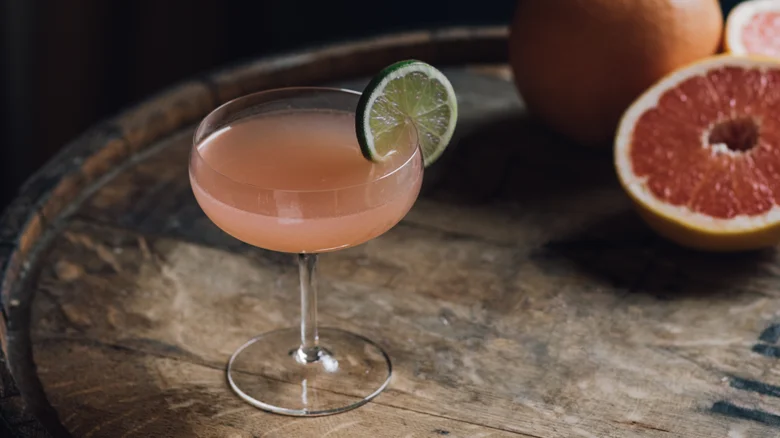
He may have countless other drinks associated with his name, including the Death in the Afternoon (which he invented) and the Mojito. But rest assured, Papa loved his Daiquiris—he even named one after him! Have you heard of the Hemingway Daiquiri? The drink was invented at the Floridita bar in Cuba, where Hemingway spent much of his time while America was suffering through Prohibition. The refreshing drink is perfect for summer soirees, but it is good enough to drink year-round.

When Hemingway found himself living in Havana, Cuba, he was said to be a regular at El Floridita, where he developed a particular fondness for the daiquiri, even going on to request a custom version – no sugar, double rum, and plenty of fresh lime and grapefruit juice. Dubbed the “Papa Doble,” Hemingway’s daiquiri was a sharp, potent cocktail that mirrored his writing: it was clean, bold, and unflinching.

His preference for a stripped-down, no-nonsense drink aligned perfectly with his minimalistic approach and literary style. Hemingway claimed he could drink a dozen of these modified daiquiris without feeling drunk, a boast that reinforced his larger-than-life persona. 
Credit Brent Hofacker/Shutterstock

F. Scott Fitzgerald & the gin rickey

F. Scott Fitzgerald remains one of the most celebrated voices of the Jazz Age, capturing its glamour, excess, and underlying despair in novels such as “The Great Gatsby,” “Tender Is the Night,” and “This Side of Paradise.” There has always been a fascination surrounding Fitzgerald and his glamorous, albeit turbulent, marriage to Zelda Fitzgerald, with themes of longing, loss, and alcoholism pervading his fiction. When it came to alcohol, Fitzgerald famously said, “First you take a drink, then the drink takes a drink, then the drink takes you.”

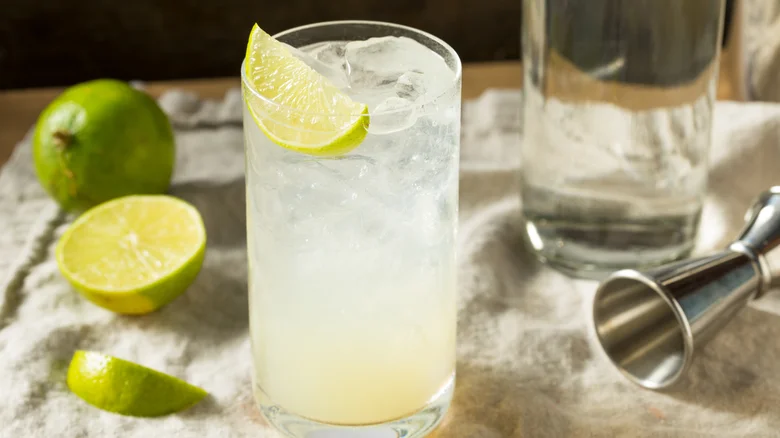
When it came to his cocktail of choice, Fitzgerald had an affinity for the gin rickey — a refreshing mix of gin, lime juice, and soda — which would have proven a fitting match for his love of high society. One reason Fitzgerald is said to have favored this light cocktail was for practical reasons: it left little lingering scent on the breath.

In the glamorous world of 1920s high society, maintaining an air of polish was crucial, and the gin rickey’s clean and tart profile, with minimal smell, would have proved a worthy writing companion. 

If there’s any doubt about Fitzgerald’s reverence for the gin rickey, one need only revisit “The Great Gatsby” (one of my favorite books), where Fitzgerald’s drink of choice appears within its pages, where the characters of Tom and Daisy take “long, greedy swallows” of their gin-and-lime libations.

Sylvia Plath & the vodka martini

Sylvia Plath remains one of the most influential and haunting voices in both poetry and literature. She is best known as the author of the posthumously published poetry collection, “Ariel,” and her semi-autobiographical novel, “The Bell Jar.” Her writing would often touch on heavier themes such as mental illness, identity crisis, and existential despair with a candid intensity that helped usher in a new confessional style of poetry.

In short, Plath was a true tortured artist, and her confessional style of writing paired with her emotional honesty left an indelible mark on the world of poetry and literature as we know it today. 

Sylvia Plath and fellow poet Anne Sexton (martini lover) were said to be bonded by both poetic brilliance and a penchant for vodka martinis. After poetry seminars, the two would head to the Ritz-Carlton in Boston and order at least three vodka martinis each, where they would chat about everything from their work to the instructor of their poetry seminar. 

Like their poetry, their vodka martini of choice was direct and barebones, calling simply for vodka, dry vermouth, and a lemon twist or an olive garnish. Who knows how many eloquent lines came out of those meetings?

Truman Capote & the vodka screwdriver

Truman Capote is best known for his popular books “Breakfast at Tiffany’s” and “In Cold Blood,” the latter of which was a groundbreaking nonfiction novel that redefined the true crime genre by combining journalism with narrative storytelling.

While Capote was known for his flamboyant and larger-than-life public persona among New York’s high society, of which he was a fixture, his writing proved to be more nuanced and vulnerable, revealing deep wells of emotion and glimpses into the demons he unfortunately struggled with for much of his life, including alcoholism. 

When it came to his drink of choice, Capote was known to appreciate the simplicity of the vodka screwdriver: a mixture of vodka and orange juice, an easy-to-sip cocktail he endearingly called “my orange drink” during his lifetime. While the vodka screwdriver is a simple cocktail, its history is a little more complex, with an unclear origin. One theory is that the screwdriver can be attributed to marines during World War II, who were said to occasionally add vodka to their orange juice. 

As far as Truman Capote is concerned, while he loved screwdrivers and remained loyal to vodka, he did not remain as loyal to his mixers. On occasion, he was known to swap out the orange juice for soda and grapefruit juice.

Cocktails in Capote’s work are like masks — they help characters become who they wish to be, even if only for the evening.

Capote loved cocktails that walked the line between elegance and mischief. In Breakfast at Tiffany’s, Holly Golightly orders a White Angel cocktail at the beginning of the tale, which is described as “something new… one-half vodka, one-half gin, no vermouth” – basically a strong variation of martini.

He once said “Promise me one thing: don’t take me home until I’m drunk – very drunk indeed.

Credit iStock

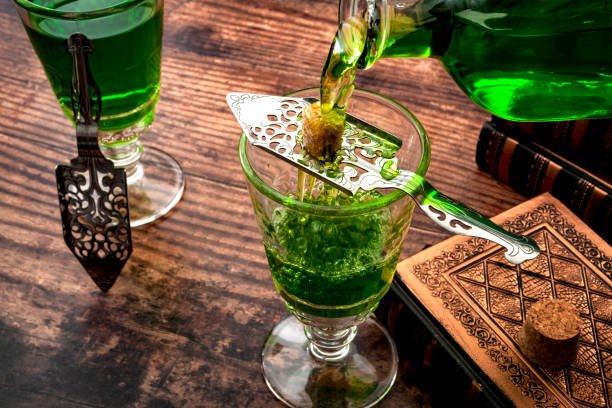
Oscar Wilde & absinthe

Oscar Wilde was an Irish writer, poet, and playwright who reached literary fame with his plays “The Importance of Being Earnest” and “An Ideal Husband” — both of which are celebrated for their satire and brilliant dialogue — as well as his only novel, “The Picture of Dorian Gray.” When it came to drinking, Wilde was said to have loved absinthe.

Nicknamed “the green fairy,” the hallucinogenic component of absinthe, brought on by wormwood, promised visions and inspiration that could help fuel creativity. Wilde famously described the absinthe experience in stages: “After the first glass, you see things as you wish they were. After the second, you see things as they are not. Finally, you see things as they really are, and that is the most horrible thing in the world.” 

While absinthe was made illegal in the United States due to its hallucinogenic qualities (the psychoactive effects are caused by thujone, which is derived from wormwood), today you can find absinthe sold in America, provided that it is wormwood-free. In other words, the absinthe Oscar Wilde once enjoyed is difficult to find in the United States nowadays, but in Europe, you can still find absinthe containing wormwood.

Dorothy Parker & the whiskey sour

One of the founding members of the famed “Vicious Circle,” which once gathered at the Round Table at New York’s historic Algonquin Hotel back in the 1920s and 30s, Dorothy Parker was a poet, critic, and satirist celebrated for her cutting wit, caustic humor, and unflinching observations. 

Her writing, which included “Enough Rope” and “Big Blonde,” often explored darker themes of loneliness and the gap between societal expectations and one’s personal reality, making for timely observations that still resonate today. 

While Parker is remembered for her dazzling words, her layered writing makes her one of the most complex voices of American literature. So, when it came to her beverage of choice, it should come as no surprise that Parker gravitated towards a cocktail that struck the same complexities as her work: the whiskey sour.

This classic and historic cocktail blends whiskey, lemon, and sugar, resulting in a flavor profile that is both tart and potent. Whether she was crafting biting poems or skewering societal hypocrisy, Parker’s drink of choice tended to embody her literary voice — it was elegant, complex, punchy, and laced with just the right amount of bitterness.

While Parker clearly enjoyed her whiskey sours, it’s also worth noting that her writing mentions her love of champagne. As shown in her poem, “Inventory,” Parker wrote: “Three be the things I shall never attain: Envy, content, and sufficient champagne.”
Credit Vecteezy

Hunter S. Thompson & the Singapore Sling

Hunter S. Thompson was a journalist-turned-author who is best known as being the pioneer of “gonzo journalism,” a style of writing that blends fact, fiction, and personal experience. It goes without saying that Hunter S. Thompson was a juggernaut who broke traditional journalistic rules by placing himself at the center of a story, offering keen observations through his raw, unfiltered voice and experiences. 

His book, “Fear and Loathing in Las Vegas: A Savage Journey to the Heart of the American Dream,” was by far his most famous work and one that captured the disillusionment of the American Dream through his own drug-fueled odyssey in Las Vegas. 

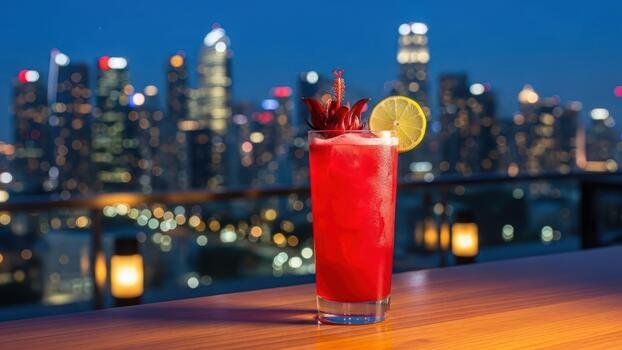
Not only does Thompson’s autobiographical novel offer a chaotic glimpse into his wild journey, but it also provides readers with a look at one of his preferred cocktails: the Singapore Sling. This historic cocktail, a colorful blend of gin, sugar, lime juice, and cherry brandy, has undergone multiple iterations, with some Singapore Sling recipes even adding pineapple, grenadine, or red wine.

In his book, Hunter S. Thompson wrote of the afternoons spent indulging in Singapore Slings, wasting away afternoons with his friends in tow: “sitting there in the Polo Lounge — for many hours, drinking Singapore Slings with mescal on the side and beer chasers. 

His cocktail tastes were as bold as his prose: while he downed whisky with professional dedication, his unexpected soft spot was the Singapore Sling, a drink he associated with humid hotel bars, tropical assignments, and the illusion of calm before the next storm.

He said “Twenty‑four hours ago we were sitting in the Polo Lounge … drinking Singapore Slings with mescal on the side and beer chasers.”

Anthony Bourdain & the Negroni

By far the most recent writer on this list, the late and great Anthony Bourdain was an acclaimed storyteller, television host, chef, and travel documentarian who rose to fame following the publication of his bestselling memoir, “Kitchen Confidential: Adventures in the Culinary Underbelly,” an unfiltered look behind the scenes of professional kitchens that combined humor, grit, and poignant insight.

Following the success of his memoir, Bourdain set out to write one of my personal favorite books, “A Cook’s Tour: In Search of the Perfect Meal,” while simultaneously filming his first travel show of the same name. From then on, Bourdain’s television career as a travel host was cemented with his subsequent shows, “No Reservations” and CNN’s “Parts Unknown.” 

During his lifetime, Bourdain, who spent his life connecting with cultures through food and drink, made it known that he was a devoted fan of the Negroni, a cocktail he considered perfect, even calling it one of his all-time favorite drinks.

“A Negroni is a perfect drink, as far as I’m concerned,” said Bourdain in an interview with Barron’s at its 2016 annual American Craft Council Fellowship Awards. “You know, it’s three liquors that I’m not particularly interested in. I’m not really a gin drinker, don’t like Campari, and straight vermouth leaves me cold, but put ’em together with a slice of orange … it works.” Made with gin, Campari, and vermouth, the Negroni strikes a perfect balance between bitter, sweet, and botanical notes.

Maya Angelou & sherry

Maya Angelou was a poet, memoirist, and civil rights activist whose work has become a cultural touchstone, capturing the struggles and triumphs of the Black community in the United States.

She is best known for her autobiographical series, beginning with “I Know Why the Caged Bird Sings,” and her writing style, which blends narrative with social commentary, particularly examining racism, trauma, and resilience.

In an interview with The Paris Review, Angelou shared her writing ritual, which took place in hotel rooms, accompanied by nothing more than a dictionary, an ashtray, yellow legal pads, and a bottle of sherry.

In response to the interviewer asking if the fortified wine Angelou preferred was an end-of-day tradition or something to fuel the imagination, Angelou replied simply: “I might have it at six-fifteen a.m. just as soon as I get in, but usually it’s about eleven o’clock when I’ll have a glass of sherry.” 

Much like her writing, the warmth and depth of sherry seems a perfect metaphor for Maya Angelou’s rich storytelling, dripping with warmth, wisdom, and strength.

A few other notables coming from the fantasy world – J.R.R. Tolkien (Lord of the Rings) and C.S. Lewis (Narnia). They would often grab beers together at a local pub and talk about their books, and Jane Austen would write letters to her sister about the luxury of drinking a fine French wine.

Some famous literary cocktails –

The Virginia Woolf – A refreshing highball style drink combining gin, lemonade, ice, a cucumber slice, and a lime twist. Gin Austen – A literary-themed craft cocktail honoring Jane Austen made with gin, rosé, sage, lemon, and bitters.

Final Toast

These writers didn’t just write about cocktails — they lived in their glow. For some, drinking was joy or elegance; for others, escape. But in all cases, the cocktail becomes a symbol of era, of mood, of self.

So next time you mix a drink, raise a glass to these literary legends. And maybe, just maybe, start the next great novel.

P.S. You can now follow me on Substack under The Michael Pour at substack.com/@themichaelpour. There isn’t a paywall yet but is being considered. Eventually, I foresee that being my primary writing and posting forum for monetary reasons, primarily. Come follow me on there! A writer has to make a living lol.

Cheers & Sante,

Michael

michael@michaelpour.com

Cover photo courtesy of the Daily Mail
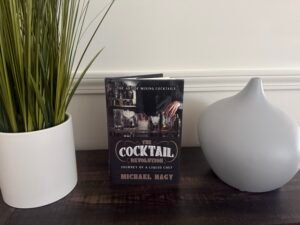
The Cocktail Revolution: Journey of a Liquid Chef

August
23
2026

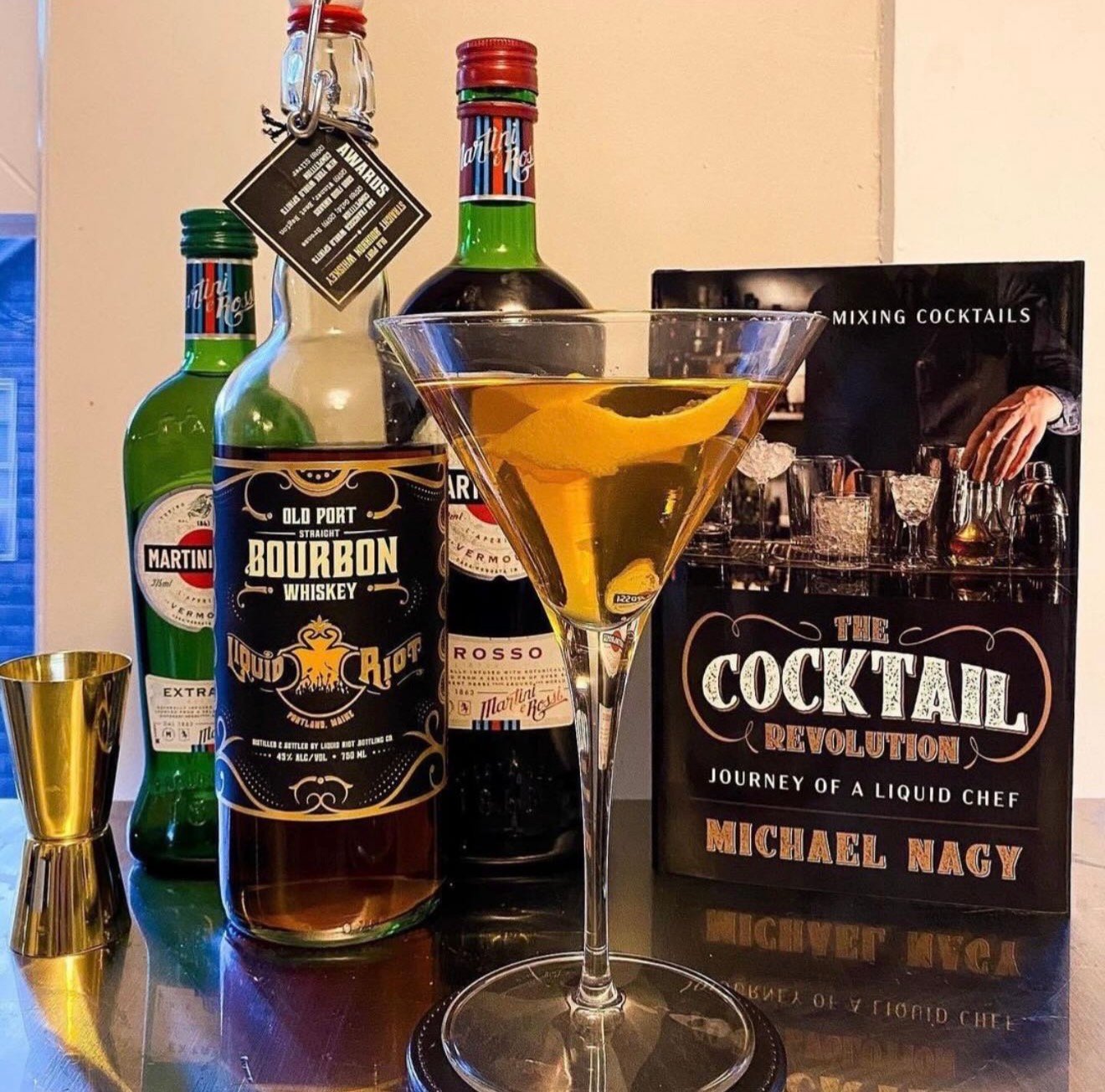
For those who aren’t aware, I published a bar and cocktail book back in 2020 during the height of the pandemic. The book is titled “The Cocktail Revolution: Journey of a Liquid Chef”.

I went through a small publishing house, so I didn’t receive much promotion and marketing for the book. I decided to sell the book direct to consumer. Because I’m not a household name in the world of book writers, it wasn’t going to do well commercially, and I wanted the ability to give signed copies with a personal note. Although it is available on Amazon, I only receive a small royalty for each sale. It was never going to be a get rich, lucrative book project, but I did want to make a little money and get my name and expertise out there.

If you are local to Central or Upstate NY or the Syracuse, NY area, I am more than happy to personally deliver it to you. If you would like to receive it directly from me, I am offering FREE shipping. If you prefer to purchase through Amazon, here is the link https://a.co/d/013uXcHP . If interested, send me an email listed below or DM on Instagram. Payment can be made via Venmo or cash.

I was able to do a podcast with ‘The Uncorked Corner”, a New England-based food and beverage podcast for the release of the book. To give it a listen, you can find it on YouTube at Uncorked Corner, Episode 14, Spotify, and Apple podcasts under the same name.

I hope to do some book signing events in the community soon. Stay tuned! Also, I am working on my next book project, which may or may not be cocktail-related.

Thank you for your support!

Cheers,

Michael Nagy

michael@michaelpour.com

The Mai Tai: Cocktail & Mocktail for Mom

July
23
2026

Welcome all the new subscribers to this page. It’s great to have you onboard. I hope you find this content to be fun, inspiring, educational, informative, and sometimes entertaining.

As a subscriber, I invite you to submit your ideas of topics you would like to learn more about. This page covers all types of beverages along with information about industry trends, commentary, advice, recipes, recommendations, and much more…. You can submit your ideas by commenting on this post, DM on Instagram, or send me an email below.

There are many unconfirmed subscriptions pending, so if this is you, check your spam folder so you don’t miss a drop. And yes, it’s free to join. Most of these posts will be exclusive to members and not appear on Instagram. Plus, they will be automatically sent to your email, so you don’t have to worry about bookmarking the page or visiting the link tree on Instagram.

The world of beverages is vast and with the emergence and evolution of non-alcohol cocktails/mocktails, NA/low-alcohol drinks, and healthy, mindful drinking, there is a lot to choose from. This way, I am reaching my audience more specifically. Check out the other blog posts to see what we’ve been talking about this summer.

What’s happening at The Michael Pour?

My summer mocktail program is kicking into gear with not just original mocktails but also turning classic summer cocktails into mocktails and creating variations of those cocktails. Please let me know if this something you are interested in for your place of business or for your summer parties or events. Wine and cocktails can also be included. Don’t require service? Just ask about a free consultation.

I have received some interest for stewarding wine dinners and conducting wine pairings and wine tastings. Wine, spirits, cocktail, and mocktail classes are available and pop-up events for local businesses who want to add a beverage component to their events and festivities.

On August 17th, I will be doing an Amaro and Vermouth class with a featured vermouth cocktail at “Vine & Fig” Wine Bistro and Shop in Rome with Mediterranean bites, wine, and history of Italian elixirs. If interested in attending, visit their page Vine & Fig, inquire by email, or look for announcement on Instagram this week.

Look out for our next social with Women for Wine Sense, Syracuse Chapter in August. It will be held on the courtyard at Eva’s European Sweets in Solvay. They are celebrating 29 glorious years in CNY. They are a lovely family!

On a personal note, I will be returning to my hometown of Harrisburg, PA this weekend to visit my mother for her birthday. This will be the first time I am back there in about three years.

For this week’s blog, I am dedicating it to my mother who loves a sunny, tropical, fruity, and sweet drink to enjoy by her pool. I decided to go with the classic “Mai Tai“. I will give the cocktail and mocktail version for you to mix up and a little history of this drink.

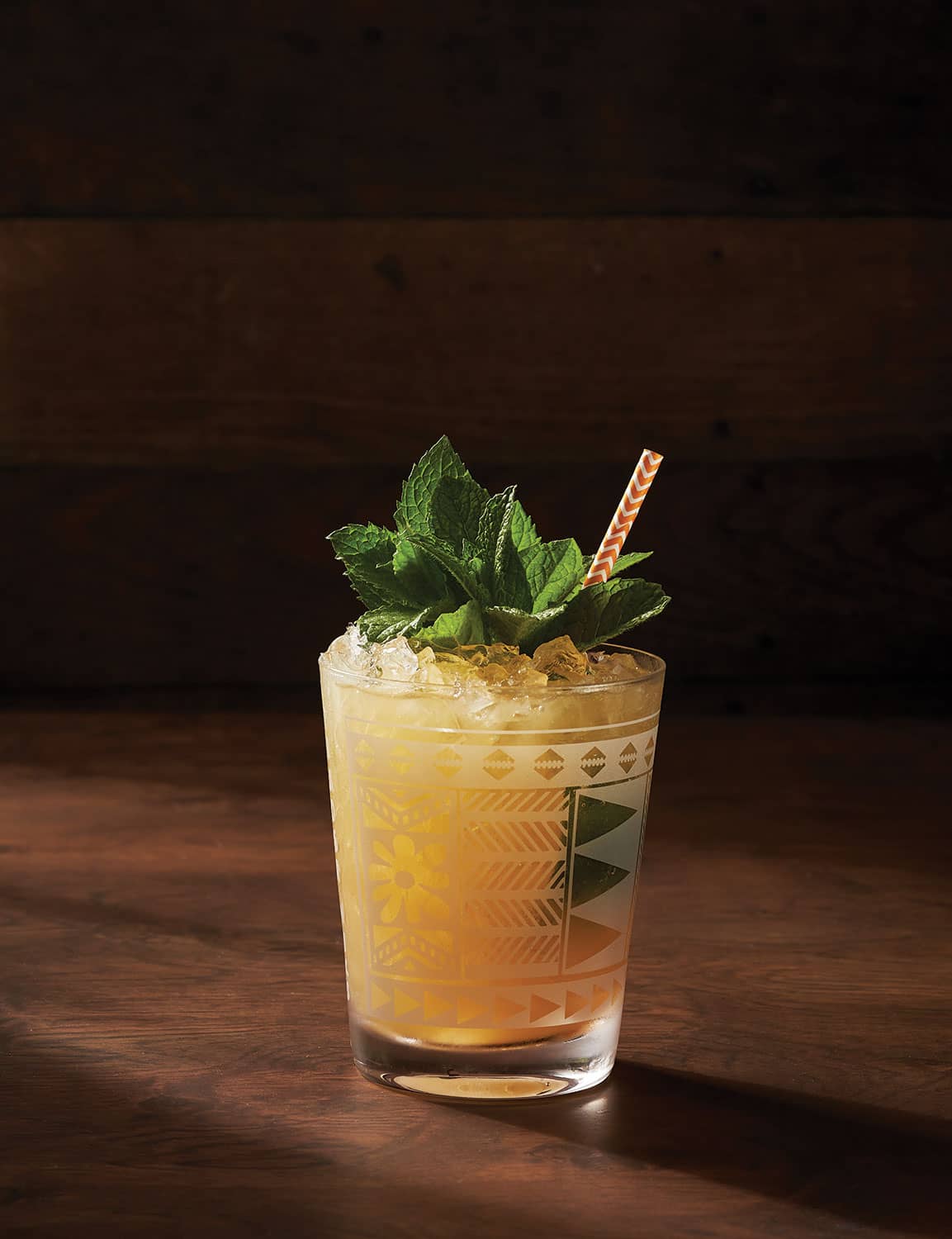
The “Mai Tai’ is arguably one of the most famous tiki cocktails in the world and all too often messed up by bar keeps. The classic does not call for orange juice or pineapple juice. It is a rum-based cocktail, and the rum should be the star, not the juices. For anyone who has traveled to Jamaica or Caribbean islands, you may have imbibed on a Mai Tai.

The tale of the Mai Tai started in 1944, according to Trader Vic. Victor Jules Bergeron, better known as Trader Vic, was the owner of a tiki restaurant of the same name. Together with Donn Beach, from Donn the Beachcomber, they were the first one to start the tiki culture. The tiki culture is a blend of the Polynesian and the Caribbean. It was a place where people could escape reality and be transported to the tropics while enjoying tropical flavored cocktails. The cocktails were a careful combination of tropical flavors like lime juice, curaçao liqueur, and Caribbean rum. 

Trader Vic tells the story of the day he was serving two friends, Eastham and Carrie Guild from Tahiti, at his restaurant in Oakland. Inspired by the simplicity of successful drinks like Martinis, Manhattans, and Daiquiris he set himself to create a new exotic rum drink.

In keeping mostly with tradition, I like to get creative and modernize it a little by introducing new flavors. Although some ingredients may not be readily available, I offer alternatives.

Original Mai Tai

  • 1.5 oz white rum
  • 3/4 oz orange liqueur
  • 1/2 oz Orgeat syrup (almond-flavored). Store-bought or homemade recipe (preferred) below. Don’t use Amaretto lol. If you are allergic to almonds, sub oat milk, or roast other nuts/seeds
  • 3/4 oz fresh lime juice
  • 1/2 dark rum
  • Garnish – mint sprig and lime slice (no cherry or umbrella)
  • Glass – rocks or tiki

In a shaker tin, combine all ingredients except dark rum and shake. Strain mixture into a rocks glass filled with shaved or very small ice cubes. Using the back of a bar spoon, carefully float the dark rum on top and garnish mint sprig.

Orgeat recipe –

  • 1 cup of unsweetened almond milk, 2 cups of sugar, 3 tsp of almond extract, 1/2 tsp of orange blossom water, 1/4 cup of brandy. Combine the almond milk and sugar in a saucepan on medium heat. Stir until dissolved and the mixture starts to boil. Add the remaining ingredients and stir to combine. Transfer to a clean jar and store in the fridge. Should last up to 4 weeks.

Tahitian Tongue (mocktail)

  • 1.5 oz spirit-free rum or combo of 1 oz pineapple juice, 1/4 tsp molasses, and 1/4 tsp vanilla extract (preferred)
  • 3/4 oz coconut water
  • 1 oz Acidified Orange Juice (to mimic lime juice add a drop of malic and citric acid to orange juice)
  • 1/2 oz Orgeat syrup (almond-flavored). Store-bought or homemade recipe (preferred) below. Don’t use Amaretto lol. If you are allergic to almonds, sub oat milk, or roast other nuts/seeds
  • 2 dashes aromatic bitters
  • Garnish – mint sprig and orange twist (no cherry or umbrella)
  • Glass – tiki or tulip

In a shaker tin, combine all ingredients and shake. Fine Strain mixture into a rocks glass filled with ice and garnish.

Cheers,

Michael Nagy

michael@michaelpour.com

717.877.2729

How To Make the Best Old Fashioned

November
13
2024

How to make the best Old-Fashioned cocktail? What is the correct way to make an Old-Fashioned? Why does it matter? For someone who has been in the biz for over 22 years (behind the stick for much of that time), certified in advanced mixology, runs his own cocktail business, published cocktail author, and oversaw the cocktail program at many high-end cocktail bars and establishments, I think I have the qualifications.

Not only will I discuss the cocktail making, but also the subtle nuances that goes into perfecting this classic cocktail, like ice, sugar, whiskey, bitters, glassware, garnishments, etc… All too often I see and taste Old-Fashioneds that are prepared, mixed, and served incorrectly. Sure, there are many variations of the cocktail and depends on how you and your guests want it, but, for the most part (other than choice of whiskey), most consumers will drink it the way you serve it and not experience its potential.

After you have read through this discussion, I hope that you have the ability and confidence to mix a well-balanced, visually appealing, and tasty Old-Fashioned for yourself and guests from your home bar. It will also give you the knowledge to order confidently from your favorite, local watering hole so you receive the cocktail the way you like it. I encourage you to experiment with different types of whiskey and other brown spirits and ice/ice molds to find YOUR best Old-Fashioned.

A little history behind the cocktail

The Old-Fashioned is considered the oldest American cocktail. The word cocktail wasn’t even in the vernacular until 1806, which at the time described a drink of spirits, sugar, water, and bitters. By the late 1800s, bartenders were evolving. Credit is given to a bartender at the Pendennis Club in Kentucky for creating the official Old-Fashioned in 1880, which he introduced to New York at the Waldorf-Astoria Hotel bar. During Prohibition, bartenders muddled orange and cherry into the cocktail, reportedly to mask the poor-quality alcohol’s harsh taste.

Therefore, the Old-Fashioned is considered the grandfather of all cocktails. Simple yet complex, subtle yet bold, it’s easy to see why the classic three-ingredient elixir remains so revered by bartenders and cocktail connoisseurs. It is so admired by bartenders that it is often the first cocktail they diligently master. What appears to be a simple drink of whiskey, sugar, and bitters is actually a complex, art form dependent on the right ingredients and the method of mixing them.

Ordering an Old-Fashioned at a bar will usually earn you an approving nod (except in those cases where barkeeps have no idea where to start), but it’s also the perfect cocktail to master at home. Though it’s relatively easy to concoct, it’s just as easy to mess it up.

Dark and boozy, a little sweet and a little bitter. In cocktail lore, is there another whiskey drink more historic and satisfying than the Old-Fashioned? The cocktail defies nostalgic title, and while it certainly went through less-than-ideal incarnations over the years. Luckily, the Old-Fashioned is one of the few cocktails that has never gone out of style and has been embraced by more women today than it ever has. If done right, whiskey cocktails have become more approachable for women.

The Old Fashioned is a cocktail of evolution. What we do know is that by the time cocktail books began appearing in the late 19th century, what we would call an Old-Fashioned today was often under the title of “Whiskey Cocktail”.

Reach for a quality whiskey

An Old Fashioned is essentially a vehicle for enjoying your favorite whiskey, so choose wisely. No need to break the bank but choose at least a midrange or call whiskey. Tradition calls for rye whiskey, but many people prefer bourbon. There is a plethora of different styled bourbons and whiskeys, like wheated bourbons, four-grain bourbons, single barrel bourbons, small batch bourbons, Irish whiskey, scotch whisky on the market today so give them a sip to find your style. There is also the age of the whiskey and the vessel it was aged in to consider (see below). I have served brandy or Cognac Old-Fashioneds over the years but is rare. It really comes down to individual preference.

Your choice of whiskey is the most important ingredient. it dictates the flavor profile and how well it mixes with the other flavors. A good rule of thumb is that heavier whiskeys, like bourbon, will make the cocktail taste a little on the sweeter side, while lighter whiskeys, like rye, will be more refreshing, but drier, and taste slightly spicy. I will list my favorite whiskey and bourbon to use for my Old-Fashioned recipe at the end of this post.

The only other ingredients the cocktail requires are bitters and sugar that work together to enhance the spirit with a subtle sweetness. Over the years, the cocktail has evolved to sometimes include sweet vermouth, orange slice, cherry, and club soda, but they are not traditional. Never add sweet vermouth – that is intended for a Manhattan.

Bourbon is my preference

The relatively heavy body of bourbon, a corn-based spirit, creates structure within the cocktail, and its natural sweetness helps counterbalance the more astringent elements of bitters. As bourbon is aged in charred new oak barrels, it tends to take on notes of vanilla and caramel, which are brought out by the addition of sugar.  They also help to reduce the perceived heat of the alcohol, in turn allowing the spirit’s nuances to come through more cleanly. There is a trend of smoked Old-Fashioneds by using a smoker kit with different flavored wood, like peach, cherry, and apple and a torch.

Don’t throw in a sugar packet

Sugar is one of the three necessary ingredients of the cocktail, so it deserves some thought. The classic way to make an Old-Fashioned start with placing a sugar cube at the bottom of the glass, adding a few dashes of aromatic bitters and a splash of water and muddling with muddler until it’s completely dissolved (like a paste). Most people use simple syrup for ease and convenience, which is fine, but the sugar cube will help break it down and make it easier to dissolve and integrate into the drink.

The sugar does make a difference. You don’t want to hide ingredients – you want everything to be present. With the Old Fashioned, it depends on what you’re using as your sugar source and how much. If you use a 1:1 (water-sugar) simple syrup, use a younger bourbon between 80 to 90 proof for lighter sugar content. If we are at 91-plus proof whiskey that has some age to it, use a thicker/heavier syrup such as 2:1 demerara sugar.

Be aware of bitters

An Old-Fashioned calls for 2-3 dashes of bitters—no more, no less—that are added to the sugar cube or simple syrup. While the amount seems small, having too many or too few dashes can dramatically change the taste of the drink. The type and quality of bitters matters too. Angostura bitters is the classic and always an excellent choice, but I prefer orange bitters for mine. I have also experimented using a variety of other bitters, like chocolate, Peychaud’s, grapefruit, and lavender.

Don’t add soda water

Besides sugar, whiskey and bitters, any other ingredients are not in an Old-Fashioned. Although orange slices, cherries and soda water are commonly seen in Old Fashioneds, this is not correct. As mentioned earlier, many believe these ingredients (not soda water) were added during Prohibition to help cover up the sting of moonshine or whiskey. The use of soda water today by bartenders is a modern thing. Use a splash of regular water to help dissolve the sugar cube instead.

Don’t muddle cherries

If you prefer your Old-Fashioned with a cherry, like a brandied or Luxardo, just make sure not to muddle it into the cocktail. This cocktail does not want a punch of cherry flavor or floating fruit. Instead, add it later as a garnish on a pick with an orange peel or just dropped in. Choose one Luxardo cherry over the bright neon maraschino cherry, which is sweet and full of chemicals. Some Old-Fashioned enthusiasts like a Luxardo cherry syrup to be added to mix.

Add an orange peel for aromatics and citrus

Of all the additions to the Old Fashioned over the years, the orange peel is the most appropriate. I personally garnish a picked orange peel, not twist (you don’t want pith). Don’t muddle or add an orange quarter or slice. Use a vegetable peeler to peel off a thin layer. Express the oil of an orange twist over the glass before picked and dropped in.

Use a large ice cube

Back in the 1800s, ice cubes were typically two inches on each side, unlike the small versions today that melt quickly. If you want to be a purist (or at the least impress your guests), keep some large square or cylinder cube molds in the freezer for that unexpected guest. The cocktail will remain chilled for a while without diluting too quickly. If you don’t have access to one large cube, then opt for 2-3 larger sized ice cubes. Be careful not to over-dilute. You should never fill the glass to the top with ice. Avoid small cubes and crushed ice.

Don’t shake it

Old Fashioneds are to be stirred, never shaken. Use a bar spoon to steadily stir the cocktail for a maximum of 30 seconds—you want to chill it without melting the ice cube down too much. Find a good rhythm of stirring several rotations and then firmly stopping with the spoon in the glass every ten or so rotations. You want to smoothly incorporate the sugar paste without agitating the cocktail too much. As you stir, press the back of the spoon firmly against the mixing glass. You don’t want to slosh the drink around as that can be detrimental to the smooth, silky texture that is the hallmark of a great Old-Fashioned.

Old Fashioned glass

Use an Old-Fashioned glass (pictured)

That’s what they were made for after all. Even you don’t have them, a large rocks glass versus a small rocks glass will suffice. A small rocks glass is preferable for a spirit ‘neat’ or ‘on the rocks’. Don’t serve an Old-Fashioned in any other type of glass.

Proper Old-Fashioned Cocktail By Michael

  • 1 sugar cube preferred or 1/2 oz demerara simple syrup
  • 2-3 dashes orange bitters (Angostura bitters is classic)
  • 1 barspoon of water to help dissolve
  • 2 oz bourbon, such as Basil Hayden’s or Horse Soldier, or rye whiskey
  • 1 large ice cube (square or cylinder). I prefer cylinder.
  • Garnish: orange peel and Luxardo cherry picked (see cover photo)

For bourbons, I prefer Buffalo Trace, Bulleit, Angel’s Envy, Basil Hayden’s, Horse Soldier, and Four Roses. For ryes, I recommend EH Taylor and Bulleit. For whiskey, try Crown Royal or Sour Mash Jack Daniels Single Barrel (sweeter).

Prep

  1. Add the sugar cube to the bottom of an Old-Fashioned glass. Add 2-3 dashes of orange bitters to the cube. Muddle using a muddler into a paste. Add barspoon of water and stir until the sugar is nearly dissolved.
  2. Add large ice cube or a few large pieces of ice. Add whiskey/bourbon and stir until well-chilled. Stir clockwise and counterclockwise alternating every 10 seconds.
  3. Express the oil of an orange twist over the glass, pick the peel with a Luxardo cherry, then drop into the glass to garnish.

Cheers,

Michael

Seasonal Spotlight: 5 Cocktails to Sip this Winter

Spiced Poached Pear Cocktail
November
11
2024

Thank you to all those who responded to the poll question on my Instagram story last week. The majority of you are interested in reading more posts about cocktails with recipes so here you go. In this post, I offer you a selection of handcrafted winter cocktails that I absolutely love. Some of them require some time and work but are so worth it. They are perfect to concoct for your holiday parties and get-togethers this fall and winter. I identified each cocktail for its base spirit and winter ingredients so if you like tequila, dark rum, whiskey, vodka, or gin and specialty syrups, there is definitely something for you!

I highly recommend batching them ahead of time, so you don’t have to worry about slaving in the kitchen while entertaining and compromising time with your guests. Each recipe is for one cocktail so simply multiply the ingredients by number of people you are serving. For homemade syrup recipes, you should have enough for more than one cocktail. I always recommend using fresh ingredients rather than store-bought unless you don’t have the time or don’t any other choice.

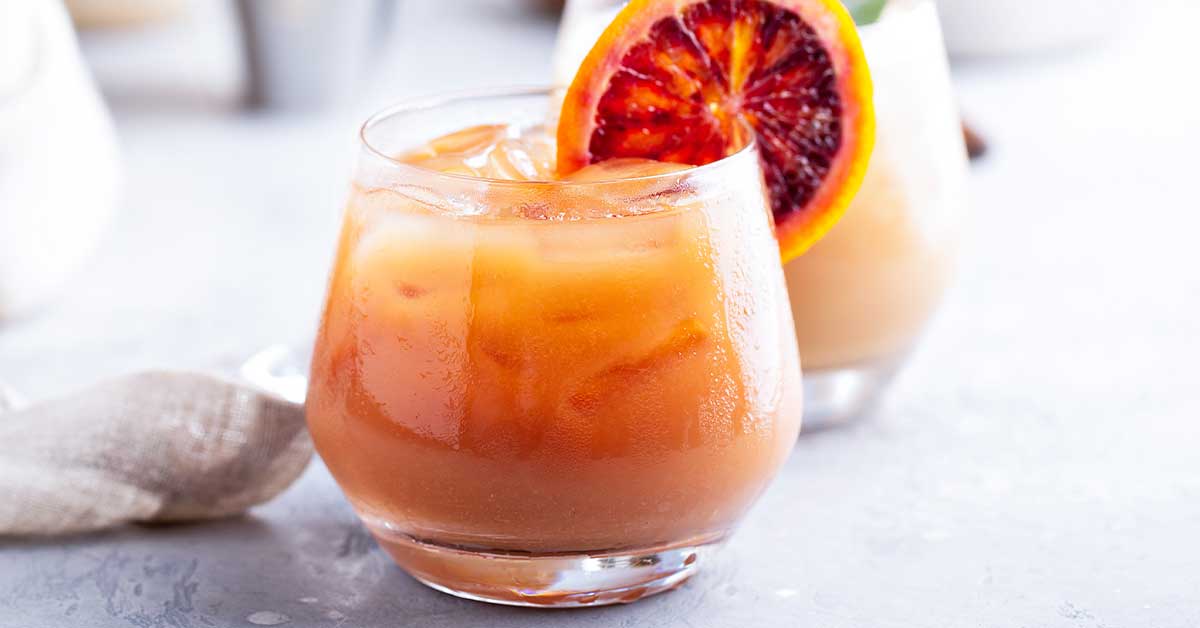
This spiced Winter Margarita will warm you up from the inside out, offering a touch of sweet, tart, spicy, and oaky flavor. Reposado tequila offers you a deeper, rich flavor profile for this winter cocktail due to its aging in oak and hints of vanilla and toast.

Winter Margarita

Winter Margarita (tequila)

  • 2 oz Reposado tequila, such as Patron, Milagro, or Teremana
  • 1 tsp fresh honey syrup
  • ½ oz fresh lime juice
  • 1 oz blood orange juice
  • ½ tsp vanilla extract
  • pinch cinnamon
  • optional – rim with sugar, salt, cinnamon, or cayenne pepper or combo of several of these

Prep:

Rub a lime wedge along the rim of chilled coupe glass or large rocks glass, coat the edges, and set aside. Fill a cocktail shaker or mixing glass with ice and add tequila, honey, lime juice, blood orange juice, vanilla, and a pinch of cinnamon. Shake and strain into coupe glass filled with ice. Be careful not to disturb rim. Garnish with a blood orange slice and cinnamon stick, if desired.

Apple Fizz

Apple Fizz (Irish whiskey)

  • 1 ½ oz Double Barrel Irish Whiskey, such as Glendalough (if you can’t find double whiskey, just use another aged Irish whiskey)
  • ½ oz pear liqueur, such as Mathilde, 99 Pears, or St. George
  • ½ oz fresh lemon juice
  • ½ oz fresh honey syrup (preferable) or store bought
  • hard apple cider to top
  • garnish apple slices & grated cinnamon

Prep:

Add all ingredients to a cocktail shaker, except cider. Shake well and strain into a highball glass with ice. Add the hard apple cider and garnish with apple and cinnamon.

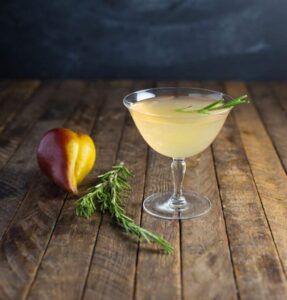
Spiced Poached Pear (vodka)

A garnish of fresh rosemary adds an herbal note to this yummy pear cocktail, which balances the warm, spicy sweetness flavor profile. Cover photo.

  • 1 ½ oz vodka, such as Ketel One, McKenzie NY vodka, or Absolut
  • 1 oz Lillet Blanc (hard to find, if not available, use a light Sauvignon Blanc wine)
  • 2-3 oz Asian pear syrup* depending on sweetness level
  • 1 oz lemon juice
  • 2 sprigs fresh rosemary

Prep:

In cocktail shaker filled with ice, combine vodka, Lillet or Sauv Blanc, lemon juice and pear syrup. Shake vigorously and strain into up glass. Twist the rosemary sprigs a few times to release the oils and garnish.

*For the Spiced Pear Syrup:

  • 2 Asian pears chopped into 1-inch pieces (no need to peel)
  • 1 cup water
  • ½ cup Sauvignon Blanc
  • 1 cup sugar
  • 1 cinnamon stick
  • 1 pod star anise
  • 1 strip lemon zest (3-inch), peeled with a vegetable peeler

Prep:

In a small saucepan combine water, wine, sugar, cinnamon, star anise and lemon zest. Bring to a boil over medium-high heat then reduce to a simmer. Add the chopped pears and cook until pears are soft, and the liquid becomes syrupy, about 30 minutes. Remove from heat and strain through a fine mesh sieve into a clean glass jar. Don’t press the pears or the syrup will become cloudy. Discard the solids and chill syrup until ready to use.

Snowbird (dark rum)

If you’re a snowbird and head down south for the winter and like your tiki drinks, this tropical flavored cocktail should satisfy your palate.

  • 1 ½ oz dark rum, such as Plantation Original Dark Rum or Myers
  • ½ oz Fernet-Branca liqueur
  • ½ oz apricot liqueur
  • ¾ oz fresh lime juice
  • ½ oz orange juice
  • ½ oz pineapple juice
  • ¾ oz simple syrup
  • 4 dashes Angostura bitters
  • garnish quarter of orange wheel and brandied cherry (optional)

Prep:

Add all ingredients into a shaker with ice and shake until well-chilled. Strain into a collins glass, tiki or copper mule mug over ice. Garnish with a quarter orange wheel and a brandied cherry.

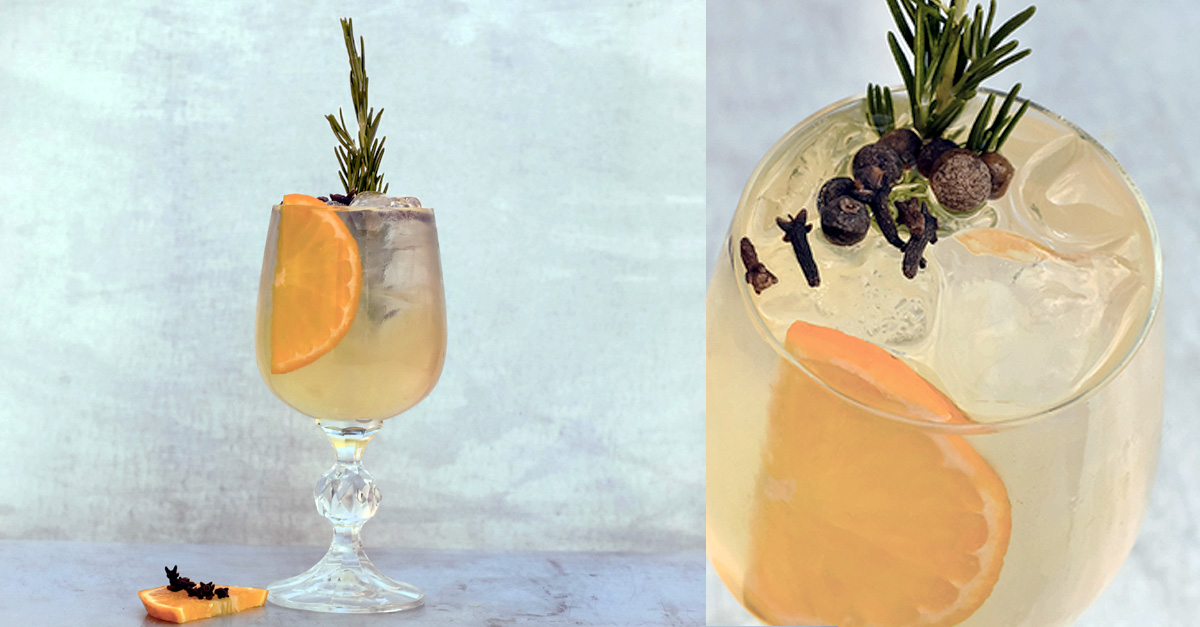
Winter Gin & Tonic

Winter Gin & Tonic

The air is cold and crisp, but why not go with a classic, elegant, and always relevant G & T. This cocktail has a little winter spice with a balance of citrus, acidity, and warmth to round it out on your palate.

  • 1 ½ oz gin, like Bluecoat or 1911 Established New York gin
  • ¾ oz winter spice simple syrup*
  • ½ oz freshly squeezed orange juice
  • ½ oz pomegranate juice (optional)
  • fill with high quality tonic water, like Fever Tree
  • garnish orange slices, allspices, whole cloves, and sage leaves (optional)

Prep:

Add all ingredients into a mixing glass with half ice and stir well with barspoon until well-chilled and combined. Strain into a red wine glass using a julep strainer over ice. Garnish with oranges, allspices, whole cloves, and sage leaves (optional)

*For the Winter Spiced Simple Syrup:

  • 1 cup of water
  • 1 cup of sugar
  • 1 tsp of whole allspice
  • 1 tsp of whole cloves
  • 2 cinnamon sticks

Add all ingredients to a medium saucepan and simmer mixture until sugar is dissolved. Cool mixture then strain into a clean, clear bottle until use. Keep in fridge for a couple of months.

I would love your feedback on this post as well as all other posts, so feel free to comment here or social media. Enjoy!

Cheers,

Michael XOXO

Wine Glass

DON’T MISS A DROP

Get notified when new articles are poured

We don’t spam!