We browse the shelves of wine shops all the time, not only to shop for dinner but also to scope out the deals. More than ever, we see a massive proliferation of wine labels with creative imagery, lingo, and descriptors. New brands and labels seem to be appearing every week. All this choice is amazing: or is it completely overwhelming depending on how you approach the situation.
One clear way to become more comfortable when confronted by endless shelves of unfamiliar wine labels is to figure out how to decipher the information given. Reading wine labels can be daunting, but not so difficult when you finish this article.
One thing to note is that regulations, both domestic and international, dictate what info must, can, and cannot appear on the label. Master that with the help of this article, you’ll be well on your way to finding that special wine bottle with much more ease.
Wine labels have a lot of information on them. Some of it is critical to understanding what is in the bottle, and some of it is just blowing smoke. Here’s a quick guide to help you know what matters, how to spot a bargain, and what to ignore.
How To Read A Wine Label
There are 2 main styles of wine labels commonly found in shops. A wine identified by its brand name or a wine designated by its appellation, region, or sub-region. A wine that is labeled by its brand will indicate what grapes it’s made of on the front label (whether it be chardonnay or ‘red blend’).
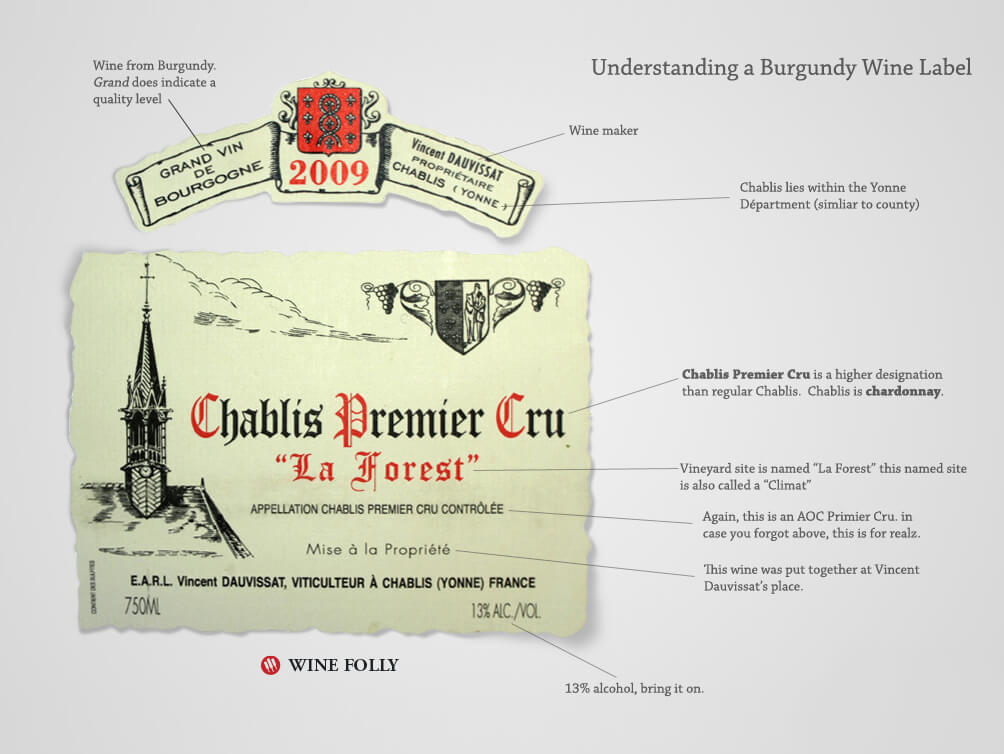
A wine that is identified by its appellation relies on the appellation’s quality level rules and regulations by country to indicate what’s in the bottle. A perfect example of an appellation wine is Chablis. Nowhere on a Chablis label is a mention of chardonnay as the grape, nor that Chablis is typically an unoaked chardonnay.
Understanding a wine label may not always tell you how the wine tastes but it can help you get a better picture of exactly what you are buying.
5 Basic Parts To A Wine Label
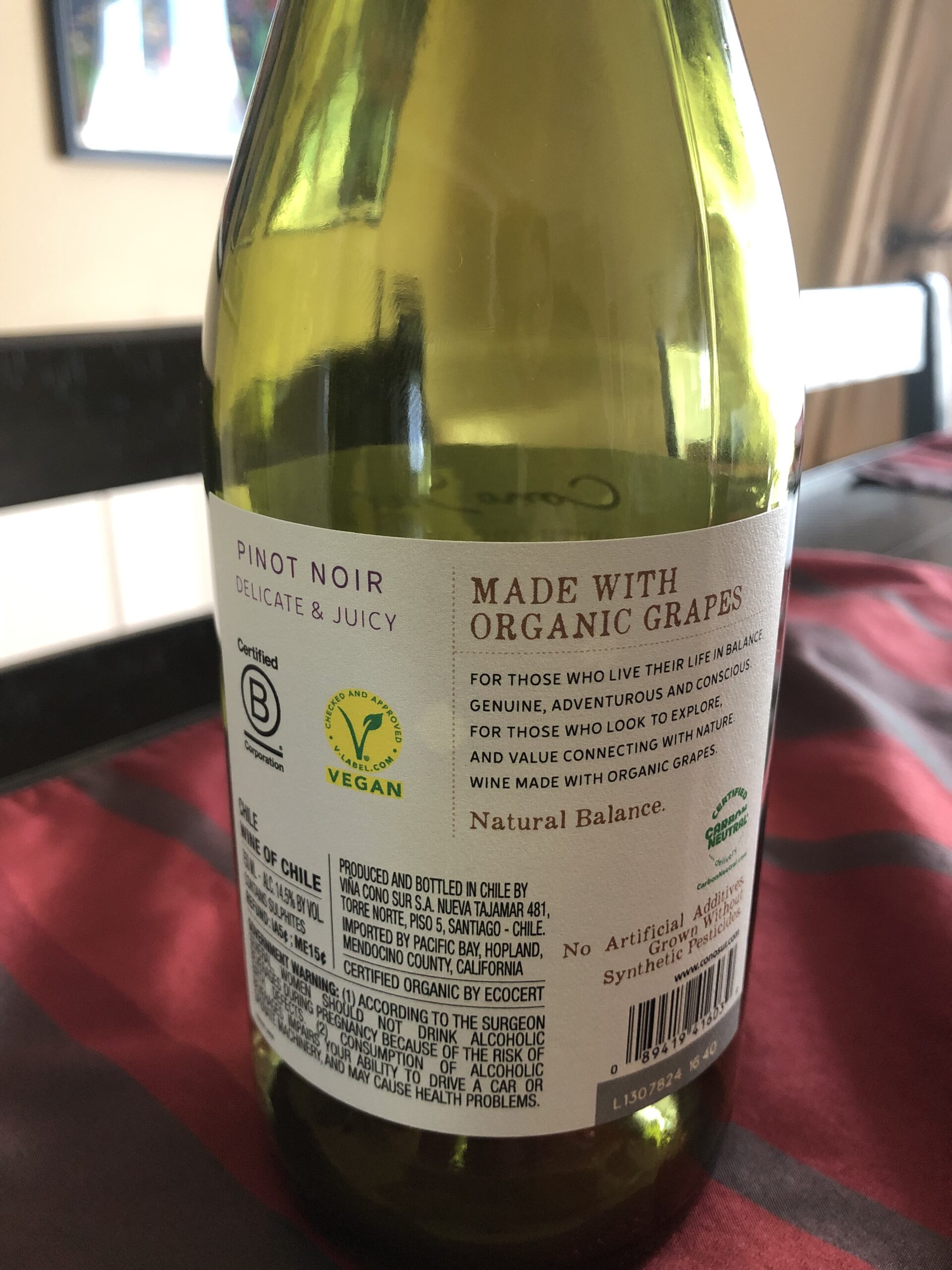
Producer or Name The producer’s name is either obvious or in small text at the top or the bottom of the label (such as many French wine label examples). This is who made the wine. It’s important to note that some American wine labels that only have a Wine Name (such as Apothic Red) are branded wines from larger wine companies. Apothic Red is a branded wine by E&J Gallo–the producer.
Region The region indicates from where the grapes were sourced to produce the wine. A wine from a larger (read: more vague) region is typically a value wine whereas a wine from a specific vineyard site often indicates a higher quality regional designation (i.e. “California” vs. “Santa Rita Hills” AVA). If a wine is from a specific vineyard site, that site will be indicated in quotations (i.e. “Les Suchots”) or located right below the region designation (ie Vosne Romanee Les Suchots). Generally, as you narrow the source to a specific site, the quality level becomes more refined and the price increases.
Variety or Appellation The variety refers to what grape or grapes are used in making the wine, i.e. Merlot or GSM Blend (Grenache, Syrah, and Mourvedre). Many blends will not reveal the constituent grapes nor the percentage that each makes of the whole. If there is no varietal given, look for the Appellation, which can give you clues to what varietals were used based on the rules governing that region. There are 15 nations with officially regulated appellations, though the strictness of the rules and what matters varies wildly among them.
Vintage or Non-Vintage (NV) The year that the grapes were harvested is the vintage. The vintage tells a lot about a wine if you are familiar with vintage variations. As a general rule, multi-vintage wines or “NV” wines are lower value wines, because they have the ease of pulling wine from multiple vintages to control the flavor, except in the case of Champagne.
Alcohol by Volume (ABV) The alcohol level actually says a lot about a wine. Many European wine regions only allow their highest quality wines to have 13.5% ABV and above. In America, ABVs can be quite high (up to 17% on some dry wines) and the alcohol level is an indication of how rich/big the wine may taste. Many higher alcohol wines are made from riper grapes and tend to have more fruit forward flavors. Again, this is a generalization and there are exceptions to the rule.
Some Wines are Labeled by Grape Variety
When you see a wine labeled with “grape” words like Cabernet Sauvignon or Gruner Veltliner, then it’s labeled by grape variety. There are thousands of different wine varieties and it’s possible to label a wine with more than one grape.
Wine labeled by variety doesn’t guarantee that the wine is 100% of the listed variety. Each country has their own set of minimum requirements to label wine by variety (Surprisingly, the United States has the lowest!):
75% USA (except for Oregon which requires 90%), 80% Argentina, 85% Italy, France, Germany, Austria, Portugal, New Zealand, South Africa, Australia, United Kingdom.
Some Wines are Labeled by Region
Wines like Bordeaux, Chablis, Chianti, Sancerre, and Rioja are labeled by region. This style of labeling is used mostly in Old World wine countries like France, Italy, Spain and Portugal. Regional labeling likely came from a time when many different varieties grew together in the same vineyards and were blended together into wine.
Each wine region dictates what grapes can be used in the regional wine. So, in order to know what’s inside one of these regionally labeled wines, you’ll want to do a little research. For example, Chablis in France grows Chardonnay, and Chianti in Italy specializes in Sangiovese.
Some Wines are Labeled by Name
The last common style of wine labeling includes wines using a made-up or fantasy name. More often than not, named wines are unique blends invented by the wine producer. You’ll also find named wines common in regions that do not allow the use of certain grapes in their regional wine (but still grow them). For example, Tuscan wines made with French-origin grapes including Merlot, Syrah, and Cabernet are not allowed to be labeled as an Italian regional wine. (This is how the first Super Tuscan wines came to be!)
Common Label Confusions and How to Avoid Mistakes
Anyone new to reading wine labels can get confused pretty quickly. Here is a breakdown of key things to look for.
“Reserve” Means Different Things – It’s not a legal term everywhere, so don’t assume it guarantees top quality. Research might reveal that it’s just marketing fluff in some regions.
Non-Vintage (NV) Wines – Often sparkling wines or blends without a specific year. That can be confusing but generally indicates consistent style rather than ignoring quality.
Multi-Grape Blends – Sometimes the label lists a single variety, but the wine could be a blend. If you aren’t sure, ask a trusted vendor or check online reviews to get the full story.
Old-World vs New-World Labeling – European wines tend to emphasize region over grape, while New World wines (like from the US or Australia) highlight grape variety first. That’s helpful to know when trying unfamiliar wines.
Pronunciation Woes – Don’t let tough to pronounce names scare you. It happens to everyone. Ask in store or look it up.
Getting around these common issues makes wine shopping less intimidating and more fun.
Picking the Perfect Wine for Your Next Dinner Party
Here is a potential real-life scenario. You’ve got a planned Friday night with friends, and you want to bring a bottle that everyone will love without breaking the bank or appearing clueless. How do you choose?
Start by thinking about the food. If you’re serving a classic Italian pasta with tomato sauce, a medium-bodied red like Sangiovese is your go-to. Check the label for the region—Chianti, for instance, shines here. Look for a recent vintage but avoid very young wines that might be too tannic.
Maybe you want a white to kick off the evening. Something crisp, light, and crowd-pleasing like Sauvignon Blanc from New Zealand? Search for “Marlborough” on the label, which is famous for this style of wine. A vintage within the last two years keeps that fresh, zesty vibe going all night.
Last, but not least, don’t ignore the fun part. Personal touches like a unique bottle design, label, or interesting backstory can spark conversation and set the tone. For adding a playful or classy edge, personalized wine labels can be a hit. Btw, I’m guilty of buying a bottle based on the label and overall appearance of the bottle. I know it sounds superficial of me but have fun with it. If you know me, I am more attracted to substance and personality.
Watch the video below from my friends over at Wine Folly. If you would like to learn more about German, French, or Italian wine labels, which can be super hard to read, please reach out. Also, if you desire a deeper dive into what to look for in a bottle, please don’t hesitate to ask.
Cheers,
Michael Nagy
(Cover Photo courtesy of Lucia Capretti & Tasting Table)