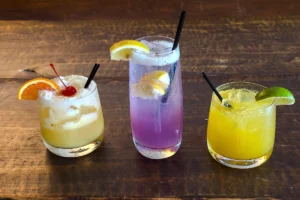
In our current drinking climate, we see a variety of names given to non-alcoholic drinking options. On bar menus, you see Zero ABV, Low & No Alcohol, Alcohol-Free, NA Options, Non-Alcoholic Cocktails, Zero Proof, but the one you see and hear the most is ‘Mocktails’.
By whatever name you call them, really good ‘craft’ mocktails require care, skill, and fresh ingredients, just like their boozy cousins. In short, they should be as well-crafted as a cocktail. Being a classically trained bartender/mixologist, I enjoy using the term ‘non-alcoholic cocktails’ because they are essentially ‘cocktails’ without the booze. For purposes of this post, I will use ‘mocktail’.
Just like classic cocktails, i.e. Frozen Daiquiri or Margarita, being made in a blender evolving into a hand-shaken, on-the-the-rocks or straight-up drink, we have moved beyond the virgin blender drink and Shirley Temple.
Mocktails follow the same structure of an alcoholic drink by mixing ingredients together, combining interesting flavors, non-alcoholic spirits as the base, and adding garnishes. A non-alcoholic drink is meant to replicate a cocktail. Mocktails have evolved from simple non‑alcoholic substitutes into refined beverages that stand on their own. They combine fresh ingredients, balanced flavors, and thoughtful presentation, making them a central part of modern beverage culture.
Mocktails are crafted beverages that deliver the flavor complexity and visual appeal of cocktails. They too rely on fresh produce, herbs, spices, syrups, shrubs, purees, modifiers, and sweeteners to create drinks that feel polished and complete.
An argument can be made that they are more difficult to concoct and craft and perfect because they require a keen understanding of aroma, flavor, texture, acidity, sweetness, and balance. When designing a booze-free cocktail, you’re trying to create an elevated, complex drink, not just fancy juice.
Mocktails do matter because they offer an enjoyable, healthy, and mindful drinking option. They allow anyone to participate in social gatherings without compromising on taste or experience. This has made them hugely popular across restaurants, events, and home entertaining that emphasize flavor and craftsmanship.
Today, mocktails appeal to people who value creativity, wellness, and inclusive social experiences. Before the non-alcoholic spirits boom over the last five years, the buzz-free route presented challenges. Many recipes called for shrubs, syrups and other house-made components to build complex flavors.
That was somewhat manageable for cocktail bars and restaurants with plenty of time, ingredients to choose from, and deep pockets, but what about home bartenders seeking a drink at the end of the day or a host at an event or party? The sober curious movement and Dry January have led to the rise of non-alcoholic bottle shops all over the country with most located in big cities.
Quick story – In April 2020, during the early stages of the pandemic, an Instagram user captured the moment coherently. She posted a video on there to show how she was holding up at home during quarantine. She demonstrated this by making a large batch of Cosmos to be served to herself in a gigantic martini glass.
She wasn’t drinking alone. According to a study by the National Library of Medicine, an organization within the National Institutes of Health, many people who were significantly impacted by the pandemic began to drink significantly more alcohol as a result. However, as the pandemic progresses, a counter-phenomenon had surfaced.
Demand for booze-free beverages was up 60% from July 2020 to 2021, and the global non-alcoholic market has seen steady growth since 2020. According to trends reports across the globe, approximately 58% of those who drink alcohol are increasingly opting for non and low-alcohol cocktails indicating that the wave hasn’t let up.
It’s projected to reach nearly $1,258 billion by 2027, according to Fortune Business Insights. In comparison, the industry was valued at just over $900 billion in 2019. Altogether, it’s proof that non-alcoholic drinks are having a moment and are here to stay.
The way people are imbibing is changing and they are becoming more sophisticated. People are more comfortable coming to an establishment and ordering something non-alcoholic, and they’re still being treated like an adult. Unlike early 20th-century temperance and Prohibition, the modern non-alcoholic movement is more about options and individualization than widespread moralizing.
At the same token, patrons often wanted to consume less alcohol in each cocktail and wanted to try different types of drinks in a given setting. Their general knowledge of what a balanced drink should taste like has increased tremendously.
What people have really started to understand about their own behavior is that what they’re actually really enjoying is the social experience. It’s not necessarily that they enjoy the alcohol, it’s that they enjoy being together, celebrating and relaxing.
Why Are Mocktails Becoming So Popular?
The growing interest in wellness and more a balanced lifestyle has played a major role in the popularity of mocktails and non‑alcoholic elixirs. Many people want drinks that feel celebratory but are less impactful. Others simply want options that suit personal, cultural, or health‑related choices.
Some of the key reasons for their growing demand spelled out here:
- Health‑conscious lifestyles: Many individuals look for lighter drinks that still feel indulgent.
- Inclusive social settings: Mocktails and non‑alcoholic elixirs offer thoughtful choices for pregnant women, designated drivers, younger guests, and those who avoid alcohol.
- Creative beverage menus: Restaurants and bars now treat mocktails and non‑alcoholic elixirs with the same respect as cocktails, offering intriguing flavors and elegant presentation.
- Broader dietary preferences: Many mocktails and elixirs naturally align with vegan, gluten‑free, or low‑sugar lifestyles.
Mocktails have moved far beyond simple juice blends. They now represent artistry, innovation, and mindful enjoyment, much like the non‑alcoholic offerings created by some really cool brands.
At one time, the idea of not drinking, whether you were the designated driver, sober, pregnant, or simply abstaining, meant picking from sugary sodas, juices, teas. sparkling/tonic water, cheap coffee, or just tap water. Not very appealing options. The “big upgrade” to this list was the addition of non-alcoholic beer.
Taking care of your patrons or guests means giving serious consideration to the non-alcoholic beverages you are creating. Who will be drinking it and when? This also includes the food that will complement the experience.
What’s the occasion and setting? The “who” and “when” answers will influence the glass, temperature, flavors, presentation/color scheme, and textures desired. Remember, the drink’s glass and size should match the alcoholic counterpart, as not to draw attention to the person who isn’t drinking alcohol. No need to encourage the alcohol bullies.
Do they abstain from alcohol entirely, or can you use dashes of bitters, or do you serve alcohol-free beer or wine? The answer is that all of those things contain a microscopic amount of alcohol so ethically can’t serve.
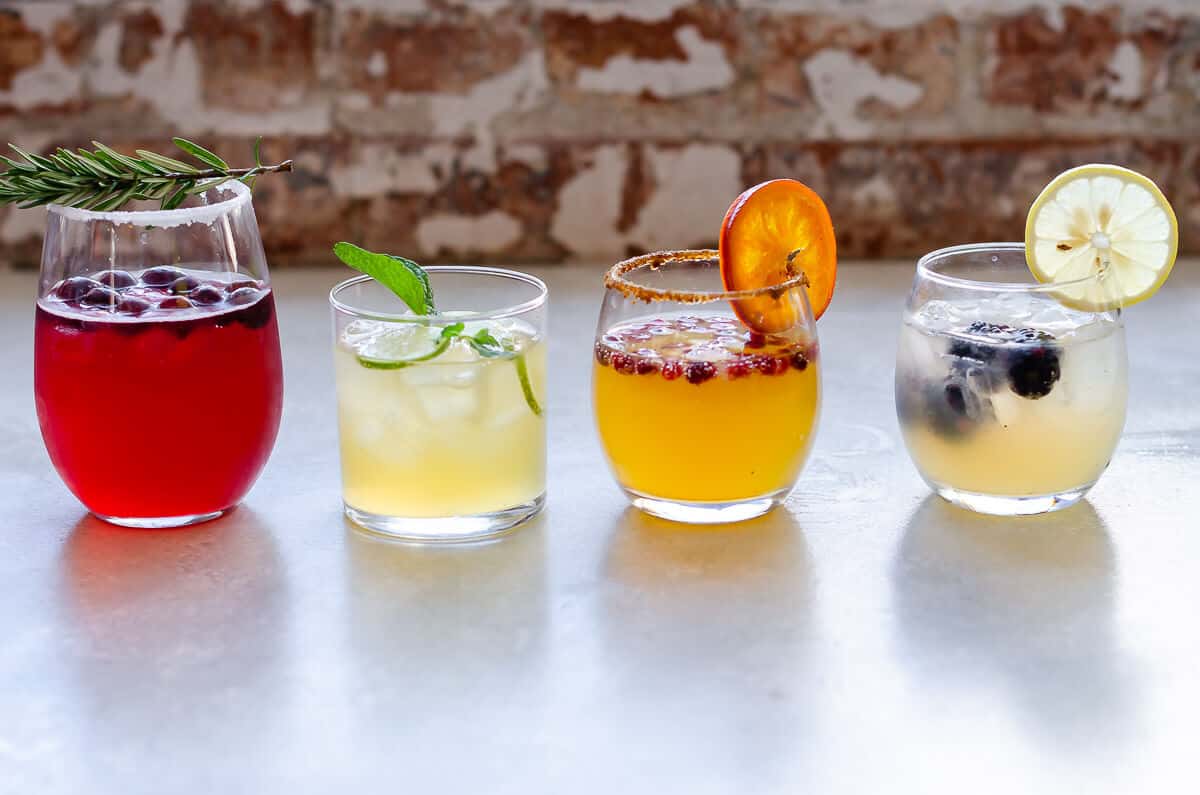
Your objective is to mix up a flavorful, complex, balanced, and beautiful drink.
Flavorful: The drink should have a distinct flavor, not a watered-down juice or weak hint of something added to soda water.
Complex: Complexity will come from using various flavors and aromas that blend harmoniously or provide an exciting contrast.
Balance: Balance is the interplay between the five basic taste elements: sweet, salty, sour, bitter, and umami. A well-balanced drink will use multiple ingredients in proportion so that a single flavor does not leave the drink tasting one-dimensional. This is the science!
Beauty – We eat and drink with our eyes first. Use garnishes, ice, and glassware to create flair and enhance the experience of the drink. This is the art form!
The craft cocktail movement is founded on the use of fresh ingredients, like fresh juices, house-made syrups, shrubs, tinctures, infusions, fresh-picked herbs and flowers, and the use of artisan brands. So, too, are craft mocktails.
Juice: A handheld or electric juicer may become part of your essential bar equipment.
Syrups, Shrubs, and Tinctures: These not only provide sweetness but also enhance your drinks with tartness, herbs, spices, fruit flavors, and peppers to build balance and complexity. Infusing flavor and color to elevate the senses.
Fresh-picked: Both taste and aroma create flavor. The use of fresh herbs and flowers in juices, syrups, and garnishes enhances the flavors you are making while also setting expectations visually.
Artisan: Whenever possible, choose to make your mocktail ingredients at home or purchase brands that embrace the craft movement’s ethos.
Aristotle said, “The whole is greater than the sum of its parts.” And that’s totally true with mocktails and cocktails. The interplay between a dash of this and a small amount of that, mixed with something else, can create a flavor profile that is truly inspired.
Part 2 will go into more detail about the making of mocktails and about my mocktail business.
Cheers,
Michael Nagy 🙂
michael@michaelpour.com
717.877.2729