

“Happy Beaujolais Nouveau Day 2025”
Beaujolais Nouveau is a light, fruity red wine from the Beaujolais region of France made from the Gamay grape. It is released on the third Thursday of November every year. It is known for its easy-drinking and juicy quality with notes of banana and strawberry, served slightly chilled, and has become a celebration of young wine worldwide. Its popularity is largely due to marketing efforts in the mid-20th century that promoted a race to get the first bottles to Paris.
The Gamay grape is also grown in parts of New York State and the Finger Lakes region due to the cool climate and longitude and latitude proximity. Try the Gamay Noir from Sheldrake Point Winery on the west side of Cayuga Lake. You will not find too many Gamay in the marketplace. I did recently indulge in one at Noble Cellar in downtown Syracuse NY. If you do find one in a local shop, expect to only pay around $20–$25.
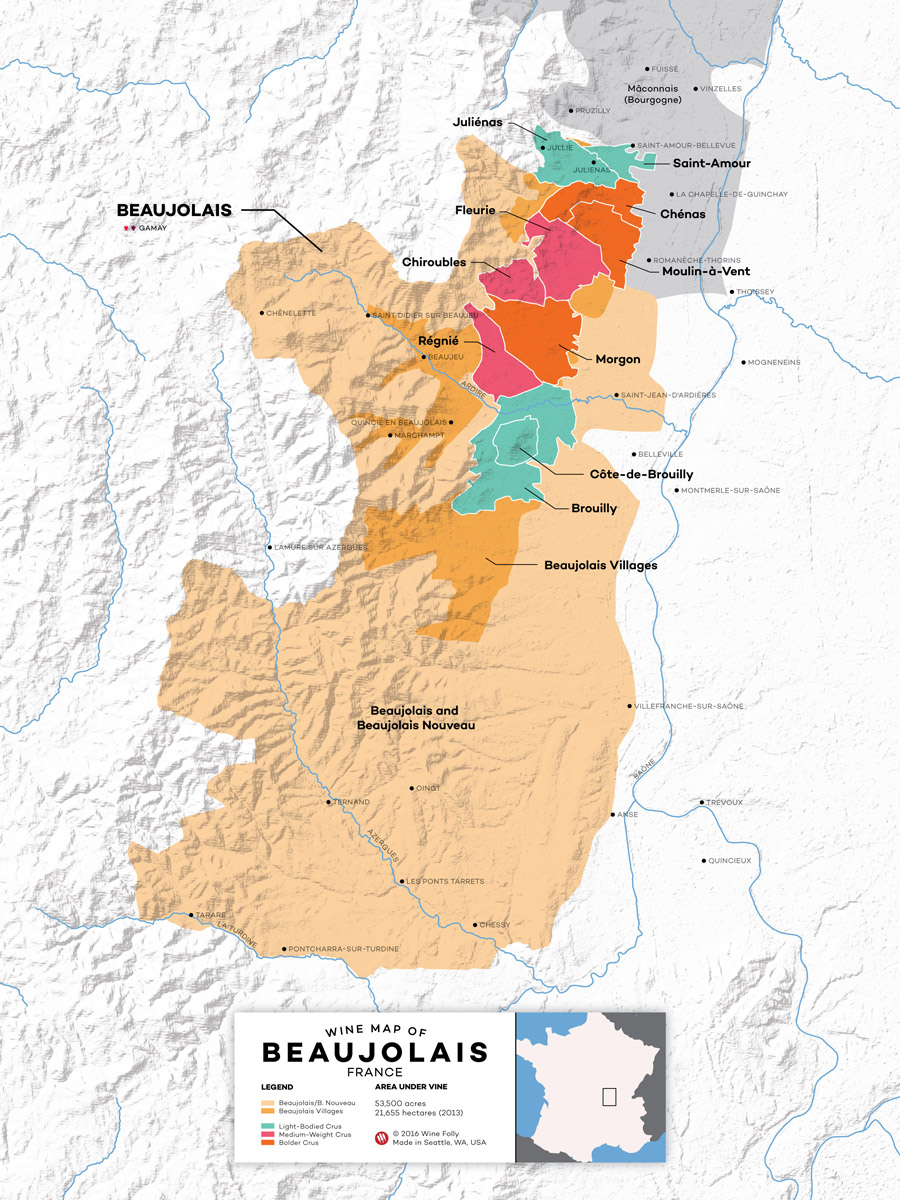
Beaujolais is the name of a little area in France just south of the Burgundy region. It is one of the few wine regions of France that has a more casual approach. Historically, Beaujolais has been considered a part of Burgundy, but today it stands alone producing high quality, signature wines. The more serious cru designations of Beaujolais drink very much like a red Burgundy (Pinot Noir). Beaujolais is arguably one of the lightest reds you will encounter.
Where is Beaujolais?
- Bordered by Burgundy to the North – the Saône River (which leads to Côtes du Rhône) to the East – the “Gastronomic Capital of France”, Lyon, to the South – and the Monts de Beaujolais (the hills of the Massif Central) on the West.
- Beaujolais is just 34 miles long and 7-9 miles wide.
- Divided into two sections by the Nizerand River, with different soils on each side.
- Beaujolais’ flavor is in the soil. There are mostly granite and schist (decomposed rock) to the North and clay-based soils (marl) to the South.
- All of the Beaujolais Cru vineyards are located on the northern side of Beaujolais.
10 Beaujolais Crus
The crème de la crème of Beaujolais!
There are 10 Crus of Beaujolais – all in the north and producing only red wines. The wine labels will simply state the name of the Cru, like Fleurie.
Each Beaujolais cru has its own distinct personality – climate, soils, altitude, aspect, and a host of other factors that are unique. These wines tend to be more complex and known to age well.
The Romans were the first to plant vineyards – to keep legionnaires happy! – followed by the Benedictine monks in the Middle Ages.
It was the Dukes of Beaujeu who made the wines fashionable. Originally, the town of Lyon was the main market for Beaujolais wine.
When the railroads were built in the 19th century, Beaujolais spread to Paris. This marked the start of its popularity.
Some of my regional favorites below, which may be partly due to their distribution and accessibility in the states.
Moulin-à-Vent
Considered “The King of Beaujolais,” this sub-region’s vineyards are grown on decomposed pink granite and soft flaky quartz giving the wines a dark ruby/garnet color, good structure and complexity. These are the most tannic and full-bodied wines of all the Cru.
When they’re young you’ll notice lots of plum, cherry and violet notes, but if you can allow the wine to age up to 10 years you’ll be rewarded with more ‘Pinot’ style – dried fruits, earthy truffles, meat and spice. Moulin-à-Vent gets its name from a local windmill.
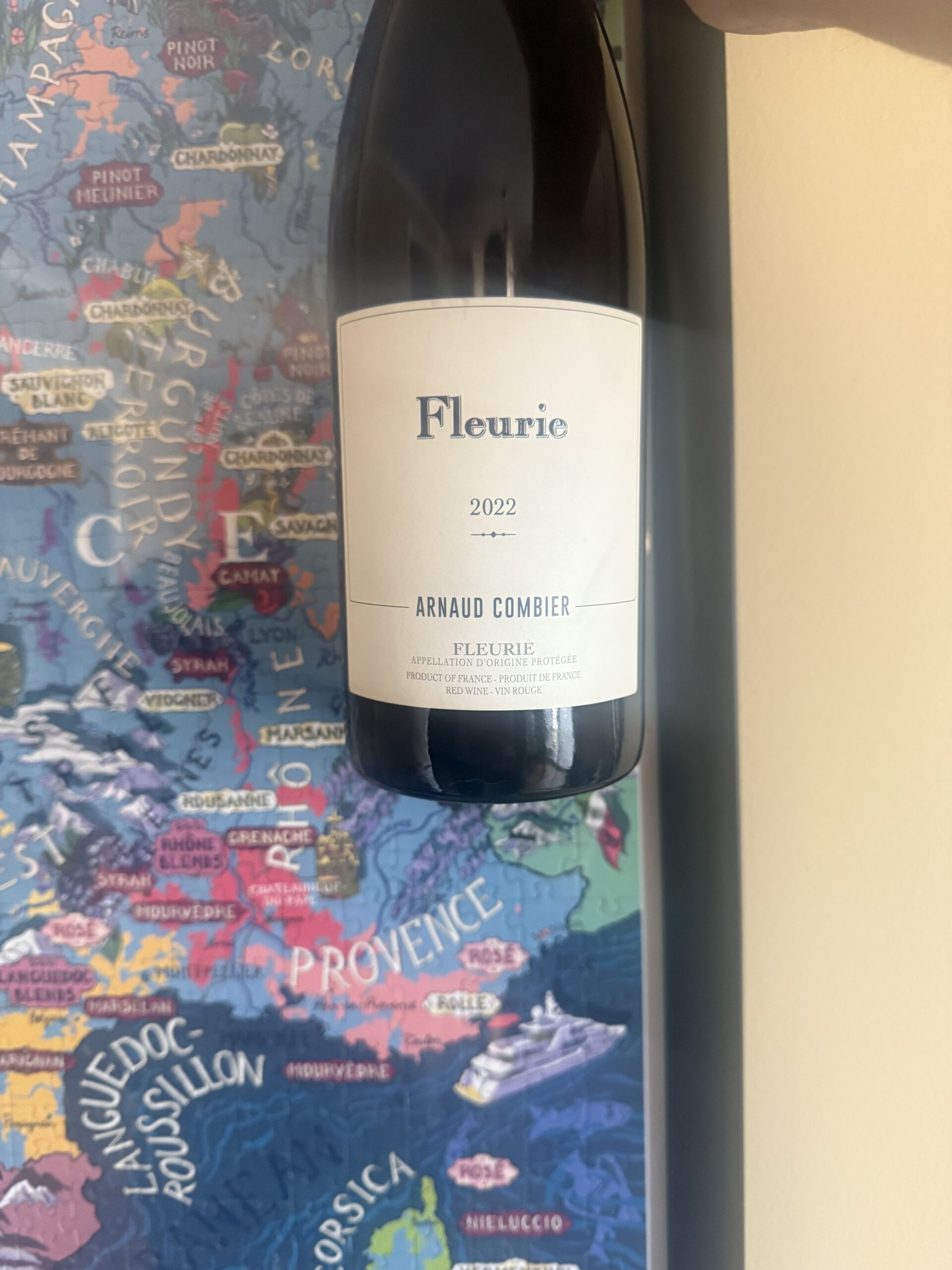
Fleurie
“The Queen of Beaujolais.” The vineyards are planted at a higher altitude on the steep slopes at the foot of La Madone.
The wines are lighter in style and highly aromatic with a ’feminine’ quality. Think roses, iris and violet along with some ripe red fruits and peach. If you’re just getting into Beaujolais, the wines of Fleurie are a great place to start. This one pictured from Angel’s Share in Clay NY is fantastic!
Morgon
The second largest of the Crus, Morgon is comprised of six climat all with slightly different styles. Their unifying feature is the decomposed “rotted rocks”. The locals believe this contributes to the ripe cherry aromas found in all the wines.
These wines are intended to age at least 5–10 years. The young, fleshy palate of peach, apricot, cherry, and plum will develop into a more earthy wine reminiscent of Burgundian Pinot Noir, similar to a Moulin above.
Why Does Beaujolais Taste Like Bananas?
One of the things that sets Beaujolais apart is a particular style of winemaking that is extremely well suited to the Gamay grape. Most of the wines of Beaujolais are produced through a method known as semi-carbonic maceration that highlights the amazing fruity aromas of the wine. You see this technique being used more often in cool climate reds around the world. Regionally, you see it done with Cabernet Franc and Pinot Noir.
The grapes are harvested and then, instead of being crushed, the whole clusters are placed in a vat or tank. The pressure of the fruit begins to crush the grapes near the bottom of the vat, expressing their juice. When the juice comes into contact with the indigenous yeast on the grape skins, the juice starts to ferment creating CO2 gas – aka carbon dioxide – which forces the oxygen out of the tank. Often, a lid is placed on the tank to help eliminate the oxygen as well.
After a short maceration period of around 4-8 days, the juice is racked off (the ‘free run”) and the remaining juice is pressed from the skins (the ‘hard press’), then the two are blended together. From this stage the juice will finish fermentation and completed as a ‘regular’ wine.
This style of fermentation is also responsible for the distinctive aromas of banana, candied fruits, pear, raspberry and cranberry in the finished wine.
(I know this is technical stuff that many of you, unless you’re a wine geek, don’t have an interest in. I bring it up to help you better understand what makes this wine different from others.)
I hope you enjoyed this little primer on Beaujolais wine and the Gamay grape. If you come across any of these wines, please share with me. As you know, I’m always on the lookout for new wines, but especially light reds. Btw, this style of red wine is very approachable, a great intro to red wine, and for those who don’t like red wine. It is also perfect to sip in the summer months and very food-friendly with its acid content and light style. Grab a bottle for Thanksgiving and let everyone try it.
Cheers,
Michael
Wow. Haven’t had a Beaujolais wine in a while time to try one thanks for the inspiration.
Sincerely, your friend
Michele