Wine Spotlight – Uncorking the Magic of the Universe

August
5
2026

During my short time away from social media (may not return) and blogging, I decided to enroll in an astrology and astro-psychology certification program from a renowned astrology school in Washington State called Kepler College. I’ve always had interest in the cosmos and in finding the meaning behind ourselves and our life. In combination with my studies and work in counseling psychology and the desire to better understanding relationships at every level, I finally came to this point in my life where I want to dive deeper.

On a side note – I will continue this blog because I enjoy writing about things that interest me and educating consumers about all things beverages, but unsure about the future of the business side. The lack of business and engagement has been extremely frustrating and has affected my mental health. Hence, I’ve removed myself from instagram.

I’m sure you’re wondering what this has to do this wine, mocktails, cocktails, and beverages, in general? I realize you didn’t sign up for a blog about the metaphysical, but this sets the stage for the discussion below. Plus, if you’re like me, you like to learn more about the author and their life perspective. Bear with me for a bit!

Hopefully some of this content interests you and maybe will lead to you exploring the topic further. I think it is fascinating stuff! Don’t worry – for the purpose of this blog, I will not go into great detail about the signs but will demonstrate their relationship to wine and why we choose a certain grape/bottle over another during specific life events.

What can astrology say to us?

Sometimes people confuse astrology with astronomy. Astrology deals with ‘meaning’ whereas astronomy deals with measurement. Traditional astrology focuses more on planets than signs. It is much more than just reading your daily horoscope.

What periods of time may be more stressful than others and when you need to be more careful? It can even give you the idea of the areas of life that will be most affected.

Where may you and another person have difficulties getting along? When is it a good time to marry, start a business, or sell your home? When you or someone you love encounters health issues?

Astrology CANNOT

Tell you the winning lottery numbers. Tell you whether or not you will land that promotion. Predict when your rich uncle will pass away and leave you his inheritance. Tell you whether or not someone is trustworthy. Let you know if you will catch a cold before your next vacation or something unexpected will happen.

BEST OF ALL –

Astrology can help you better understand yourself and how you interact in the world. It can help you navigate the ups and downs as you fulfill your potential. In Maslow’s hierarchy of needs, it is called self-actualization. Wouldn’t we all like to achieve that goal?

Now that we have explored the basic tenets of astrology, we can move on to its application in the world of wine. I recently became familiar with a cool wine company out of New York City who is doing some very unique things with wine based on astrological principles. Some of the players involved in its mission are certified astrologers.
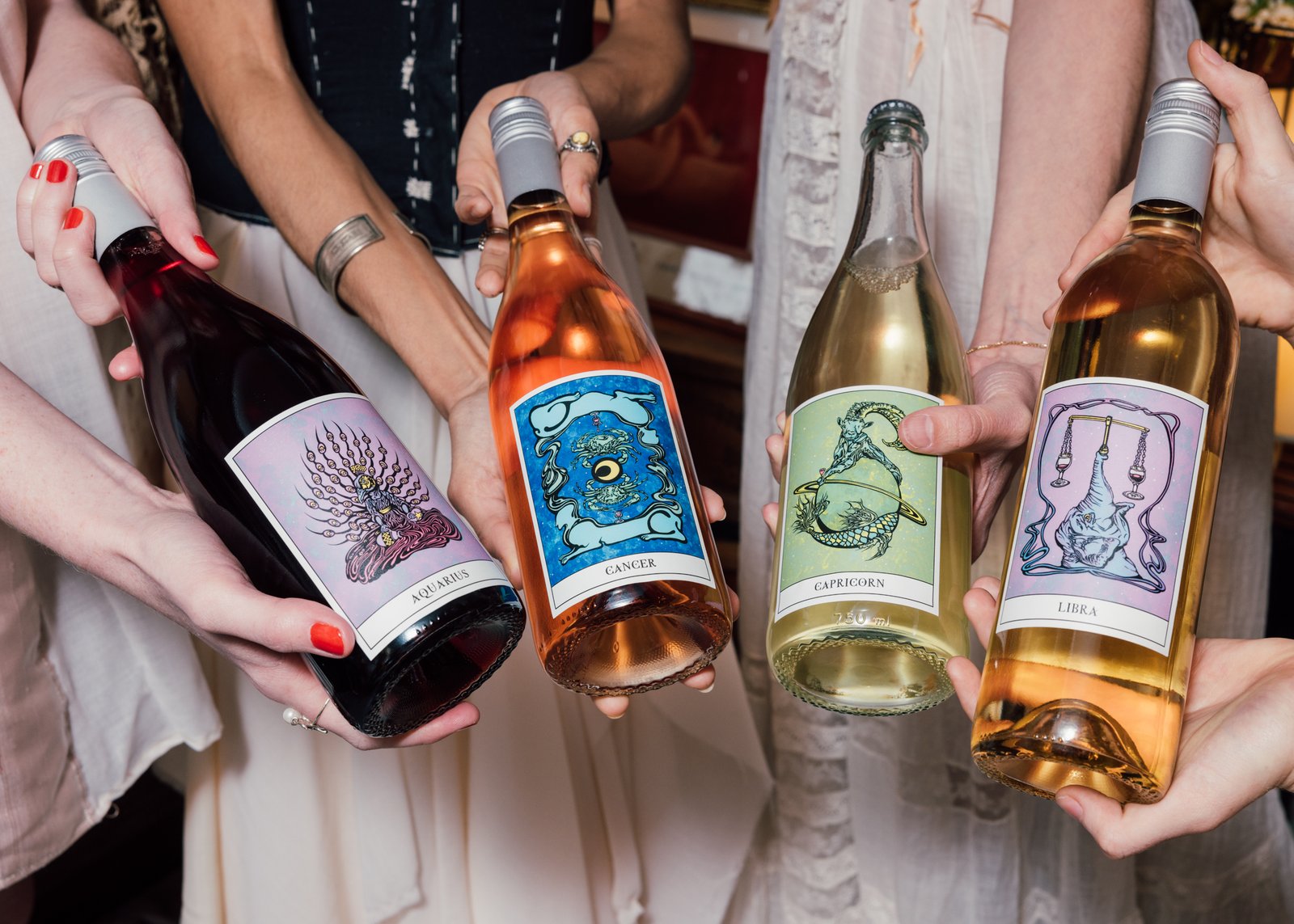
Have you heard about “Sun Moon Rising Wine”?

Sun Moon Rising, the world’s first astrology-inspired wine brand, launched in 2024 unveiling its founding collection online. Created by certified sommelier and New Yorker, Kate Webb, the brand offers 12 distinct wines sustainably sourced, handcrafted, and purposefully curated to embody the unique characteristics of its corresponding Zodiac sign. Sun Moon Rising aims to reimagine the way consumers experience wine, expertly fusing the arts of astrology and winemaking to elevate every occasion.

What’s awesome is that Sun Moon Rising sources its wines from award-winning, sustainable vineyards across New York State and emerging wine regions is deeply committed to promoting the region’s emergence as a premier destination for wine lovers. Proudly female-owned, low-intervention, and certified sustainable, Sun Moon Rising is on a mission to redefine the way consumers engage with wine, delivering a cosmic connection in every glass. The wine is available at Sun Moon Rising Wine and select shops in NYC.

Webb’s passion for creating unique wine experiences began in New York City’s top Michelin-starred restaurants, where she honed her craft as a Wine & Spirit Education Trust (WSET) Certified Sommelier. When the COVID-19 pandemic struck, it sparked her entrepreneurial spirit. “This led me to the surprising realization that no wine brand catered specifically to the 12 Zodiac signs,” stated Webb. “We created Sun Moon Rising to offer people a new way to personally connect with wine, intentionally pairing astrology and winemaking to foster community, curate connections, and elevate celebrations.”

Sun Moon Rising upholds organic practices, labor ethics, and small-batch production. In collaboration with New York’s Heron Hill Winery, the brand ensures these values are integral to its winemaking process. This dedication not only elevates the wines but also champions New York State as a premier destination for discerning wine enthusiasts, where every sip reflects our planet-friendly approach and the region’s rich winemaking heritage.

The company’s certified stargazers are expert astrologers dedicated to authentically represent the astrological community. Their insightful expertise guides us on our mission to provide accurate and meaningful astrology insights in all that we do.

They and I like to say “A Wine for Every Sign”. The meaning behind the company name – Sun – Your Core Self, Moon – Your Emotional Self, Rising – Your Outward Self, taken directly from astrology.

I will not discuss their entire portfolio and all the astrological signs but will highlight the astrological season we are currently in Leo, which runs till August 22 and is my mother’s sign and my sign, Gemini, which is from May 21-June 20. A little more about Leo and Gemini below. Are any of you a Leo ♌️ or Gemini ♊️

Gemini is the sign associated with communication, logical thought processes (based on duality) and the conscious mind. Gemini people tend to be airy and intellectual, glib of tongue and curious about life and other people. They can experience two sides of things at the same time, and may tend to be flighty. Gemini’s element is Air and ruled by the planet Mercury.

Geminis move through life like butterflies, engaging in many varied experiences to gain knowledge. They are witty and have a good sense of humor, and are likely to be excellent conversationalists. Geminis make good teachers. They can be nervous and high-strung, and may be mischievous. Unlike possessive Taurus, they tend toward liberty in relationship. And although Geminis can be easily bored, under the control of self-discipline they have tremendous intellectual and artistic possibilities.

Most Compatible – Libra, Aquarius, Aries, Leo

Least CompatiblePisces, Virgo, Capricorn, Scorpio

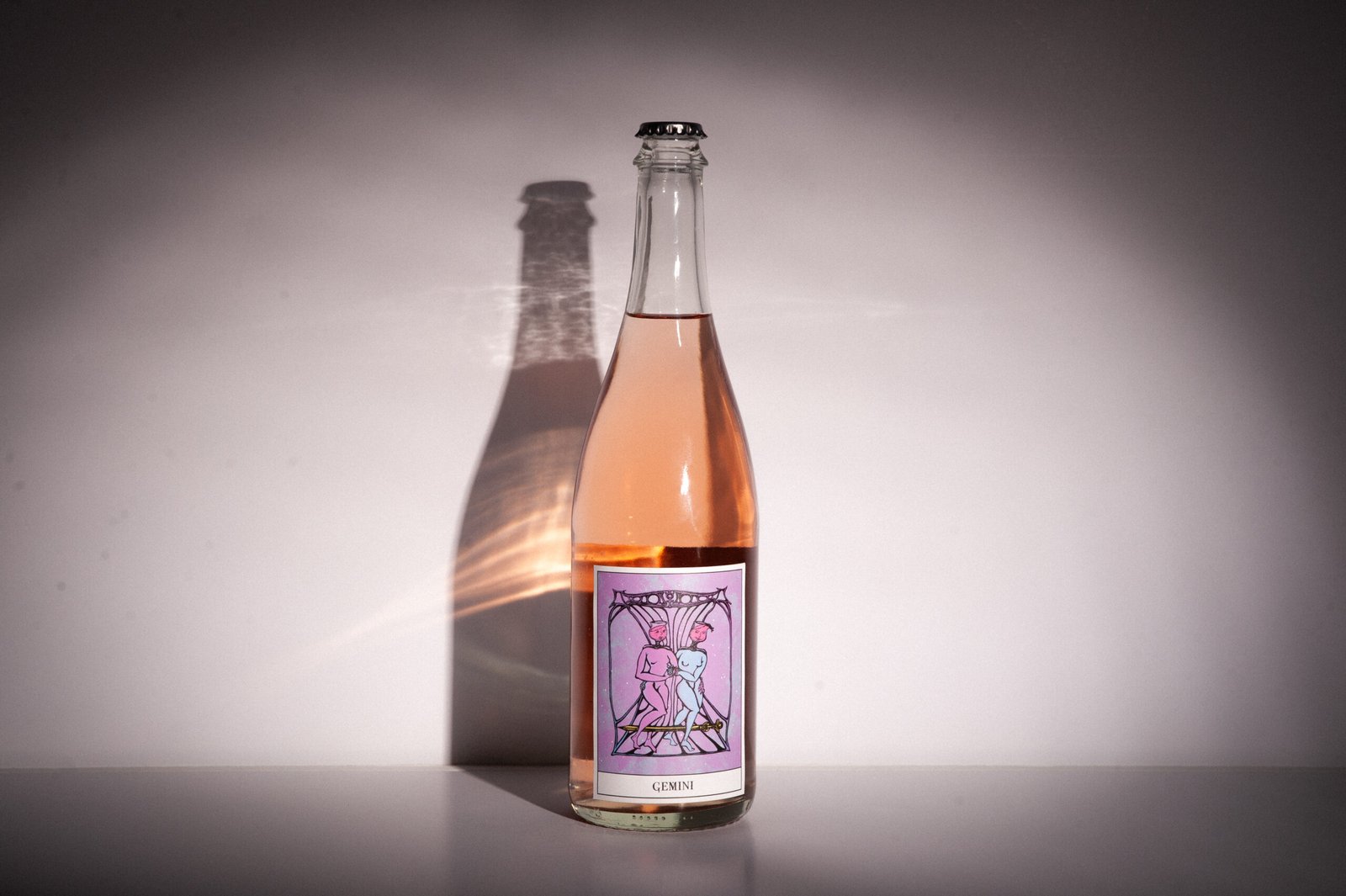
Gemini Bubbly Rosé

Bubbly, dynamic and quick-witted, Geminis are voracious learners and experts on a wide variety of subjects. Linguistically gifted, they are natural leaders and storytellers. As a mutable sign that thrives in social settings, they find ways to relate to everyone they meet with their easygoing and humorous nature.

This summer sign is matched by the Bubbly Rosé’s bright acidity and refreshing taste. With notes of strawberry and watermelon, the crisp bubbles complement this Air sign’s talkative and outgoing character. Astute, clever and curious, the depth of Gemini cannot be overstated. It is lively, smooth, crisp, playful, and refreshing with bright acidity and notes of strawberry and watermelon. Made from the Blaufränkisch aka Lemberger in the Finger Lakes, New York.

Leos are likely to express themselves in dramatic, creative and assertive ways. They are also likely to enjoy the warmth of the physical Sun. Leos have great energy, courage and honesty. They are likely to be self-confident and maybe even a bit self-indulgent as they expect to be the center of attention and often are. Leos can be quite determined and usually get their way when they really want to. They also possess great integrity and are a natural leader.

Leo people are very proud. Their challenge is to temper any tendency for arrogant or egotistical behavior and to instead develop humility and compassion; to learn detachment in the gift of their affections, so that they radiate their abundant energy freely and enhance the life experience of others around them. Leo’s element is Fire and ruled by the Sun (luminary planet).

Most Compatible Aries, Sagittarius, Gemini, Libra

Least CompatibleTaurus, Scorpio, Pisces, Capricorn

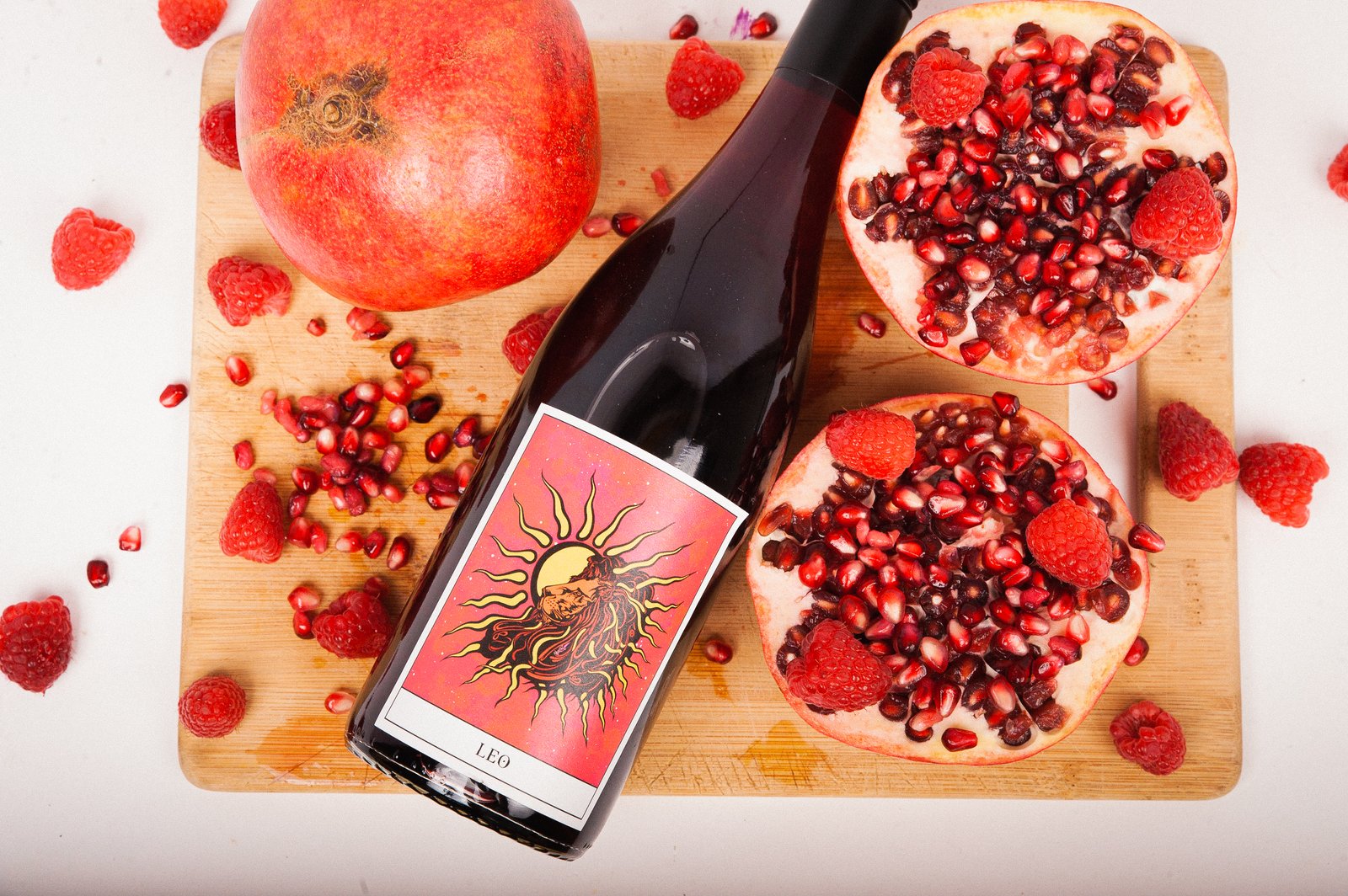
Leo Bubbly Red

Social, passionate and restless, Leos are constantly on the move. Those born under this Fire sign are experts at bringing people together and discovering new interests. As a summer sign, they thrive in the warmth of the sun and have an imaginative flair that gives them an irresistible creative edge.

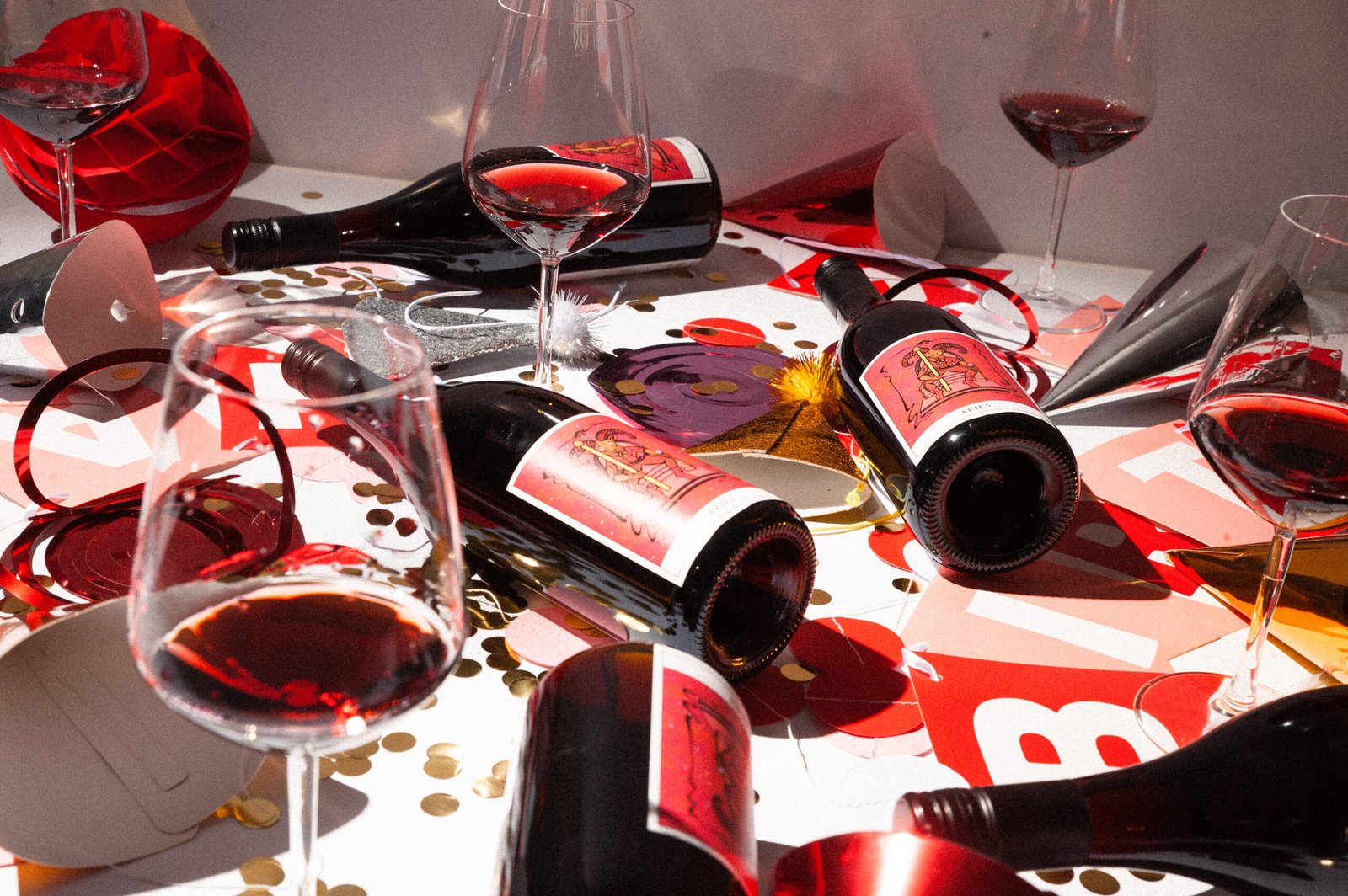
This Bubbly Red wine is vibrant, fruity, aromatic and slightly off dry with notes of pomegranate, red currant and raspberry. The unique blend of red wine and effervescence reflects Leo’s boldness and pride and complements their quirky and outgoing nature. Both this wine and this sign are eclectic in taste and bring a fresh perspective. This blend is made from 60% Marquette and 40% Marechal Foch in the Finger Lakes, New York.
I hope you enjoyed this content. See you back soon! Please share with your friends and colleagues and please let me know if this was of interest to you and if you have any comments or questions. What’s your sign? Ruling planet?

Cheers,

Michael Nagy

michael@michaelpour.com
Terroir Talk by Michael: First Vintage & First Release

Pinot Noir vineyard sign
March
27
2026

March 27, 2026

Welcome to the first edition of “Terroir Talk”. This will be a weekly wine series on everything ‘wine’ that will be guided by you, the audience. In case you’re not familiar with the term ‘terroir”, what it means or how to pronounce it, here is a brief explanation –

Terroir (pronounced tear-whah) is a French term with no direct English equivalent. It basically refers to a “sense of place”. It is the combination of environmental factors, like soil, climate, weather and topography/geography that give agricultural products, especially wine, a unique, non-replicable character linked to their specific origin.

Since all wine comes from the earth via grapes, it is an appropriate name for the beginning of this wine series. No ‘terroir’ in the world is exactly the same, therefore, no wine is exactly the same when you factor in ‘terroir’.

How it works? Users and subscribers will submit their wine questions on the comments sections here, from the “Terroir Talk” group chat on Instagram, Instagram posts, direct email, or text. Every week, Michael will review the questions and list them on this page and provide answers directly below with mention of the person posing the question. If you desire anonymity and privacy, I will not mention your name.

As mentioned above, the purpose of this forum is to engage wine lovers, provide consumer education, and tailor the content to you, my followers and audience. I hope to receive at least 2-3 questions per week. In the case of more submissions, I will table them for the next edition.

Many of my followers are local to Central NY and NYS where I reside so many of the questions will have a local and state flavor. However, that doesn’t preclude a discussion on grapes, wines, and regions spanning the globe. You will find that many wine enthusiasts are curious about the differences from one region to another.

I hope this weekly wine column will be useful and a great resource for your wine studies, wine knowledge, wine curiosity, and confidence in buying and ordering wine. I encourage all wine and interest levels to sign up by email for the free newsletter on the homepage, so you don’t miss a drop. Please share with others so we can make this page a huge success. If so, maybe a podcast is in our future.

Shannon from PA asks, “How to describe wine”?

Because this is a loaded question, I will write up a separate blog post to answer it thoroughly. The system that wine schools use can differ. I am classically trained in the WSET method of tasting wine with a focus on appearance, clarity, nose, palate, and assessment of quality.

With appearance, you look at intensity, color, and how it appears. With nose, you note the intensity, aroma traits, and development of wine. With palate, you describe the sweetness, acidity, tannin, alcohol, body, texture, flavor intensity, flavor traits, and finish. With the final assessment, you describe the quality (faulty, poor, acceptable, good, very good, outstanding) and readiness for drinking and potential for aging.

Wine professionals will use this method or other methods, which vary a little, when reviewing and rating wines. They will use a systematic approach by jotting down notes that cover all or most of these points listed above. Stay tuned for a more in-depth look at describing wine. Thank you Shannon!

Allison from Long Island, NY asks, “I know of wine from the Finger Lakes and Long Island, NY, but where else in NY produces wine”?

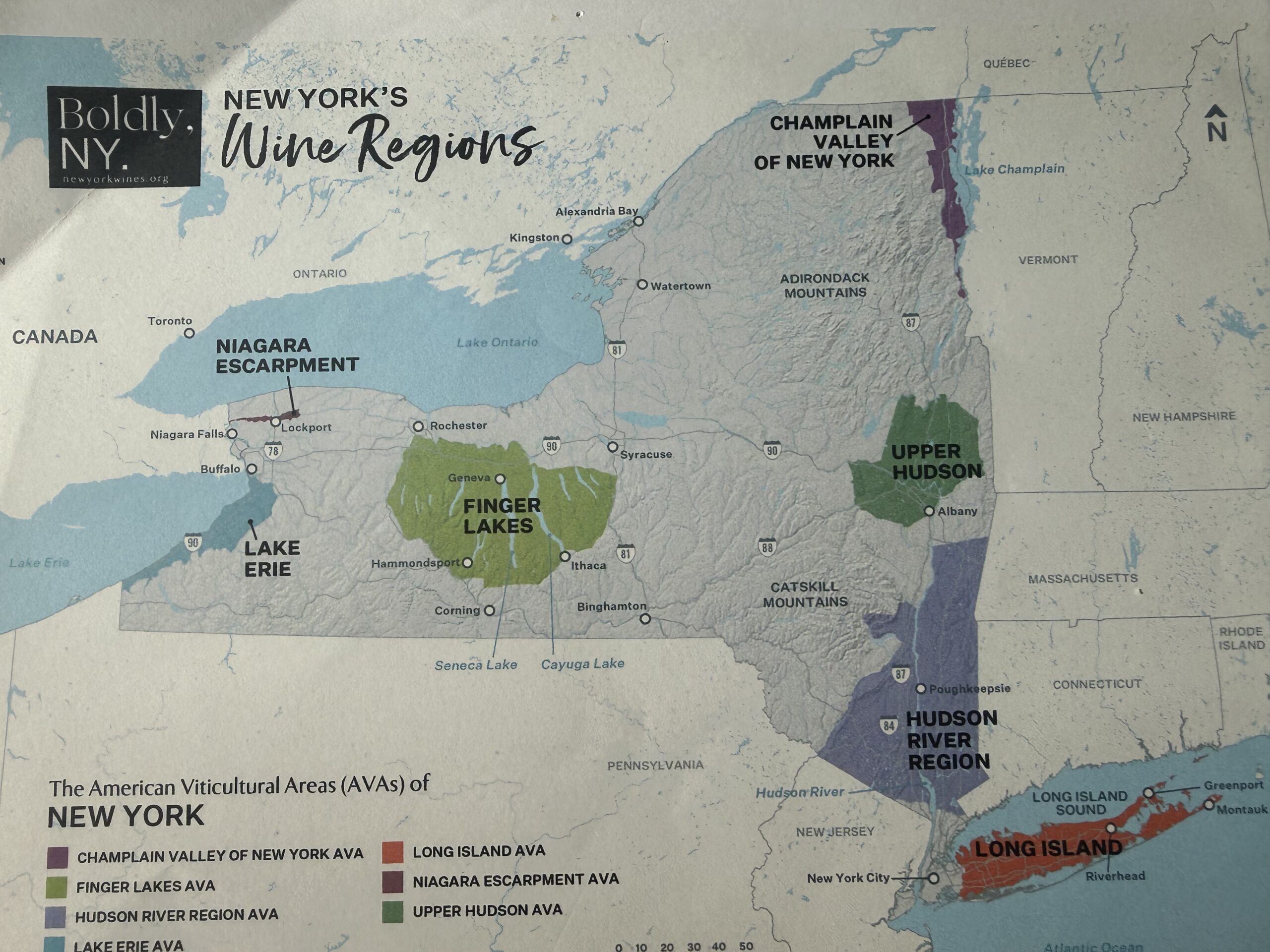
I answered this briefly on the instagram group chat last night but will answer it in more detail here. New York’s Wine Regions (7) span from the Niagara Escarpment in the northwest corner of NY on the Canada border, Lake Erie in the southwest corner of NY along Lake Erie, Finger Lakes in the middle of the state.

There are 11 official lakes in the pattern of fingers running north to south. The 3 main grape growing lakes (Keuka, Seneca, and Cayuga) in the center of the region. Keuka Lake is the only lake that breaks off into two fingers.

Champlain Valley of NY is located in the northeast corner of the state bordering Vermont and Canada. It is a lesser-known wine region. Upper Hudson and Hudson River Region are in the Hudson Valley in the Catskill Mountains along the eastern side of the state. Lastly, Long Island is an island in the Atlantic Ocean off the coast of New York City. Thank you Allison!

Next time, we will delve into this question.

Alexandra and Rebekah from Central NY and group chat both ask, “Explain the difference between Finger Lakes Rieslings and Old-World Rieslings“?

Here is the direct link to our new and rapidly growing wino group chat on IG – https://ig.me/j/AbZTQkzqM-4x1fDc/

If you have any questions or wish to submit your wine questions, you can email me at michael@michaelpour.com or DM on instagram. If on instagram, but don’t follow me yet, please do and let’s have some fun.
Cheers & Sante,

Michael Nagy

Wine Spotlight: What happened to Pinot Grigio?

March
3
2026

If you consider yourself a novice wine drinker or sip your customary glass of wine at a wedding, gala, or a home party, you probably tried that once popular Italian white wine called Pinot Grigio.

At one time, it was almost always on the wine menu because it was a huge crowd pleaser. Easy going, uncomplicated, not complex, and cheap. Pinot Grigio is a light-bodied wine that gets along with most everyone. Yes, it’s an entry level white wine, but is it still popular?

If you’re well studied in wine, you know of it, but is it a wine you would recommend? If you ask wine professionals, they most likely would say ‘no’ and not suggest it or recommend it for most wine drinking occasions or as an excellent food pairing. Often perceived by consumers and sommeliers as a safe, uninteresting, and safe restaurant choice rather than a nuanced wine experience.

Pinot Grigio’s decline in popularity stems from a reputation for being flavorless, watery, and mass-produced, leading consumers to seek more flavorful, aromatic, or trendy alternatives, like Sauvignon Blanc, Chenin Blanc, and dry Rosé.

They have shifted to more vibrant, aromatic, or flavorful white wines such as Sauvignon Blanc or Riesling. In fact, Rosé has largely overtaken Pinot Grigio as the preferred, fashionable, casual summer, easy-drinking wine over the last decade or two.

The Pinot Grigio market has also become saturated with low-quality, generic, overproduced, and often overly acidic or manipulated, cheaper options. Leaner versions of Pinot Grigio are more refreshing, generally more popular, and will cost over the standard $15 price tag. Look for over $20 at least. And if you avoid mass-marketed brands in favor of smaller, quality wine producers, you would be in for a light and refreshing experience.

However, high-quality, authentic Pinot Grigio filled with personality still exists, particularly from regions like Italy’s Alto Adige and Friuli in the northeast. The Friuli region offers the best in the world with nice aromatics and hint of bitter almond, a signature trait of PG. I will discuss other regions producing Pinot Grigio later in the article along with its counterpart “Pinot Gris”, with same name, but quite different for comparative analysis.

Italian Wine Regions & Styles

In Alto Adige, Pinot Grigio is all about ripe stone fruits (peach and apricot), notes of ginger, floral aromas, and refreshing acidity. Alto Adige produces some world-class, cellar-worthy (very unusual for this grape) Pinot Grigio, and is one of the most beautiful wine regions.

sun goddess pinot grigio

In Friuli-Venezia Giulia (short version Friuli), it is known for its textured Pinot Grigio and the unique ‘Ramato’ style (skin contact wines), Friuli’s wines also feature ripe stone fruits, floral hints, but with a subtle spice. The refreshing acidity is still present but encased in a fuller body.

If you want to learn more about ramato-style wines, please let me know. They are fascinating! For purposes of length, I didn’t include here. I had a wonderful Ramato last summer pictured above.

Wine Production

Pinot Grigio is harvested early and gets bottled and distributed within three months of fermentation. It is wine meant to be drunk as soon as possible. These wines possess entrancing aromatic qualities, zippy acidity, and fruit flavors that diminishes over time.

Enjoy it now and don’t let it sit around on your rack or in your cellar. A general rule for this wine is to drink it within one to two years of the vintage date, similar to Rose. There are rare occasions that allow PG to last longer, especially it’s oaked and has exceptional balance.

Food Pairing

The light, crisp flavor of Pinot Grigio makes it great for a lot more than just casual sipping. This dry white wine is ideal for cooking lighter dishes by adding brightness and acidity to the mix. It is known to pair well with fatty fish, like trout, tuna, and salmon helping to balance out the taste and texture of the main ingredient. 

Pinot Grigio is a perfect wine choice for summer sipping because of its lightness, tartness and acidity due to being grown in cool climate regions, like those in northern Italy. The lower temperatures help slow down the ripening process causing less sugar developing in the grapes.

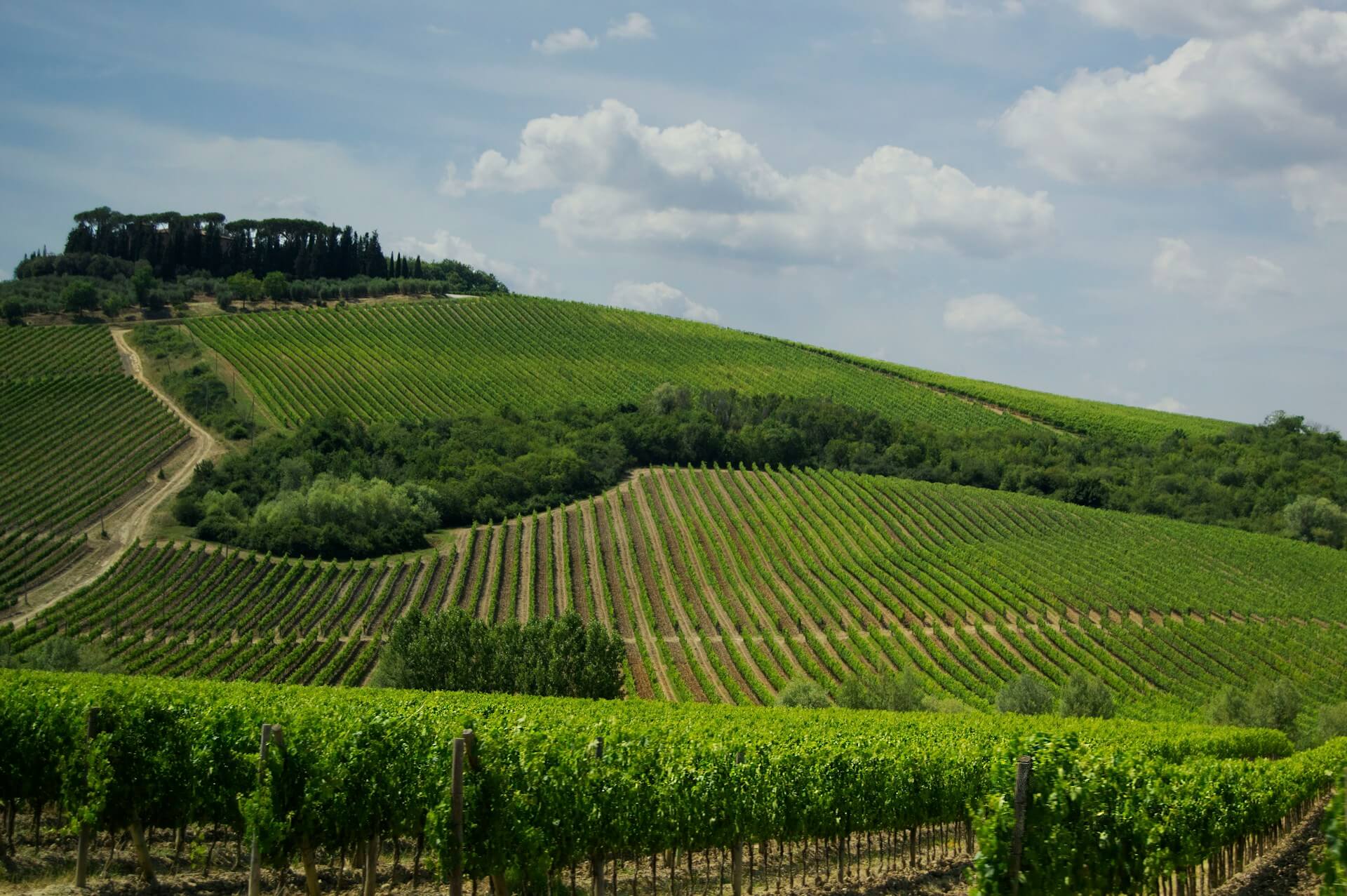
Additionally, as mentioned earlier, the grapes are harvested early on in their ripeness, and then stored and fermented in stainless steel tanks retaining crispness. All of this helps give Pinot Grigio a fresh, highly acidic and sometimes citrus quality, that is preferable than its fuller and deeper competition with summer and light cuisine. Planted Pinot Grigio vines at a vineyard in Friuli Region of Italy.

Pinot Gris vs. Pinot Grigio

Pinot Gris (aka Pinot Grigio) is a pinkish grape mutation of Pinot Noir. ‘Gris’ is the French word for gray and ‘grigio’ is the Italian word for gray.

The same grape is used to produce Pinot Gris in France (mostly in the Alsace region) and Pinot Grigio in Italy. However, the two wines have different styles and with their own unique traits. Pinot Grigio tends to be crisper and lighter-bodied with strong fruit and floral notes.

Pinot Gris is more full-bodied than its Italian counterpart, with a deeper, richer flavor, and even spicy notes depending on the winemaking style. Additionally, Pinot Grigio is typically drier than Pinot Gris. Despite its French origin, the largest producer of Pinot Gris is actually Italy.

Pinot Gris has a touch of honey on the palate from naturally occurring botrytis/noble rot (fungus) common in the Alsace region. The botrytis concentrates sugars and flavors, which can lead to creating excellent dessert wines. Pinot Gris is also used for sweet, orange, rosé wine in northern Italy, Alsace, Oregon, and Germany.

Italian Pinot Grigio tends to be easy drinking compared to French Pinot Gris and others. The misnomer out there is that Pinot Grigio and Pinot Gris are the same wine. They cite the only difference being that one comes from Italy and the other comes from France. Pinot Grigio and Pinot Gris do have similarities because they are produced from the same grape, but stylistically they are not.

The grape is usually referred to as Pinot Gris because it was first developed in France’s Burgundy region. However, once the grape made its way to Italy, it was used to develop what we know as Pinot Grigio. The difference, therefore, lies more in how the grapes are grown, vinified, and managed and how these two different countries produce noticeably different wines.

Pinot Gris

Considered to be the homeland of Pinot Gris, Alsace showcases a rich, full-bodied style with ripe orchard and tropical fruit flavors and minerality. It often possesses a delicate smokiness and spice, especially in aged versions, adding depth to the vibrant fruit character. Look for “Grand Cru” on the label for the best wines.

American versions often have more exaggerated fruit flavors and less acidity than their European counterparts. Primarily grown in the cool-climate Willamette Valley in Oregon, it presents a balanced profile of fresh citrus and ripe orchard fruit flavors.

The wines are typically medium to full-bodied, with a refreshing acidity and often a hint of mineral or spice. Its versatility and expressive character reflect the region’s diverse microclimates and innovative winemaking techniques.

Food Pairing

The versatile Pinot Gris pairs well with many dishes. Lighter, zesty styles are phenomenal with seafood, salads, and mild cheeses, while full-bodied or orange versions complement rich meats like roasted chicken or pork. Sweet and late-harvest expressions perfectly match fruity desserts or even on their own. Pinot Gris rosé is an excellent appetizer wine and pairs nicely with light pasta, charcuterie, or salty snacks.

Its diverse range matches the broad variety of world cuisine. Pinot Gris and Pinot Grigio alike are perfect wines to cut through salty cheese like feta or goat cheese, nuts, and any other snacks you’ve prepared for your summer picnics.

Here are the major growing regions and style of Pinot Grigio/Pinot Gris –

Alsace, France (rich version, Pinot Gris)

Veneto, Italy (crisp, neutral flavor, cheaper/mass produced, great for weddings and large format)

Friuli, Italy (crisp, more aromatic, some of the best Grigio on the planet)

Alto-Adige, Italy (crisp, more aromatic, second to Friuli for Grigio)

Willamette Valley, Oregon (fuller version, citrusy/minerally, both)

Look for these producers –

Cantina Tramin (Alto Adige, Italy)

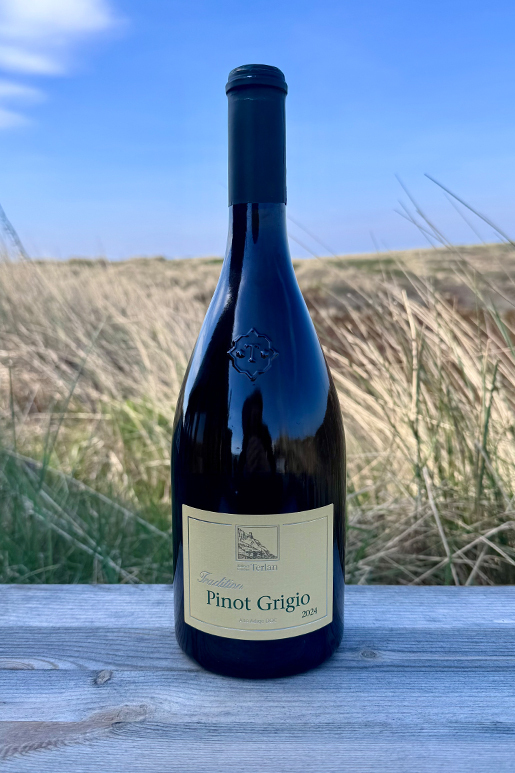
Cantina Terlano (Alto Adige, Italy) – pictured

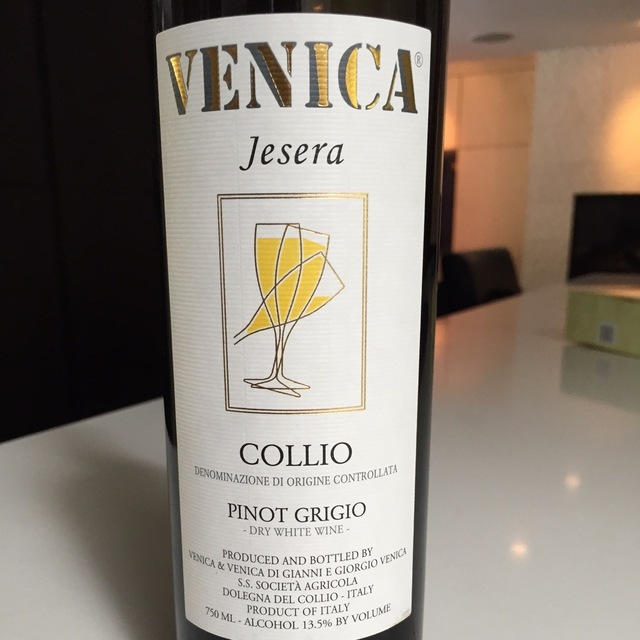
Venica & Venica (Friuli, Italy) – pictured

Neumeister (Styria, Austria)

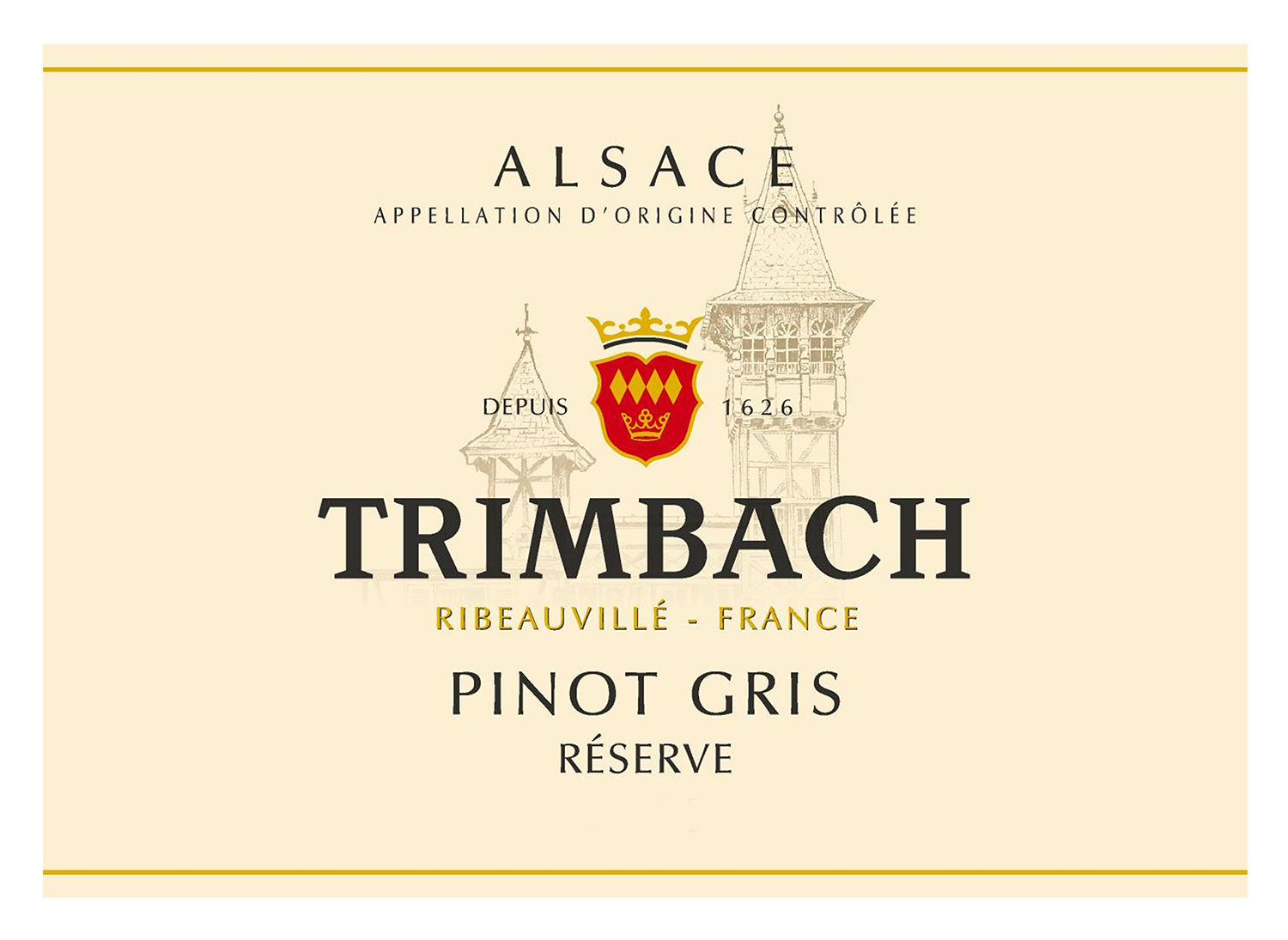
Trimbach (Alsace) – pictured

Zind-Humbrecht (Alsace)


Cheers,

Michael

michael@michaelpour.com
Wine & The Moon: The Lunar Influence

February
24
2026

I’ve always had an interest in astrology, oracle, alchemy, and the occult sciences. Recently I’ve been fascinated with how it applies to wine and wine tasting. Let’s take a closer look! As one subscriber stated, “This is so interesting, Michael! None of this ever occurred to me, so I find it quite enlightening.”~ Trie

Do you remember all the hype about the Blood Moon during the lunar eclipse? Maybe not, unless you typically follow this kind of stuff. It made me think about the moon and the universe’s impact on wine drinking. You don’t have to be a ‘wine witch‘ to be interested in it. Do you enjoy reading your daily horoscope and believe in what the universe is telling you?

The moon actually plays a crucial role in viticulture, influencing key vineyard activities such as pruning and harvest, as well as (for many) the best times for wine tasting. If you believe that wine is a living organism, then it’s reasonable to think that it is affected by the moon just as much as other living things.

The focus on the moon and how it affects life on earth goes as far back as 1st century Roman naturalist, Pliny the Elder, who said the moon “replenishes the earth; when she approaches it, she fills all bodies, while, when she recedes, she empties them.”

The lunar calendar has been used for centuries by farmers to determine when to plant and harvest. Other professions, like gardeners, religious leaders, and fishermen use it in their work. The Old Farmer’s Almanac uses the same lunar calendar to recommend planting schedules. Professional astrologers use lunar cycles for scheduling major life events, such as weddings, funerals, opening businesses, etc…

Rudolf Steiner, who created the biodynamic farming system in the 1920s, saw vines linked to the four elements – earth, air, water, and fire. Each element is favored when the moon passes into the constellations associated with it, thereby determining when a wine tastes best.

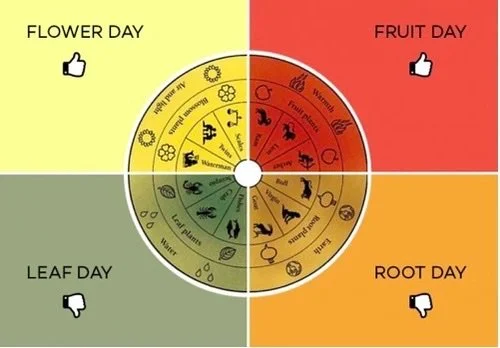
This concept was later expanded upon by Maria Thun in the 1960s. She developed a calendar indicating the best days for tasting wine—a theory further refined by her son, who authored When Wine Tastes Best, which is now an app. Check it out!

The principle suggests that not only do plants respond to the positions of the moon, sun, and planets, but that we can enhance various aspects of winemaking by considering these celestial alignments. Many of the best winemakers in the world swear by it. For example:

Fire constellations direct energy towards fruit-bearing, making them prime harvesting days.

Earth constellations focus a plant’s energy on its roots, making these ideal days for pruning.

The lunar calendar also suggests that wine can taste different depending on the day you drink it. Here are the basics. What is your sign and element?

Fruit Days: Wines are at their most expressive, showcasing a full range of aromas and flavors. These are the best days for wine tastings or enjoying a special bottle. Fruit days are when the moon is in any of the Fire Signs, such as Aries, Leo, and Sagittarius. Fruit days are the most optimal wine tasting days.

Flower Days: Wines highlight their delicate floral notes, making these days ideal for appreciating aromatic white wines and elegant reds. Flower days are when the moon is in any of the Air Signs, like Gemini (moi), Libra, and Aquarius. Flower days are recommended for enjoying aromatic wines, such as Viognier or Torrontes.

Leaf Days: Wines may exhibit more vegetal and herbaceous qualities, which can be intriguing but might not be ideal for your finest bottles. Leaf days are when the moon is in any of the Water Signs, such as Cancer, Scorpio, and Pisces. Leaf days are days when the plant is focused on producing chlorophyll, and are generally not recommended for enjoying wine.

Root Days: Wines often taste more subdued, with heightened tannins and earthy notes. Generally considered the least favourable for tasting. Root days are when the moon is in any of the Earth Signs, such as Capricorn, Taurus, and Virgo. If you follow the lunar calendar for wine tasting, root days are not good days to enjoy wine.

Node Days: Occurring when the moon crosses the Earth’s orbit, these are typically days when wines are more ‘closed’ and less expressive.

Does the moon really affect how good a bottled wine tastes? Is this wine tasting trick the reason why the same bottle sometimes doesn’t taste as good the next time you open it?

Some days you may taste a wine that you know well, and nothing really impacts you, while other days, one wine is better than the next. Instead of blaming it on the wine, think about it from a human perspective. We humans are susceptible to full moons, high pressure, and so on. Do the wines change based on the planets, moon, or alignment of the stars? Or is it that our perceptions may change?


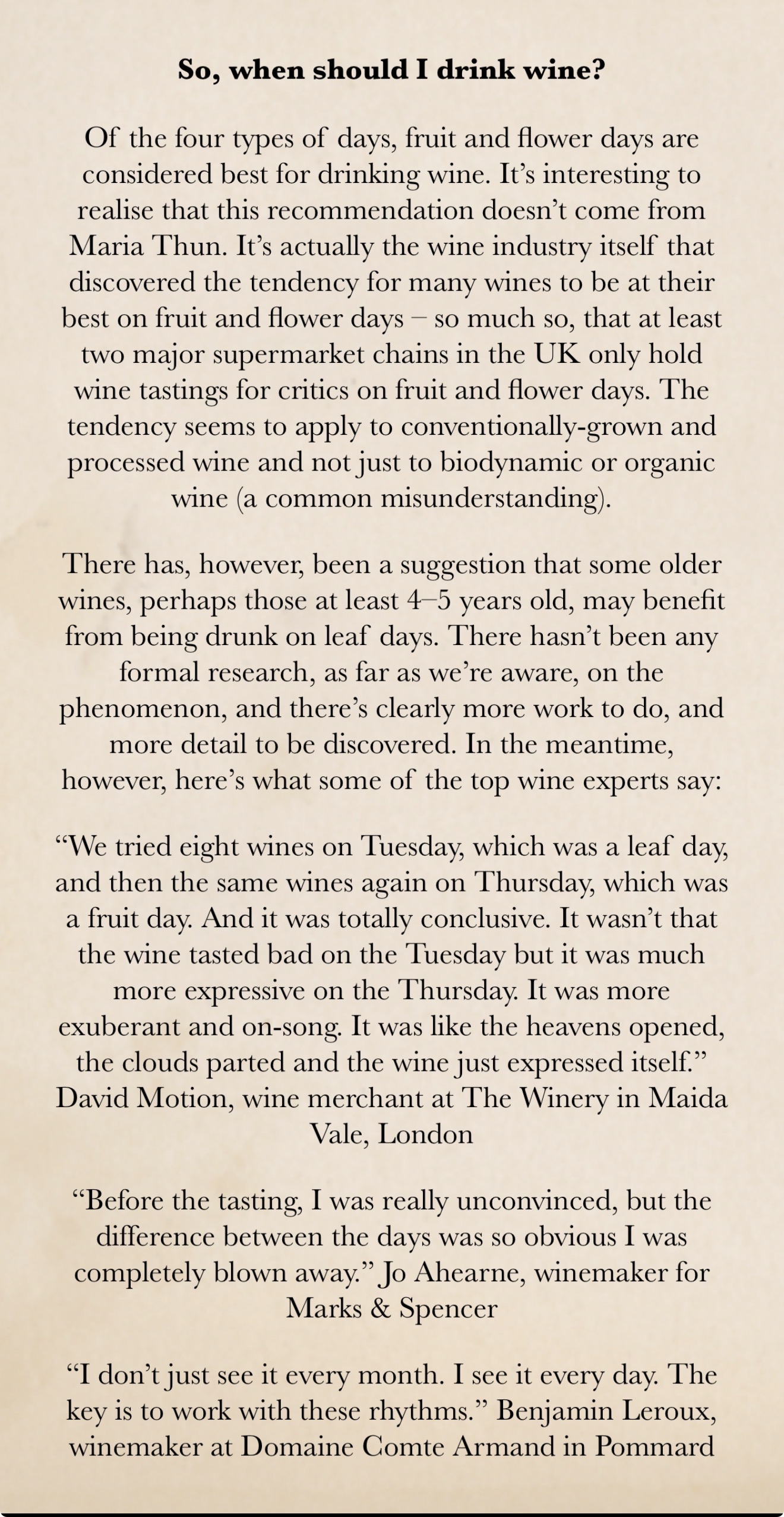
Above is an excerpt from the app. For some beyond-logical reason, red wine seems to taste better on a “fruit day.” White aromatic wines really seem to sing on a “flower day.” So maybe if you’re anxious to pop open that vintage Bordeaux you’ve been waiting to open for years, you should consult the free When Wine Tastes Best app on your phone.

Is Today a Flower Day? Here is the link to the Lunar Calendar for all things – Lunar calendar for today – live in the rhythm of nature

Share your astrological sign and element under comments here or on social media. It will be fun! Just a reminder, if you signed up for the free newsletter, you would have automatically received this story when published.

Cheers,

Michael (Gemini & Air)

michael@michaelpour.com
(cover photo courtesy of Scott Harvey Wines)

An Unexpected Wine Adventure in NY’s Hudson River Region

February
9
2026

Last week, The Michael Pour traveled to the Hudson River Region in southeastern NY just north of NYC and west of Connecticut. The purpose of my travel was to simply get on the road and venture somewhere new. The story that proceeds is both a wine and travel guide to parts of the Hudson Valley.

Although the weather this time of year can be problematic, I felt the need for a change of scenery. Cabin fever is a real thing in Central NY and this winter season has been brutal.

I landed in Poughkeepsie, NY (say that a few times) in the heart of the lower Hudson River Wine Region AVA, one of NY’s fine wine regions and undiscovered terroirs.

The locals will tell you that there isn’t much going on there, but I beg to differ. The town offers some really cool places to see and experience, including farm to table restaurants, shops, cultural destinations, and on top of that, nice people, hospitable people.

My plan for the week was to be spontaneous and let the universe guide me. Yes, wine is always on the agenda, but I was open to all kinds of fun and experiences. The Red Line Diner in Fishkill, Millhouse Brewery in Poughkeepsie business district, Bonsai Japanese restaurant in Poughkeepsie, and Marist University should be on your radar.

At one of my stops, I visited a local, boutique wine shop called “Boutique Wines & Spirits” in Fishkill, NY. When I literally stumbled upon it, I was pleasantly surprised. The staff were very knowledgeable about local and worldly wine. They were also very helpful and engaging. I wasn’t aware that they are a premier supplier of NY cider and mead and a certified shop for whiskey afficionados.

Follow this link to learn more about them – Boutique Wine Shops to Visit for Vino in the Hudson Valley

My 5-minute stop turned into a 20-minute wine discussion with a seasoned wine associate, Jen, and a young gentleman who just earned his WSET Level 2 in Wine & Spirits from the same school I earned mine from back in the day. The small, quaint shop had beautifully arranged sections with curated selection of bottles, tap system, and a nicely lit ambiance and a signature tree enveloping the room. It was welcoming, cozy and warming in many ways.

He was enthusiastic about sharing his experience, learning what I do, and picked my brain a bit. It was a lovely and fun experience and nice to make wine friends so far away from home. I walked away with a local Pinot Noir and Cabernet Franc, which they recommended. I will share info about those wines and wineries below.

I took the shop’s business card and promised to keep in touch and visit next time I’m in the area for the upcoming wine season. I would like to plan an official trip to the region for a wine tour. I am confident that the Boutique Wine staff will be a great resource for my business going forward.

Later that night, I reached out to Paige, the owner of the wine shop, on social media to express my sincere gratitude for the awesome experience. She is certified as a sommelier and pommelier (cider), WSET, and Whiskey. It is rare to find an owner of a wine and spirits shop to be so credentialed. When she responded, we had a nice conversation and discussed social networking and collaboration in the future.

You can find them at http://boutiquewsc.com and instagram @boutique_wines_spirits. The website is well organized with lots of info and accolades. As a wine professional and consumer, I highly recommend stopping in the shop or placing an order for all your wine, spirit, and cider needs and plethora of local offerings.

Keep an eye out for their ongoing events in the area and in the shop. They have put together a nice set of links for everything you need to know on their instagram bio.

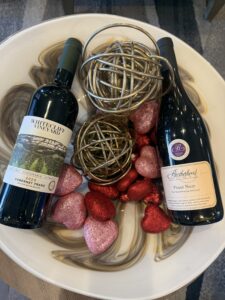
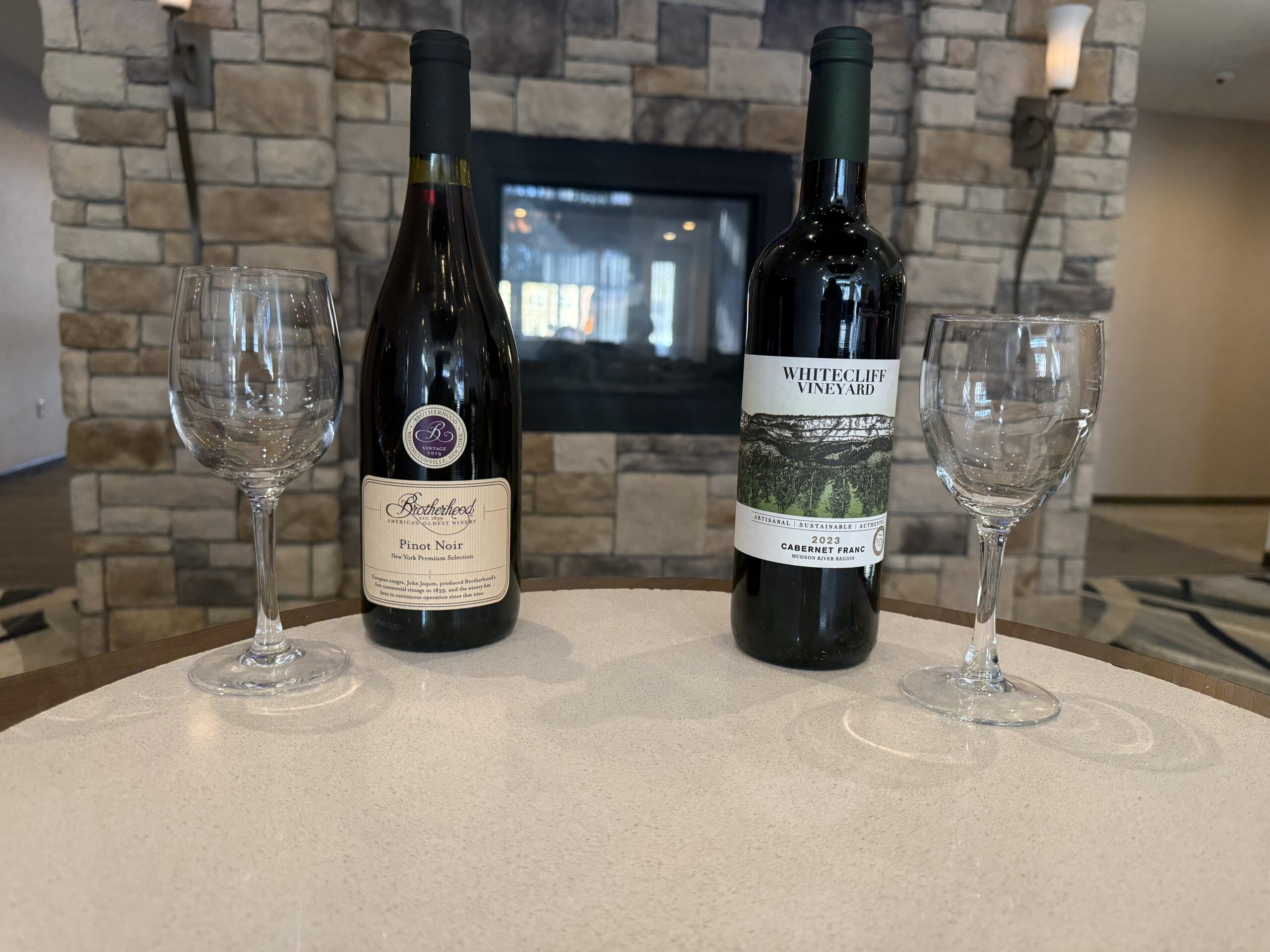
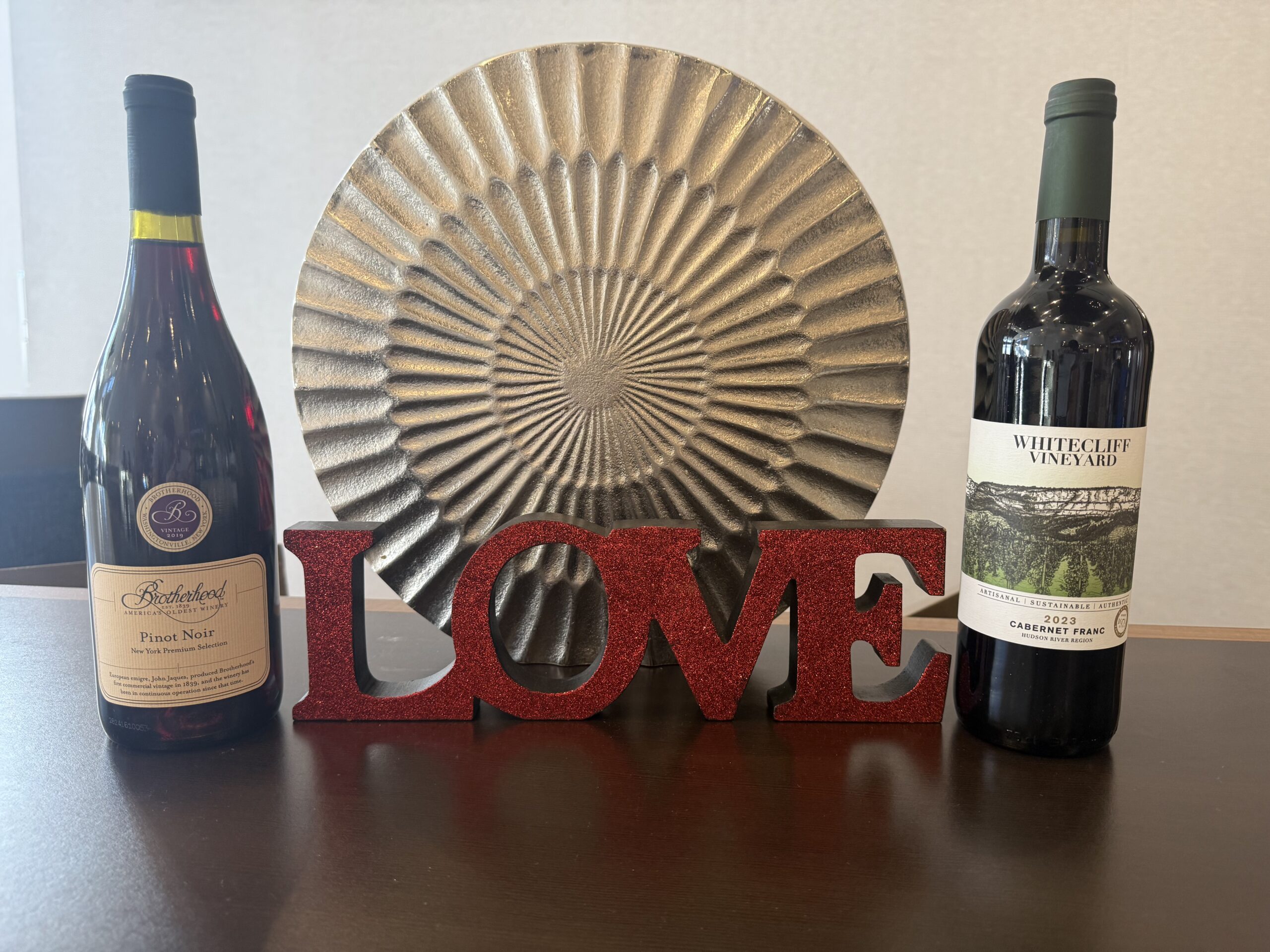
Here are the wines I picked up from them. I was able to snap some cool images throughout the week. If you’re in the area, both wineries are about 40 mins apart so they and other wineries on the wine trail can be easily accessed in one half-day. I uploaded a map of New York’s Wine Regions for your geographic reference. Let’s plan a wine trip!

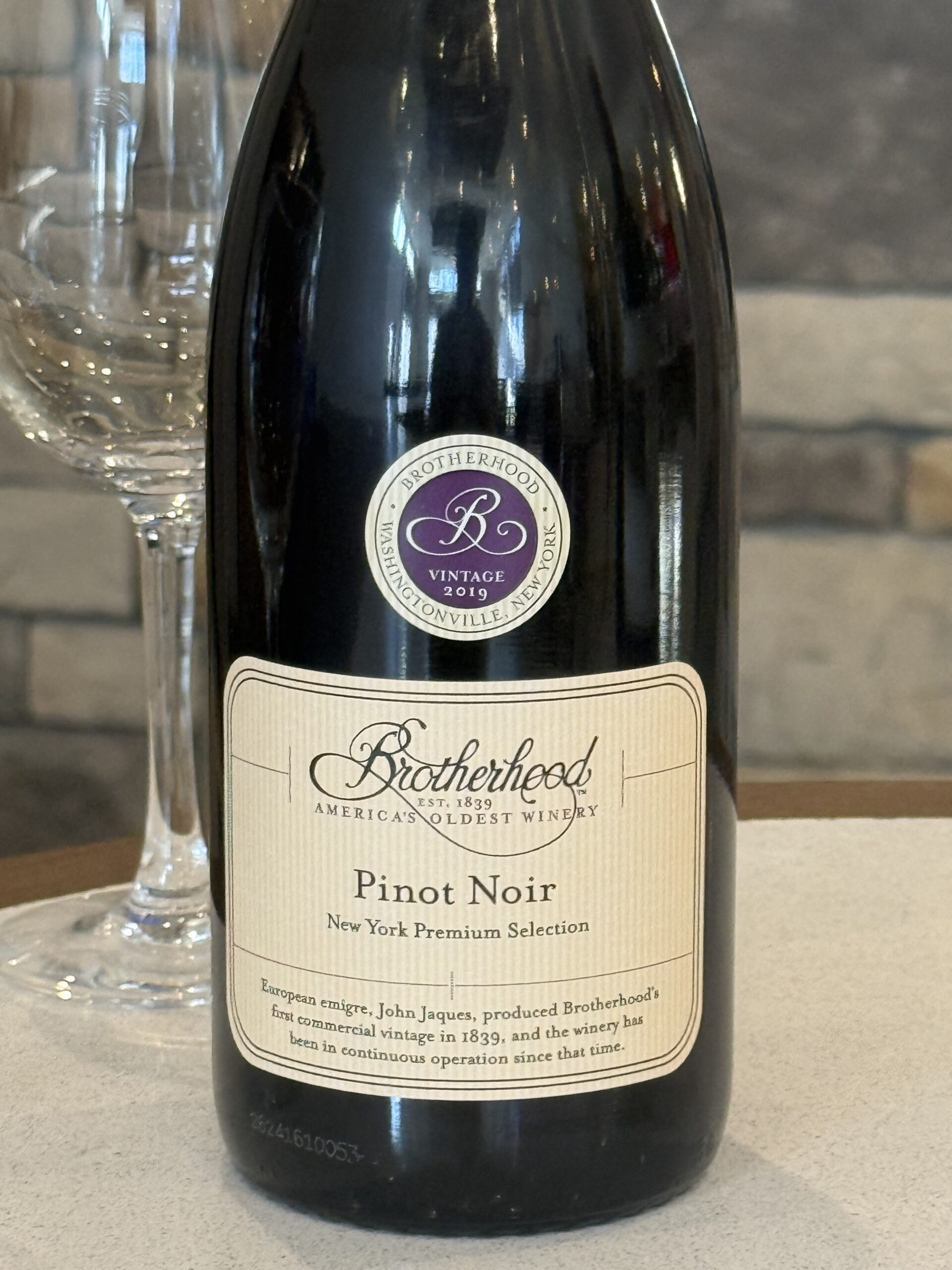
Brotherhood Winery Pinot Noir, New York Premium Selection 2019

Brotherhood Winery, located in Washingtonville, NY, is the oldest continuously operating winery in the United States, with roots dating back to 1839. Founded by Jean Jaques, it survived Prohibition by producing sacramental and medicinal wines. It is a premier Hudson Valley destination, famous for its historic underground cellars and wine tourism. 

This Pinot Noir is described by the winery as being light to medium-bodied, with berry, tea leaf and earthy aroma characteristics. Dry, light ruby in color, with berry and cherry flavors and hints of earth and mushrooms. Great value, with real Pinot personality. Perfect with broiled salmon, chicken and veal.

Specifically, the nose display notes of ripe red fruits, like cherry and raspberry, that mingle with hints of earthy undertones. Reviewers note fresh berries, plum, violet, cranberry, cherry, black tea, blueberry, and forest floor.

On the palate, it is filled with berry and cherry flavors along with hints of earth and mushrooms. The wine is described as fruity with a mushroom finish, and well-integrated tannins. It has a soft texture and moderate alcohol content.

On the finish, it promotes smooth tannins and well-integrated oak add depth to the wine, while a lingering finish leaves a lasting impression.

Stylistically, it is described as having a “Burgundian” style with a light brick-red in color. Community reviewers note it is surprisingly light for a Pinot Noir.

Being an older vintage of PN, I can testify to the color transforming to an even lighter brick red now and emerging dried fruit and truffle, soil character. I would recommend drinking this vintage sooner than later. Pinot Noir often deteriorates with age depending on the balance upon release. It currently retails at $17.99 or less (great value).

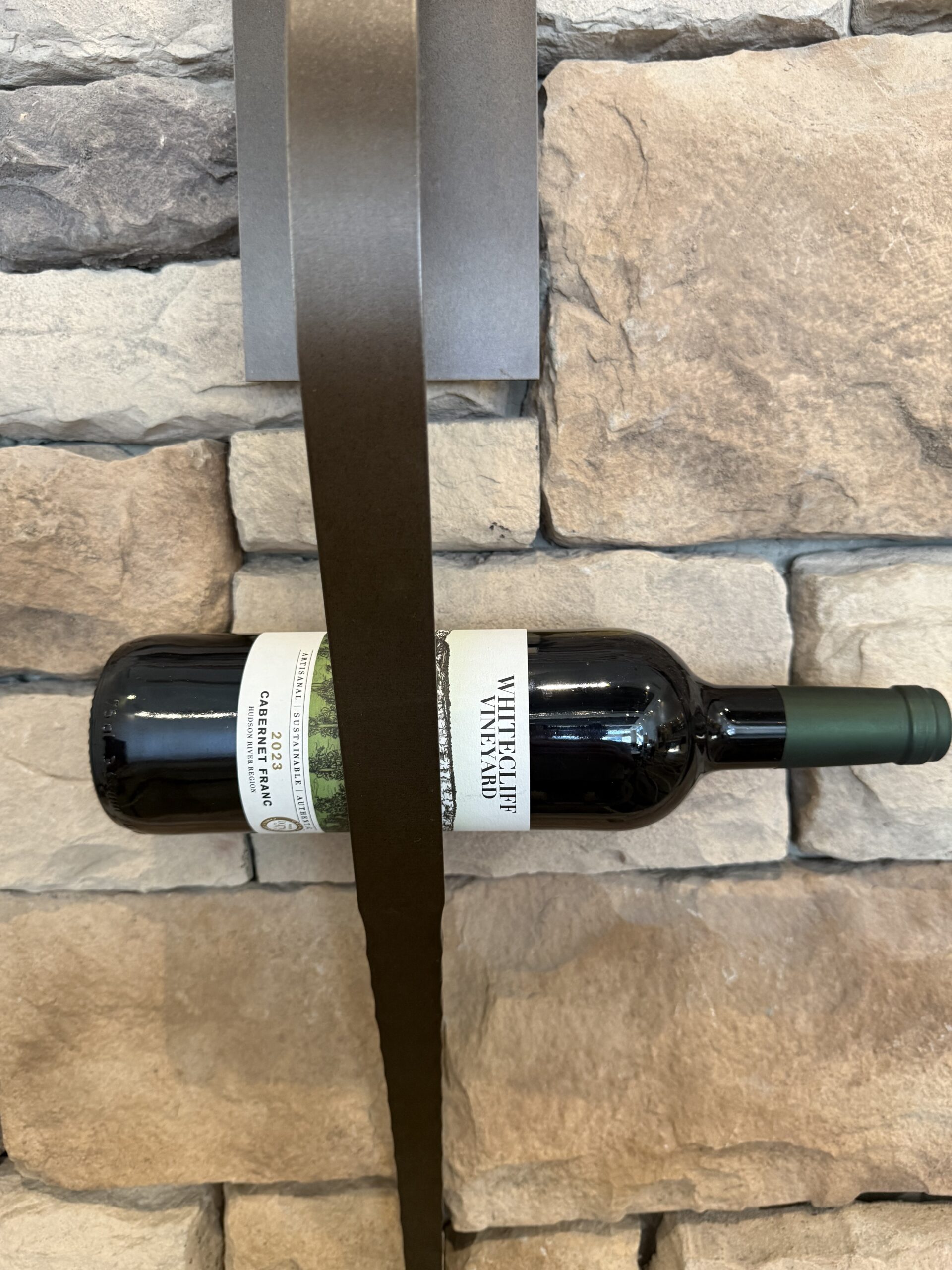
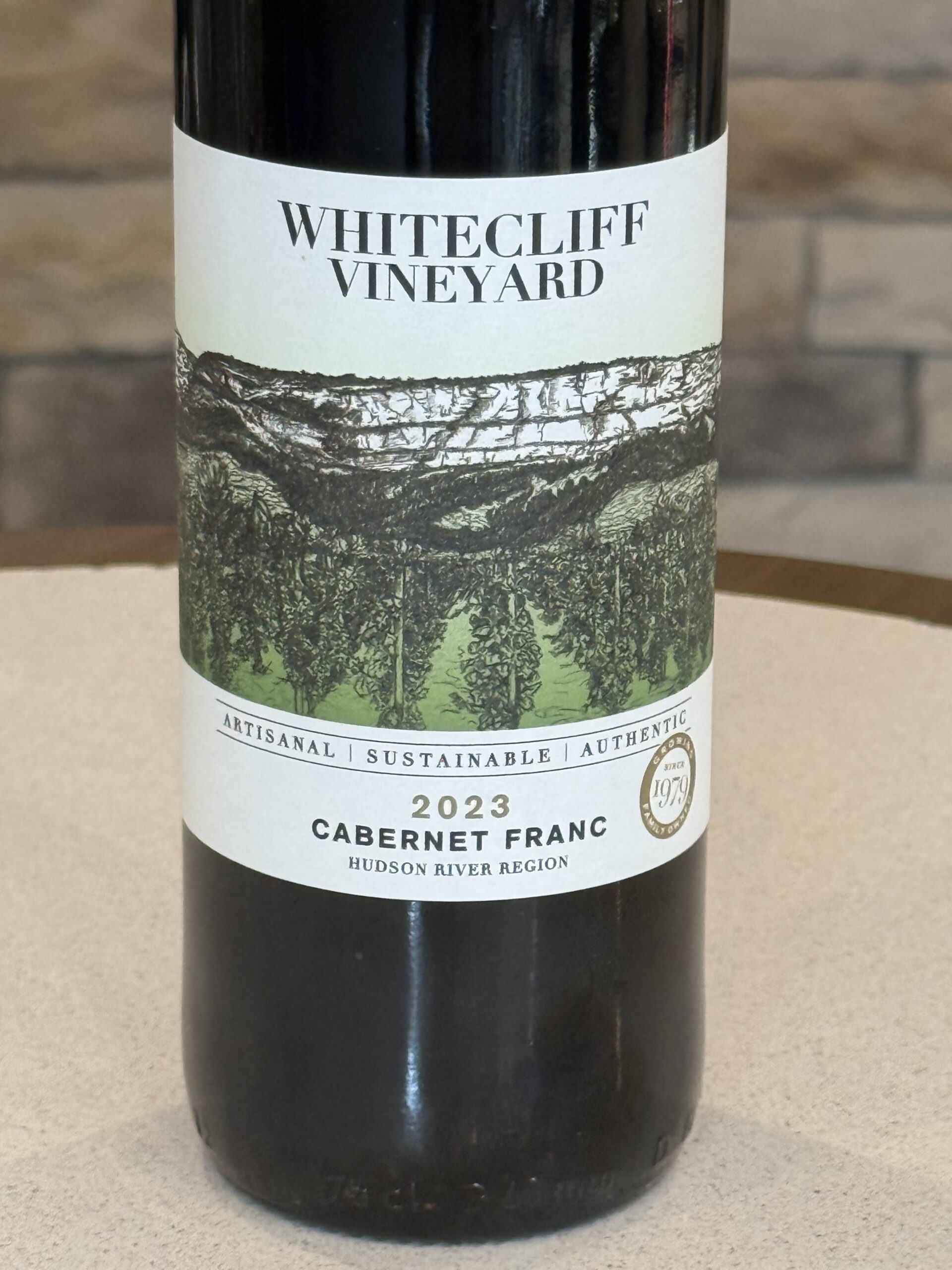
Whitecliff Vineyard Cabernet Franc Hudson River Region 2023

Founded in 1979 in Gardiner, NY, Whitecliff Vineyard & Winery is a premier Hudson Valley producer known for sustainable, vegan, award-winning wines and over 20 grape varieties. Originally experimental, the vineyard grew into one of the region’s largest, with a focus on cold and climate-resistant hybrids and vinifera and officially opened to the public in 1999. 

This Cabernet Franc is a highly regarded, estate-grown, and dry New York red from the Hudson River Region. It typically showcases a light-to-medium body with complex notes of cherry, strawberry, leather, and herbs, often featuring a deep forestry and brush aromatic quality. Pair it with pork BBQ and meatloaf.

It contains concentrated red fruits (cherry, strawberry) with herbal and earthy/leather notes. Bright acidity and a soft, slightly fleshy mouthfeel. It currently retails for about $32, but you can find for less at some online retailers.

This vintage is not yet rated. Previous vintages have earned 90+ points from Wine Enthusiast and received accolades at the San Francisco International Wine Competition and American Wine Society Commercial Competition.

If you want to experience light to medium reds from New York, search for these particular wines as well as other reds at your local wine shop, like Boutique Wine & Spirits or order online. I plan on visiting Brotherhood, Whitecliff, and many other Hudson wineries when the warm weather returns. Here are a few others of note: Milea Estate, Millbrook, City Winery, Neverstill.

New York wine regions are producing some really good classic red wines stylistically close to French Bordeaux and Burgundy, but at an affordable cost and accessible. The improvement over the past decade has been significant and promising for cool-climate red varietals.

If you have any questions or need shopping or pairing advice, please don’t hesitate to reach out to me here or on social media. If interested, our local Syracuse Chapter of Women for Wine Sense is conducting a fun wine event on February 22nd from 2-4 at The Tasting Room, Sky Armory, in downtown Syracuse.

Details are on the website at https://womenforwinesense.org/syracuse-page/ to sign up and become a member. Social media page is @winesensesyracuse. Mine is @themichaelpour. Come follow us and get in on all the wine action! As a board member, you will find me at all the events.

The Michael Pour is organizing monthly wine meetups in the Syracuse, NY market. More info is available is on the instagram page. The purpose of the meetup is for wine lovers of all knowledge and interest levels from the area to gather and learn about wine, socialize, network, and meet new people in a fun, casual setting. If interested, I hope to put one together for March.

If you enjoyed this post, don’t forget to sign up for my free email newsletter so you get notified when stories are poured. You don’t want to miss a drop. The advantage is that you get early access before its published to social media and as a subscriber you will be entered into occasional raffles, giveaways, and event discounts.

Until next time….Is there another wine adventure for me this season? In the meantime, stay tuned and stay warm NY!

“Happy V-Day”

Cheers, Michael

Wine Glass

DON’T MISS A DROP

Get notified when new articles are poured

We don’t spam!