How To Make the Best Old Fashioned

November
13
2024

How to make the best Old-Fashioned cocktail? What is the correct way to make an Old-Fashioned? Why does it matter? For someone who has been in the biz for over 22 years (behind the stick for much of that time), certified in advanced mixology, runs his own cocktail business, published cocktail author, and oversaw the cocktail program at many high-end cocktail bars and establishments, I think I have the qualifications.

Not only will I discuss the cocktail making, but also the subtle nuances that goes into perfecting this classic cocktail, like ice, sugar, whiskey, bitters, glassware, garnishments, etc… All too often I see and taste Old-Fashioneds that are prepared, mixed, and served incorrectly. Sure, there are many variations of the cocktail and depends on how you and your guests want it, but, for the most part (other than choice of whiskey), most consumers will drink it the way you serve it and not experience its potential.

After you have read through this discussion, I hope that you have the ability and confidence to mix a well-balanced, visually appealing, and tasty Old-Fashioned for yourself and guests from your home bar. It will also give you the knowledge to order confidently from your favorite, local watering hole so you receive the cocktail the way you like it. I encourage you to experiment with different types of whiskey and other brown spirits and ice/ice molds to find YOUR best Old-Fashioned.

A little history behind the cocktail

The Old-Fashioned is considered the oldest American cocktail. The word cocktail wasn’t even in the vernacular until 1806, which at the time described a drink of spirits, sugar, water, and bitters. By the late 1800s, bartenders were evolving. Credit is given to a bartender at the Pendennis Club in Kentucky for creating the official Old-Fashioned in 1880, which he introduced to New York at the Waldorf-Astoria Hotel bar. During Prohibition, bartenders muddled orange and cherry into the cocktail, reportedly to mask the poor-quality alcohol’s harsh taste.

Therefore, the Old-Fashioned is considered the grandfather of all cocktails. Simple yet complex, subtle yet bold, it’s easy to see why the classic three-ingredient elixir remains so revered by bartenders and cocktail connoisseurs. It is so admired by bartenders that it is often the first cocktail they diligently master. What appears to be a simple drink of whiskey, sugar, and bitters is actually a complex, art form dependent on the right ingredients and the method of mixing them.

Ordering an Old-Fashioned at a bar will usually earn you an approving nod (except in those cases where barkeeps have no idea where to start), but it’s also the perfect cocktail to master at home. Though it’s relatively easy to concoct, it’s just as easy to mess it up.

Dark and boozy, a little sweet and a little bitter. In cocktail lore, is there another whiskey drink more historic and satisfying than the Old-Fashioned? The cocktail defies nostalgic title, and while it certainly went through less-than-ideal incarnations over the years. Luckily, the Old-Fashioned is one of the few cocktails that has never gone out of style and has been embraced by more women today than it ever has. If done right, whiskey cocktails have become more approachable for women.

The Old Fashioned is a cocktail of evolution. What we do know is that by the time cocktail books began appearing in the late 19th century, what we would call an Old-Fashioned today was often under the title of “Whiskey Cocktail”.

Reach for a quality whiskey

An Old Fashioned is essentially a vehicle for enjoying your favorite whiskey, so choose wisely. No need to break the bank but choose at least a midrange or call whiskey. Tradition calls for rye whiskey, but many people prefer bourbon. There is a plethora of different styled bourbons and whiskeys, like wheated bourbons, four-grain bourbons, single barrel bourbons, small batch bourbons, Irish whiskey, scotch whisky on the market today so give them a sip to find your style. There is also the age of the whiskey and the vessel it was aged in to consider (see below). I have served brandy or Cognac Old-Fashioneds over the years but is rare. It really comes down to individual preference.

Your choice of whiskey is the most important ingredient. it dictates the flavor profile and how well it mixes with the other flavors. A good rule of thumb is that heavier whiskeys, like bourbon, will make the cocktail taste a little on the sweeter side, while lighter whiskeys, like rye, will be more refreshing, but drier, and taste slightly spicy. I will list my favorite whiskey and bourbon to use for my Old-Fashioned recipe at the end of this post.

The only other ingredients the cocktail requires are bitters and sugar that work together to enhance the spirit with a subtle sweetness. Over the years, the cocktail has evolved to sometimes include sweet vermouth, orange slice, cherry, and club soda, but they are not traditional. Never add sweet vermouth – that is intended for a Manhattan.

Bourbon is my preference

The relatively heavy body of bourbon, a corn-based spirit, creates structure within the cocktail, and its natural sweetness helps counterbalance the more astringent elements of bitters. As bourbon is aged in charred new oak barrels, it tends to take on notes of vanilla and caramel, which are brought out by the addition of sugar.  They also help to reduce the perceived heat of the alcohol, in turn allowing the spirit’s nuances to come through more cleanly. There is a trend of smoked Old-Fashioneds by using a smoker kit with different flavored wood, like peach, cherry, and apple and a torch.

Don’t throw in a sugar packet

Sugar is one of the three necessary ingredients of the cocktail, so it deserves some thought. The classic way to make an Old-Fashioned start with placing a sugar cube at the bottom of the glass, adding a few dashes of aromatic bitters and a splash of water and muddling with muddler until it’s completely dissolved (like a paste). Most people use simple syrup for ease and convenience, which is fine, but the sugar cube will help break it down and make it easier to dissolve and integrate into the drink.

The sugar does make a difference. You don’t want to hide ingredients – you want everything to be present. With the Old Fashioned, it depends on what you’re using as your sugar source and how much. If you use a 1:1 (water-sugar) simple syrup, use a younger bourbon between 80 to 90 proof for lighter sugar content. If we are at 91-plus proof whiskey that has some age to it, use a thicker/heavier syrup such as 2:1 demerara sugar.

Be aware of bitters

An Old-Fashioned calls for 2-3 dashes of bitters—no more, no less—that are added to the sugar cube or simple syrup. While the amount seems small, having too many or too few dashes can dramatically change the taste of the drink. The type and quality of bitters matters too. Angostura bitters is the classic and always an excellent choice, but I prefer orange bitters for mine. I have also experimented using a variety of other bitters, like chocolate, Peychaud’s, grapefruit, and lavender.

Don’t add soda water

Besides sugar, whiskey and bitters, any other ingredients are not in an Old-Fashioned. Although orange slices, cherries and soda water are commonly seen in Old Fashioneds, this is not correct. As mentioned earlier, many believe these ingredients (not soda water) were added during Prohibition to help cover up the sting of moonshine or whiskey. The use of soda water today by bartenders is a modern thing. Use a splash of regular water to help dissolve the sugar cube instead.

Don’t muddle cherries

If you prefer your Old-Fashioned with a cherry, like a brandied or Luxardo, just make sure not to muddle it into the cocktail. This cocktail does not want a punch of cherry flavor or floating fruit. Instead, add it later as a garnish on a pick with an orange peel or just dropped in. Choose one Luxardo cherry over the bright neon maraschino cherry, which is sweet and full of chemicals. Some Old-Fashioned enthusiasts like a Luxardo cherry syrup to be added to mix.

Add an orange peel for aromatics and citrus

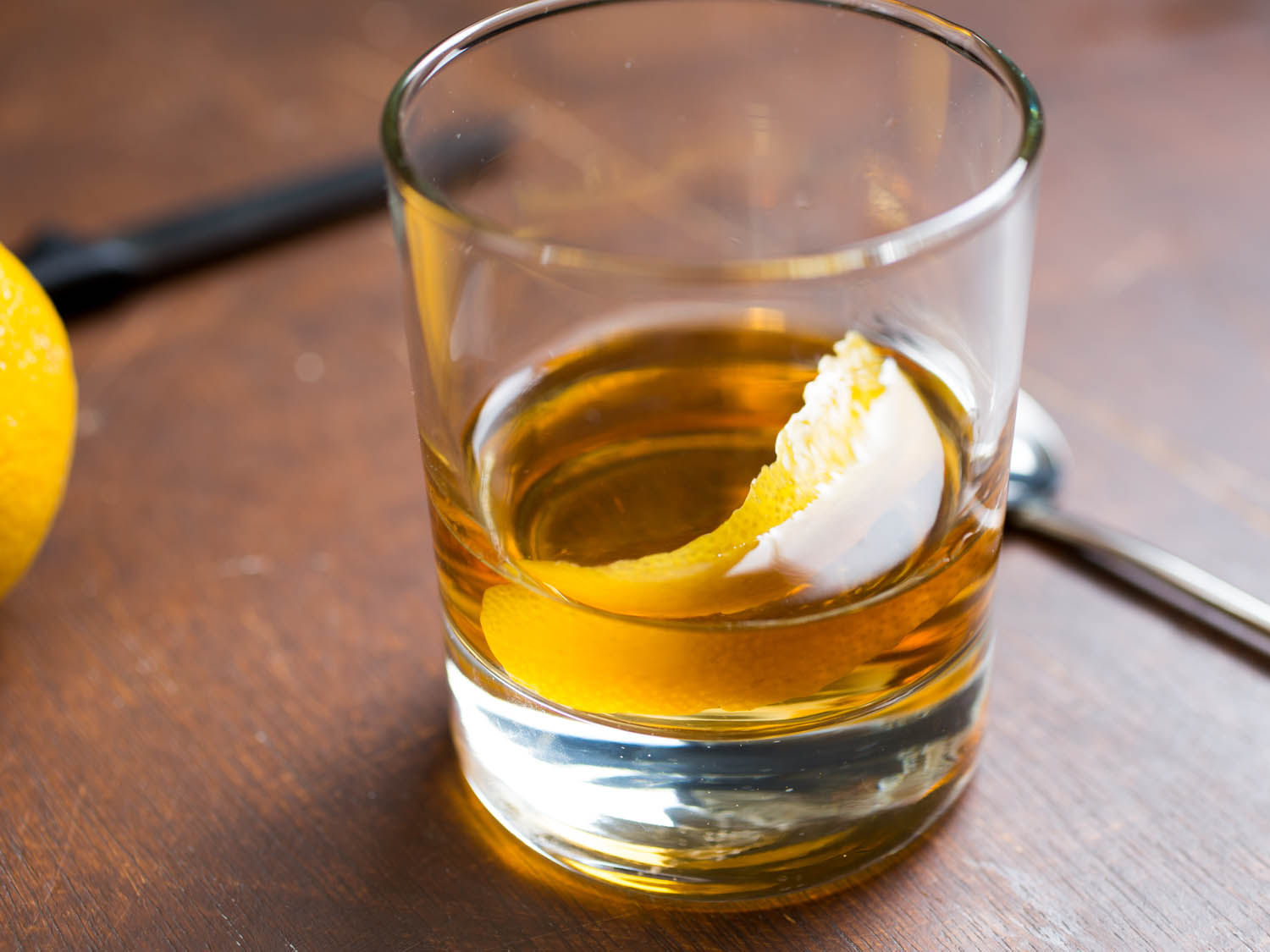
Of all the additions to the Old Fashioned over the years, the orange peel is the most appropriate. I personally garnish a picked orange peel, not twist (you don’t want pith). Don’t muddle or add an orange quarter or slice. Use a vegetable peeler to peel off a thin layer. Express the oil of an orange twist over the glass before picked and dropped in.

Use a large ice cube

Back in the 1800s, ice cubes were typically two inches on each side, unlike the small versions today that melt quickly. If you want to be a purist (or at the least impress your guests), keep some large square or cylinder cube molds in the freezer for that unexpected guest. The cocktail will remain chilled for a while without diluting too quickly. If you don’t have access to one large cube, then opt for 2-3 larger sized ice cubes. Be careful not to over-dilute. You should never fill the glass to the top with ice. Avoid small cubes and crushed ice.

Don’t shake it

Old Fashioneds are to be stirred, never shaken. Use a bar spoon to steadily stir the cocktail for a maximum of 30 seconds—you want to chill it without melting the ice cube down too much. Find a good rhythm of stirring several rotations and then firmly stopping with the spoon in the glass every ten or so rotations. You want to smoothly incorporate the sugar paste without agitating the cocktail too much. As you stir, press the back of the spoon firmly against the mixing glass. You don’t want to slosh the drink around as that can be detrimental to the smooth, silky texture that is the hallmark of a great Old-Fashioned.
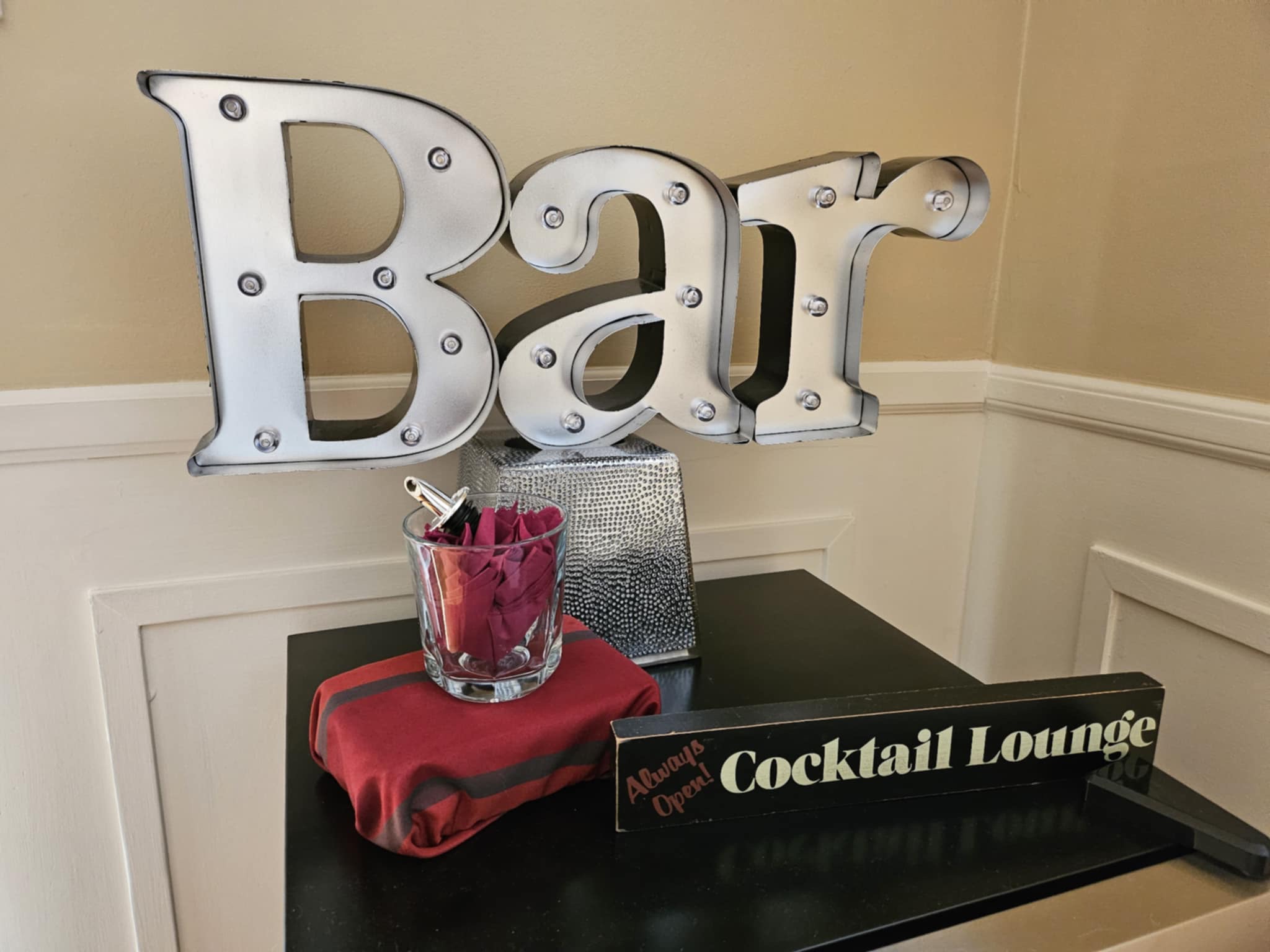
Old Fashioned glass

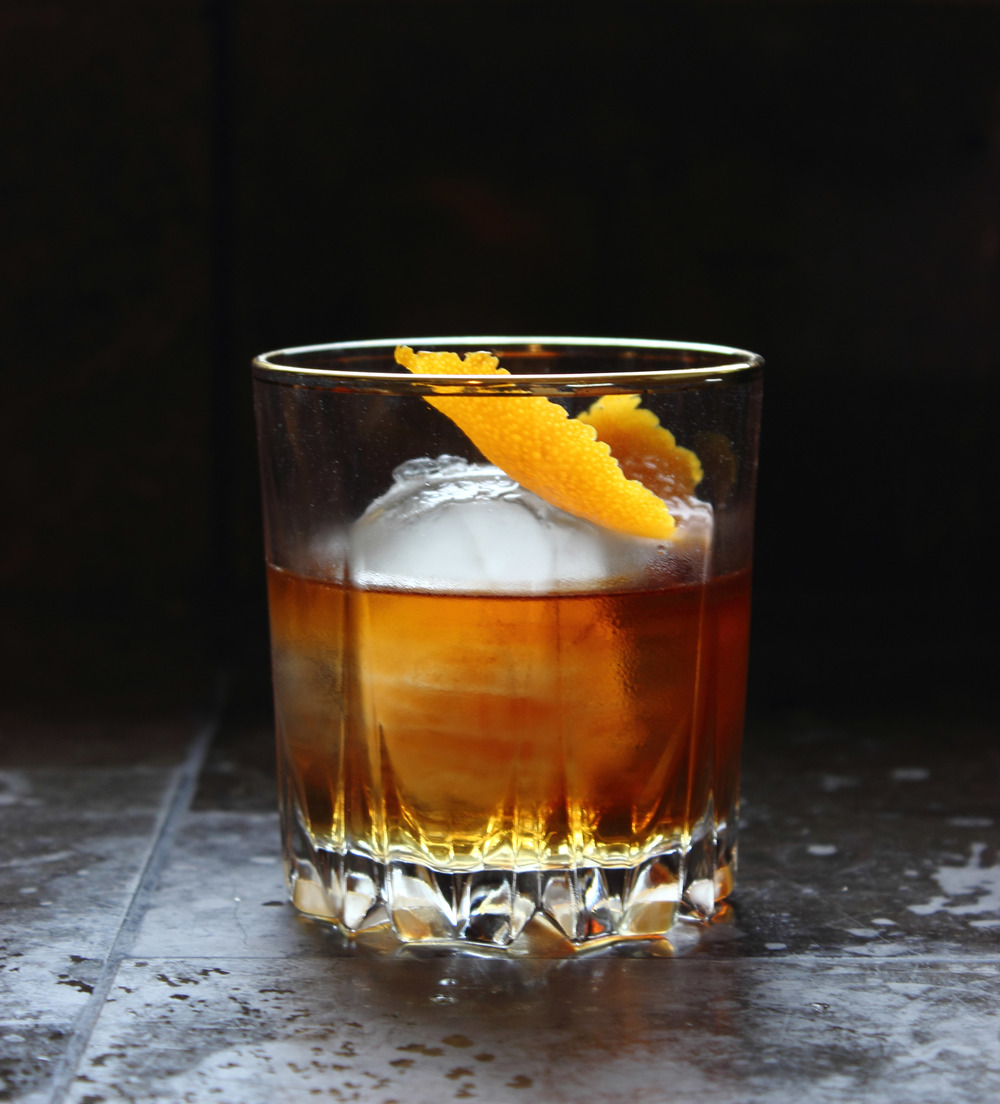
Use an Old-Fashioned glass (pictured)

That’s what they were made for after all. Even you don’t have them, a large rocks glass versus a small rocks glass will suffice. A small rocks glass is preferable for a spirit ‘neat’ or ‘on the rocks’. Don’t serve an Old-Fashioned in any other type of glass.

Proper Old-Fashioned Cocktail By Michael

  • 1 sugar cube preferred or 1/2 oz demerara simple syrup
  • 2-3 dashes orange bitters (Angostura bitters is classic)
  • 1 barspoon of water to help dissolve
  • 2 oz bourbon, such as Basil Hayden’s or Horse Soldier, or rye whiskey
  • 1 large ice cube (square or cylinder). I prefer cylinder.
  • Garnish: orange peel and Luxardo cherry picked (see cover photo)

For bourbons, I prefer Buffalo Trace, Bulleit, Angel’s Envy, Basil Hayden’s, Horse Soldier, and Four Roses. For ryes, I recommend EH Taylor and Bulleit. For whiskey, try Crown Royal or Sour Mash Jack Daniels Single Barrel (sweeter).

Prep

  1. Add the sugar cube to the bottom of an Old-Fashioned glass. Add 2-3 dashes of orange bitters to the cube. Muddle using a muddler into a paste. Add barspoon of water and stir until the sugar is nearly dissolved.
  2. Add large ice cube or a few large pieces of ice. Add whiskey/bourbon and stir until well-chilled. Stir clockwise and counterclockwise alternating every 10 seconds.
  3. Express the oil of an orange twist over the glass, pick the peel with a Luxardo cherry, then drop into the glass to garnish.

Cheers,

Michael
Seasonal Spotlight: 5 Cocktails to Sip this Winter

Spiced Poached Pear Cocktail
November
11
2024

Thank you to all those who responded to the poll question on my Instagram story last week. The majority of you are interested in reading more posts about cocktails with recipes so here you go. In this post, I offer you a selection of handcrafted winter cocktails that I absolutely love. Some of them require some time and work but are so worth it. They are perfect to concoct for your holiday parties and get-togethers this fall and winter. I identified each cocktail for its base spirit and winter ingredients so if you like tequila, dark rum, whiskey, vodka, or gin and specialty syrups, there is definitely something for you!

I highly recommend batching them ahead of time, so you don’t have to worry about slaving in the kitchen while entertaining and compromising time with your guests. Each recipe is for one cocktail so simply multiply the ingredients by number of people you are serving. For homemade syrup recipes, you should have enough for more than one cocktail. I always recommend using fresh ingredients rather than store-bought unless you don’t have the time or don’t any other choice.

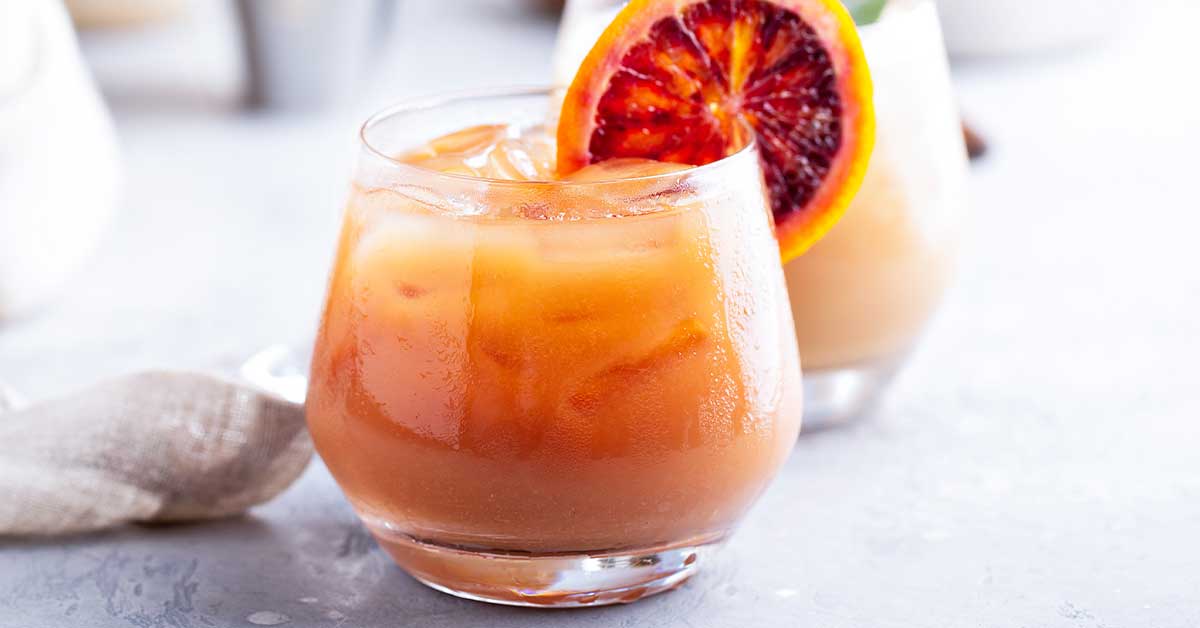
This spiced Winter Margarita will warm you up from the inside out, offering a touch of sweet, tart, spicy, and oaky flavor. Reposado tequila offers you a deeper, rich flavor profile for this winter cocktail due to its aging in oak and hints of vanilla and toast.

Winter Margarita

Winter Margarita (tequila)

  • 2 oz Reposado tequila, such as Patron, Milagro, or Teremana
  • 1 tsp fresh honey syrup
  • ½ oz fresh lime juice
  • 1 oz blood orange juice
  • ½ tsp vanilla extract
  • pinch cinnamon
  • optional – rim with sugar, salt, cinnamon, or cayenne pepper or combo of several of these

Prep:

Rub a lime wedge along the rim of chilled coupe glass or large rocks glass, coat the edges, and set aside. Fill a cocktail shaker or mixing glass with ice and add tequila, honey, lime juice, blood orange juice, vanilla, and a pinch of cinnamon. Shake and strain into coupe glass filled with ice. Be careful not to disturb rim. Garnish with a blood orange slice and cinnamon stick, if desired.

Apple Fizz

Apple Fizz (Irish whiskey)

  • 1 ½ oz Double Barrel Irish Whiskey, such as Glendalough (if you can’t find double whiskey, just use another aged Irish whiskey)
  • ½ oz pear liqueur, such as Mathilde, 99 Pears, or St. George
  • ½ oz fresh lemon juice
  • ½ oz fresh honey syrup (preferable) or store bought
  • hard apple cider to top
  • garnish apple slices & grated cinnamon

Prep:

Add all ingredients to a cocktail shaker, except cider. Shake well and strain into a highball glass with ice. Add the hard apple cider and garnish with apple and cinnamon.

Spiced Poached Pear (vodka)

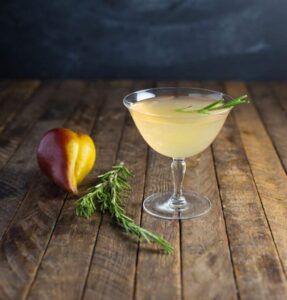
A garnish of fresh rosemary adds an herbal note to this yummy pear cocktail, which balances the warm, spicy sweetness flavor profile. Cover photo.

  • 1 ½ oz vodka, such as Ketel One, McKenzie NY vodka, or Absolut
  • 1 oz Lillet Blanc (hard to find, if not available, use a light Sauvignon Blanc wine)
  • 2-3 oz Asian pear syrup* depending on sweetness level
  • 1 oz lemon juice
  • 2 sprigs fresh rosemary

Prep:

In cocktail shaker filled with ice, combine vodka, Lillet or Sauv Blanc, lemon juice and pear syrup. Shake vigorously and strain into up glass. Twist the rosemary sprigs a few times to release the oils and garnish.

*For the Spiced Pear Syrup:

  • 2 Asian pears chopped into 1-inch pieces (no need to peel)
  • 1 cup water
  • ½ cup Sauvignon Blanc
  • 1 cup sugar
  • 1 cinnamon stick
  • 1 pod star anise
  • 1 strip lemon zest (3-inch), peeled with a vegetable peeler

Prep:

In a small saucepan combine water, wine, sugar, cinnamon, star anise and lemon zest. Bring to a boil over medium-high heat then reduce to a simmer. Add the chopped pears and cook until pears are soft, and the liquid becomes syrupy, about 30 minutes. Remove from heat and strain through a fine mesh sieve into a clean glass jar. Don’t press the pears or the syrup will become cloudy. Discard the solids and chill syrup until ready to use.

Snowbird (dark rum)

If you’re a snowbird and head down south for the winter and like your tiki drinks, this tropical flavored cocktail should satisfy your palate.

  • 1 ½ oz dark rum, such as Plantation Original Dark Rum or Myers
  • ½ oz Fernet-Branca liqueur
  • ½ oz apricot liqueur
  • ¾ oz fresh lime juice
  • ½ oz orange juice
  • ½ oz pineapple juice
  • ¾ oz simple syrup
  • 4 dashes Angostura bitters
  • garnish quarter of orange wheel and brandied cherry (optional)

Prep:

Add all ingredients into a shaker with ice and shake until well-chilled. Strain into a collins glass, tiki or copper mule mug over ice. Garnish with a quarter orange wheel and a brandied cherry.

Winter Gin & Tonic

Winter Gin & Tonic

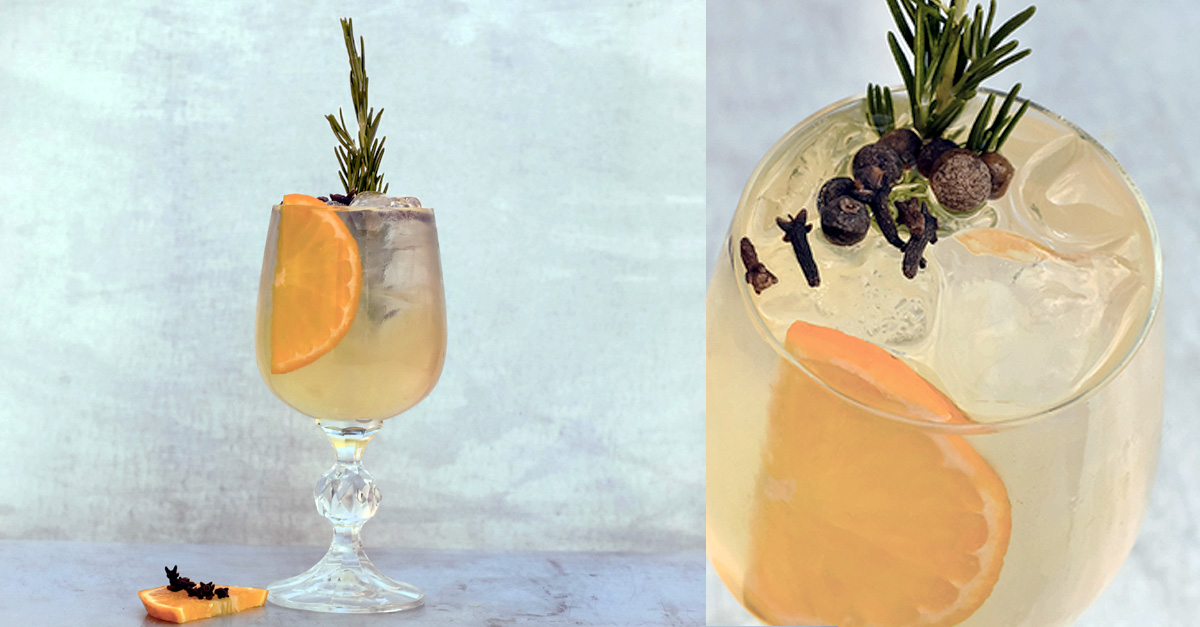
The air is cold and crisp, but why not go with a classic, elegant, and always relevant G & T. This cocktail has a little winter spice with a balance of citrus, acidity, and warmth to round it out on your palate.

  • 1 ½ oz gin, like Bluecoat or 1911 Established New York gin
  • ¾ oz winter spice simple syrup*
  • ½ oz freshly squeezed orange juice
  • ½ oz pomegranate juice (optional)
  • fill with high quality tonic water, like Fever Tree
  • garnish orange slices, allspices, whole cloves, and sage leaves (optional)

Prep:

Add all ingredients into a mixing glass with half ice and stir well with barspoon until well-chilled and combined. Strain into a red wine glass using a julep strainer over ice. Garnish with oranges, allspices, whole cloves, and sage leaves (optional)

*For the Winter Spiced Simple Syrup:

  • 1 cup of water
  • 1 cup of sugar
  • 1 tsp of whole allspice
  • 1 tsp of whole cloves
  • 2 cinnamon sticks

Add all ingredients to a medium saucepan and simmer mixture until sugar is dissolved. Cool mixture then strain into a clean, clear bottle until use. Keep in fridge for a couple of months.

I would love your feedback on this post as well as all other posts, so feel free to comment here or social media. Enjoy!

Cheers,

Michael XOXO

The Best Cognac for a Sidecar: H by HINE VSOP

August
21
2024

This is a special post for my friends at Raising the Bar Communications from San Francisco and H by HINE from Jarnac, France in the heart of Cognac, France. I had the wonderful opportunity to taste this exquisite cognac. It was splendid and is offered at a very affordable price for an aged cognac. It is a very mixable spirit in cocktails that I will discuss below. For those of you who are not familiar with cognac, cognac is a style of brandy that has to be produced in Cognac, France according to international law – much like tequila to Mexico. All cognacs are brandies, but not all brandies are cognac.

The Sidecar is a classic cocktail that has been around for centuries. It is the best-known cognac-based cocktail in the world. This basic, three-ingredient cocktail is bright and refreshing and traditionally made with brandy or cognac, orange liqueur, fresh lemon juice, and a sugared rim. The light and citrus nature of this cocktail requires careful consideration of spirit choice. To balance the cocktail, the quality, age and flavor profile of the cognac is very important. For cocktails, especially the Sidecar, not every cognac is created equal, according to experienced bartenders.


Adventurous and elegant, H by HINE VSOP is consistently recommended across the globe as bartenders’ preferred choice cognac for the Sidecar. Created with American and British bartenders, H by HINE is a special bottle within the House of HINE’s world renowned portfolio of cognacs. Crafted specifically for mixing in cocktails, this VSOP expression honors HINE’s signature elegant style known for its floral aromatics with notes of iris, fresh apricot, acacia, white pepper and hint of spice, expressive profile and depth of character, while offering a youthful vitality that plays well with others. A blend of 20 eau de vie aged an average of 5 years gives it a full spectrum of aromas and flavors.

HINE Cognacs are different because they start from the earth. The identity from the Cognac region’s two premier crus: Grande Champagne and Petite Champagne. The Sommelier’s choice for a reason. A great cognac is comparable to a great wine, which starts in the soil and ‘terroir’. Double distillation with the lees concentrates the aromas of the wines and adds texture. Loved for their personality, light toasted & fine-grained wood barrels let HINE cognacs age beautifully, preserving their pure personality. Awarded the Royal Warrant in 1962, HINE continues to be the sole official cognac supplier to the British Monarchy. 

Here’s what bartenders have to say:

 “A Sidecar is very much a citrus-led cocktail, it has lemon and orange liqueur, so for such a cocktail you want to make sure you choose a cognac that is going to complement the citrusy notes and elevate that summery party feeling that all Sidecars should have. H by HINE focuses on the fresh, light and fruity side of cognac rather than being too “wood forward”. I like to use H by HINE because it is a fresh and vibrant VSOP that brings the most out of lemon and orange notes in a Sidecar.” ~ Guillaume Le Dorner, Owner, Luciole (Cognac, France)

“H by HINE has always been the best choice for cocktails because of its versatility. H by HINE is a great choice for a classic Sidecar because it works harmoniously with the orange liqueur and lemon juice without being hidden. H by HINE’s Fine Champagne profile of the white flower, candied orange fruits and slightly peppery notes suits this sour perfectly.” ~ Angèle Grinda, Bar Manager, Bar Américain (London, EN) 

At Bar Américain, the theme of their cocktail menu is “The Golden Age of Hollywood” and pays homage to the Hollywood heydays. They wanted to create a cognac cocktail on the menu and needed to find a cognac that works perfectly in cocktails. H by HINE was their top choice in terms of taste and story. Its flavor profile was perfect for their twist on the Sidecar called the “Napoleon”, a reference to the silent movie of Abel Gance profiling Napoleon Bonaparte’s life. 

Napoleon

  • 1 ½ oz H by HINE VSOP Cognac Chamomile-Infused 
  • ½ oz Apérol 
  • ½ oz Napoléon Mandarine liqueur (Mandarin liqueur)
  • ½ oz *Nectarine Oleo Saccharum 
  • 3-4 dashes Peychaud’s bitters 

*Oleo Saccharum is a very simple mix of citrus (in this case, nectarine) peels and white sugar. Toss the two ingredients in a bowl, gently muddle, cover, and let sit for an hour or longer. The sugar draws the oils from the lemon peels, creating a rich, glossy citrus syrup in the bottom of the bowl.

Method –  Stir in a mixing glass. Strain into a large Cognac glass with one ice ball.

Classic Sidecar

  • 1 ½ oz H by HINE VSOP Cognac
  • ¾ oz orange liqueur (Cointreau), for richer version (Grand Marnier) 
  • ¾ oz fresh lemon juice
  • ½ oz simple syrup (optional, for less bitter version) 

Method – Coat the rim of a coupe glass with sugar and set aside. You can bypass the sugared rim if you don’t want the sweetness. Add all ingredients into a shaker with ice and shake. Strain into the prepared coupe glass and serve.

Try H by HINE Cognac in other classic cocktails, like an Old-Fashioned, Manhattan, Sours, Sazerac, and Highball or just enjoy it neat or over an ice sphere or ball. It serves as a great after-dinner and celebratory spirit to share with friends. 

If you would like to learn more about cognac, please let me know and I will do an educational piece on this classic spirit.

Other H by HINE products – 

HINE Rare

Fruity, Suave, and delicate. Appellation Fine Champagne Contrôlée VSOP Blend of around 20 eau-de-vie from Grande & Petite Champagne Aromas of roasted nectarines, ripe apricots and succulent melon inspire the lingering first sip, soft as brioche. Suave yet delicate, Rare is a classic expression of the House of HINE and a benchmark for their entire collection of cognacs. It reinterprets the fruity flavors characteristic of the white wines produced from Charente vines, particularly from the Grande and Petite Champagne varieties. 

HINE Cigar Reserve XO

Structured, intense, and rich. Appellation Cognac Contrôlée XO Blend of 20 eau-de-vie from Grande Champagne, Petite Champagne & Fins Bois Created by Bernard Hine and Nicholas Freeman (Hunters & Frankau) in their quest to find the perfect match between the most expressive of cigars and Hine cognacs. An invitation to embark upon a Gauguin-like journey through precious wood and sweet cinnamon. Rich and opulent in character, exotic aromas signal a cascade of aromatic complexity. Discreetly enveloping the palate, it is the perfect companion for the first puffs of a powerful and fragrant tobacco.

Recent Accolades: 

GOLD MEDAL | Global spirits awards 2023 

DOUBLE GOLD MEDAL | World spirits competition 2022 

GOLD MEDAL, 95 PTS | Bartender spirits award 2022.

Find them on Instagram @hinecognacs and Facebook at HINE Cognac and site and portfolio at links above.

Cheers,

Michael

5 Drinks Bartenders Love to Make

Array of Negroni Cocktails
August
3
2024

(Cover Photo courtesy of Michael Nagy)

In cocktail bars, bartenders are creating their own spin on classic cocktails. They want to keep them fresh and exciting. To fight the monotony and repetition of making drinks the same way year after year, bartenders are designing drinks using seasonal ingredients and flavors and adding their own personal twists to them. Here are some popular drinks that bartenders love to mix up and how to order them. 

Cosmopolitan

1) Cosmopolitan

A Cosmo is a martini-type cocktail that is served ‘up’ and shaken into a chilled cocktail glass or coupe. The base ingredients call for vodka/citrus vodka, orange liqueur, fresh lime juice, and cranberry juice cocktail. When it is done properly with the correct ratio of spirit, liqueur, modifier, and juice, it is a well balanced cocktail with a pink hue. To change it up, use premium or different flavored vodka, switch out the cranberry juice for a natural unsweetened cranberry juice to reduce sweetness, or use different fresh juices, like orange, grapefruit, or pomegranate. Garnish with different colorful fruit. Order  “Belvedere Cosmo, light cranberry”.

Old Fashioned

2) Old-Fashioned

An Old-Fashioned is always well stirred ‘on the rocks’. Bartenders like its versatility, which allows for much variation and creativity. It is a simple drink with minimal ingredients, but mixing one properly is paramount. With being whiskey based and spirit forward, there are many high-end whiskey options to choose from, whether it be bourbon, rye, Irish, or local whiskey. Experiment with different aromatic bitters, like chocolate, orange, or Angostura, to go along with the muddled orange, sugar cube, and Luxardo cherry garnish. Try it with a sphere or large ice cube. To make it a little sweeter, drop in a little Luxardo cherry juice. Smoked Old-Fashioned anyone? Order “Jefferson’s Ocean Bourbon Old-Fashioned”.

Sazerac

3) Sazerac

A Sazerac is a traditional Cognac-based cocktail that is served ‘up’ and stirred. Today, it is usually made with rye whiskey. There are many local rye whiskies available to suggest. Using equal parts of both cognac, rye whiskey, or brandy can produce a new twist. To make it correctly, use an absinthe rinse, sugar cube, Peychaud’s bitters, and lemon twist. Even though Peychaud’s bitters are standard, try using other aromatic bitters and different ‘up’ glassware. Bartenders love the uniqueness of its flavor and presentation. Order “Sazerac with Bulleit Rye”.

4) Negroni

Negroni (cover photo) is the signature cocktail of Italy.  It only contains three ingredients of gin, Campari, and sweet vermouth (White Negroni uses dry vermouth in place of sweet vermouth) with an orange peel served ‘up’ or ‘on the rocks’. There are many fun variations of the drink by using different gins, barrel-aged gin, addition of spices, like cardamom, and flaming the orange peel. A cool new trend is to infuse the Campari with coffee. You can swap out the sweet vermouth for dry vermouth to create a White Negroni or the gin for bourbon, which is called a Boulevardier. Order “Negroni on the rocks”.

Margarita

5) Margarita

Margarita is one of the most popular drinks in the world. It can be served ‘up’, ‘on the rocks’, or frozen with or without salt/sugar. A great Margarita is perfectly balanced between sweet and sour. Using fresh lemon sour to go along with blanco tequila, triple sec, fresh lime juice, and a lime garnish is the key. Have fun with the garnish by using different fruits and edible flowers. There are many different tequilas available, including gold, aged tequila, or flavored tequila. Some bartenders have experimented by infusing tequila with chili peppers or muddling jalapenos to make it spicy. Adding another liqueur or juice, or using different flavored salts, like chipotle can transform it. Order “Casamigos Margarita on the rocks with salt”.

Cheers,

Michael

Mixology School: Guide to Martinis & Manhattans

Classic Martini
July
19
2024

MARTINIS 

The first question you should ask is – Would you like it “Straight Up” or “On the Rocks”?

Next question –  Do you prefer Gin or Vodka? Based on response, offer a ‘call’ brand (Beefeater gin or Absolut vodka) and ‘premium’ brand (Tanqueray No. Ten gin or Grey Goose vodka).

If requested straight-up, all martinis go into a chilled cocktail glass or coupe glass and are stirred, not shaken, unless requested shaken. Essentially due to increased dilution leading to subdued spirit, ice chips, presentation – lack clarity, and classic way of serving. You can achieve same amount of chill by stirring a little longer than shaking. Suggest a side of used rocks from mixing for hydration and extra chill. If requested ‘on the rocks’, build ingredients in an ice-filled rocks glass.

*Ratio of ingredients are the same for straight-up or on the rocks*. If Ingredients don’t all fit in the rocks glass, pour less vermouth/more spirit. All martinis should = 3 oz total volume and should never reach the rim of glass. Of course, after stirring or shaking, it will be a little over 3 oz, but shouldn’t be overfilled. If you have a larger martini glass, inform the guest so they don’t think you are underpouring them.

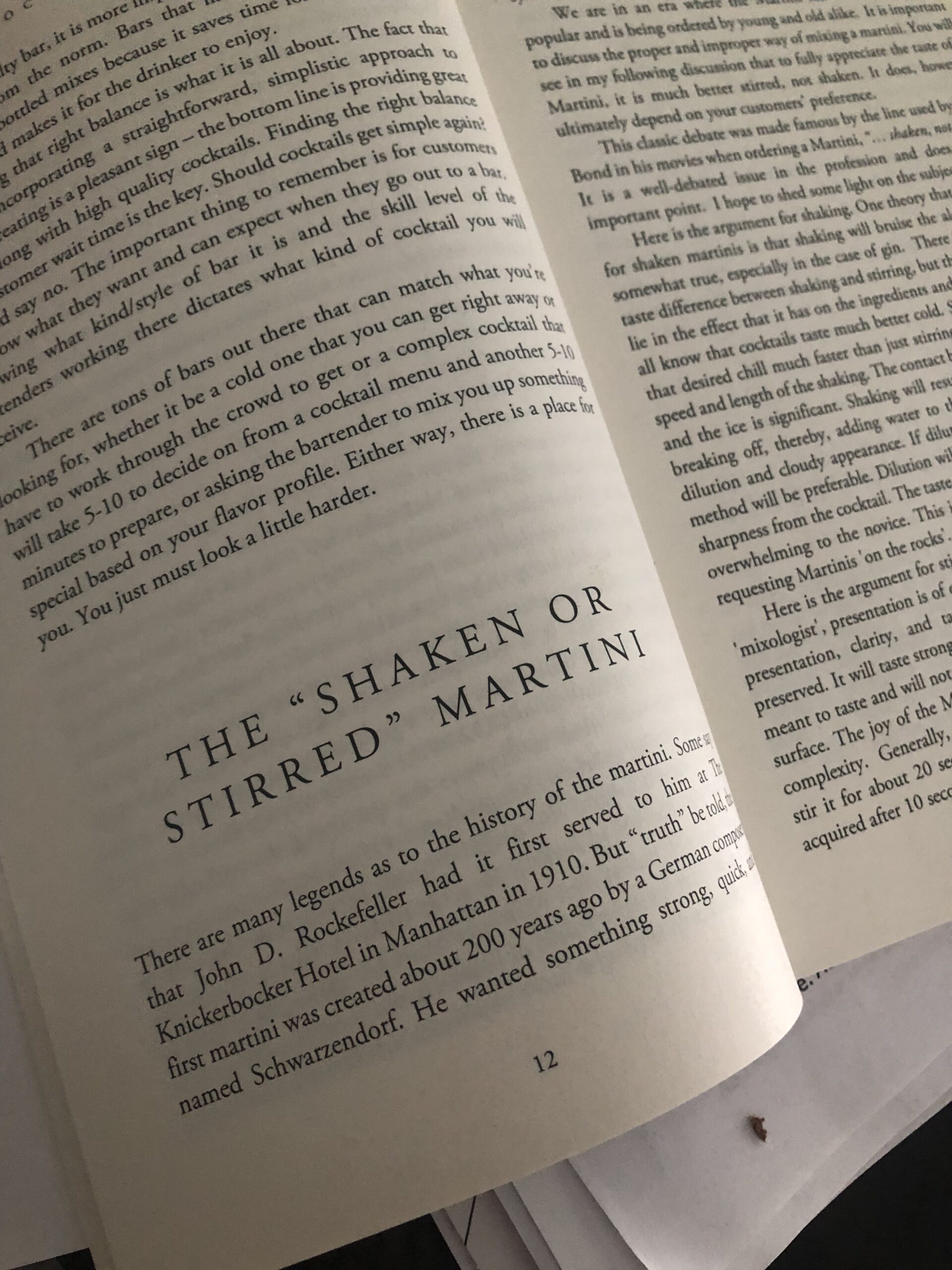
Grab my book to read a lengthy discussion on “The Martini”

Book excerpt

Standard Martini recipe

  • 2 ½ oz Gin or Vodka (Bombay or Belvedere)
  • ½ oz Dry Vermouth
  • Garnish with olives on a pick or skewer (lemon twist/lemon peel upon request)
  • Chilled cocktail glass or coupe or larger rocks glass

Prep for straight-up martinis –

  1. Chill cocktail glass or coupe with ice and soda water and set aside if glass isn’t chilled. If already chilled, leave in the fridge until ready to pour.
  2. Grab a mixing glass, not silver tin, and add one scoop of ice. The reason for just 1 scoop is because of the surface area of liquid to ice (chilling ease) and the fact that you are stirring. Same concept as using a large ice cube for a spirit on the rocks. Add vermouth and spirit and stir gently with a long bar spoon for 20 seconds clockwise and counterclockwise.
  3. Grab cocktail glass. Using a julep strainer (curved strainer with holes), strain contents into cocktail glass. Garnish olives or lemon twist and serve immediately. If lemon twist or peel, rub the rim with skin from 12 o’clock to 6 o’clock. Twist over drink to release the oils and drop in. 
  4. To make lemon twist, use a channel knife around the width of lemon and curl around finger to create a twist. To make lemon peel, use a vegetable peeler and cut off a three-inch skin.
  5. Always place a cocktail napkin in front of the guest. Some guests request a side of the used rocks from the mixing glass. Add to a rocks glass and serve.
  6. If requested ‘shaken’, add full ice to the mixing glass, and shake with silver tin for 10-15 seconds. Using a hawthorne strainer (springs), strain contents from mixing glass into cocktail glass, garnish, and serve immediately.

Prep for martinis ‘on the rocks’ –

  • Build ingredients in an ice-filled rocks glass, stir gently with bar spoon for 10 seconds, add garnish and straw, and serve.

Dry Martini 

  • 2 ¾ oz Gin or Vodka (Tanqueray or Ketel One) 
  • ¼ oz Dry Vermouth
  • same garnishes and glassware 

Extra Dry Martini

  • same as Dry Martini with just a splash of dry vermouth

Bone Dry Martini

  • no vermouth/all spirit. Guests will say “no vermouth” 

Wet Martini

  • 2 oz Gin or Vodka
  • 1 oz Dry Vermouth
  • same garnishes and glassware

Gimlet

  • Standard Martini with fresh lime juice instead of dry vermouth. Same ratio as standard martini. Garnish lime slice.

Gibson

  • Standard Martini with cocktail onions as garnish. Same ratio as standard martini.

Dirty Martini

  • 2 oz Gin or Vodka (usually vodka)
  • ½ oz Dry Vermouth
  • ½ oz olive brine (store bought, not strained from olive jar)
  • Garnish with olives on a pick or skewer (no lemon twist)

* For extra dirty/very dirty, eliminate dry vermouth and add another ½ oz of olive brine

In & Out Martini

  • Add ½ oz dry vermouth to the chilled cocktail glass and swirl around to flavor the glass and dump. Or add ½ oz dry vermouth to mixing glass with ice and stir to flavor the ice, then strain out. Make martini as you would with Bone Dry Martini (3 oz spirit).

Classic Manhattan

MANHATTANS

The first question you should ask is – Would you like it “Straight Up” or “On the Rocks”?

Next question –  What kind of whiskey would you like? Bourbon, Rye, Blended, Scotch, Irish…..Based on response, offer a ‘call’ brand (Bulleit or Crown Royal) and ‘premium’ brand (Angel’s Envy or Jefferson’s ). If no preference, use Bourbon

If requested straight-up, all Manhattans go into a chilled cocktail glass or coupe glass and are stirred, not shaken, unless requested shaken. Will explain the reasons separately. If requested ‘on the rocks’, build ingredients in an ice-filled rocks glass.

*Ratio of ingredients are the same for straight-up or on the rocks*. If Ingredients don’t all fit in the rocks glass, pour less vermouth/more spirit. All Manhattans should = 3 oz and should never reach the rim of glass. Of course, after stirring or shaking, it will be a little over 3 oz, but shouldn’t be overfilled. If you have a larger cocktail glass, inform the guest so they don’t think you are underpouring them.

Book Promo

Standard Manhattan recipe

  • 2 ½ oz Whiskey (Knob Creek Bourbon or Michter’s Rye)
  • ½ oz Sweet Vermouth
  • 2-3 dashes of Angostura bitters or orange bitters (orange is my preference)
  • Garnish with luxardo cherry on a pick or skewer  (lemon twist/peel upon request)
  • Chilled cocktail glass or coupe or larger rocks glass

Prep for straight-up manhattans –

  1. Chill cocktail glass or coupe with ice and soda water and set aside if glass isn’t chilled. If already chilled, leave in the fridge until ready to pour.
  2. Grab a mixing glass, not silver tin, and add one scoop of ice. The reason for just 1 scoop is because of the surface area of liquid to ice (chilling ease) and the fact that you are stirring. Same concept as using a large ice cube for a spirit on the rocks. Add vermouth, spirit, and bitters and stir gently with a long bar spoon for 20 seconds clockwise and counterclockwise.
  3. Grab cocktail glass. Using a julep strainer (curved strainer with holes), strain contents into cocktail glass. Garnish luxardo cherry or lemon twist and serve immediately. If lemon twist, rub the rim with skin from 12 o’clock to 6 o’clock. 
  4. Twist over drink to release the oils and drop in. 
  5. To make lemon twist, use a channel knife around the width of  lemon and curl around finger to create a twist. To make lemon peel, use a vegetable peeler and cut off a three-inch skin.
  6. Always place a cocktail napkin in front of guest. Some guests request a side of the used rocks from the mixing glass. Add to a rocks glass and serve.
  7. If requested ‘shaken’, add full ice to the mixing glass, and shake with silver tin for 10-15 seconds. Using a hawthorne strainer (strainer with springs), strain contents from mixing glass into cocktail glass, garnish, and serve immediately.

Prep for manhattans ‘on the rocks’ –

Build ingredients in an ice-filled rocks glass, stir gently with a bar spoon for 10 seconds, add garnish and straw, and serve.

Dry Manhattan

  • 2 ½ oz Whiskey (Bulleit or Blanton’s Bourbon)
  • ½ oz Dry Vermouth
  • 2-3 dashes of Angostura or orange bitters
  • Garnish lemon twist or peel, not cherry, same glassware 

Perfect Manhattan

  • 2 ½ oz Whiskey
  • ¼ oz Dry Vermouth
  • ¼ oz Sweet Vermouth

2-3 dashes of Angostura or orange bitters

  • same garnishes and glassware 

Rob Roy

  • 2 ½ oz Scotch Whiskey (Dewars or Ardbeg)
  • ½ oz Sweet Vermouth
  • 2-3 dashes of Angostura or orange bitters
  • same garnishes and glassware 

Perfect Rob Roy

  • 2 ½ oz Scotch Whiskey
  • ¼ oz Dry Vermouth
  • ¼ oz Sweet Vermouth
  • 2-3 dashes of Angostura or orange bitters
  • same garnishes and glassware 

Martini & Manhattan drinkers are often very specific. They will tell you how they want it. If not, adhere to these rules. Flavored martinis are always shaken, i.e. Cosmopolitan. Flavored martinis always have some mixer/juice, modifier, and liqueur. Will discuss them separately.….Cheers. Michael

Wine Glass

DON’T MISS A DROP

Get notified when new articles are poured

We don’t spam!