Wine Spotlight: Getting to Know Beaujolais Wine

November
20
2025

“Happy Beaujolais Nouveau Day 2025”

Beaujolais Nouveau is a light, fruity red wine from the Beaujolais region of France made from the Gamay grape. It is released on the third Thursday of November every year. It is known for its easy-drinking and juicy quality with notes of banana and strawberry, served slightly chilled, and has become a celebration of young wine worldwide.  Its popularity is largely due to marketing efforts in the mid-20th century that promoted a race to get the first bottles to Paris.  

The Gamay grape is also grown in parts of New York State and the Finger Lakes region due to the cool climate and longitude and latitude proximity. Try the Gamay Noir from Sheldrake Point Winery on the west side of Cayuga Lake. You will not find too many Gamay in the marketplace. I did recently indulge in one at Noble Cellar in downtown Syracuse NY. If you do find one in a local shop, expect to only pay around $20–$25.
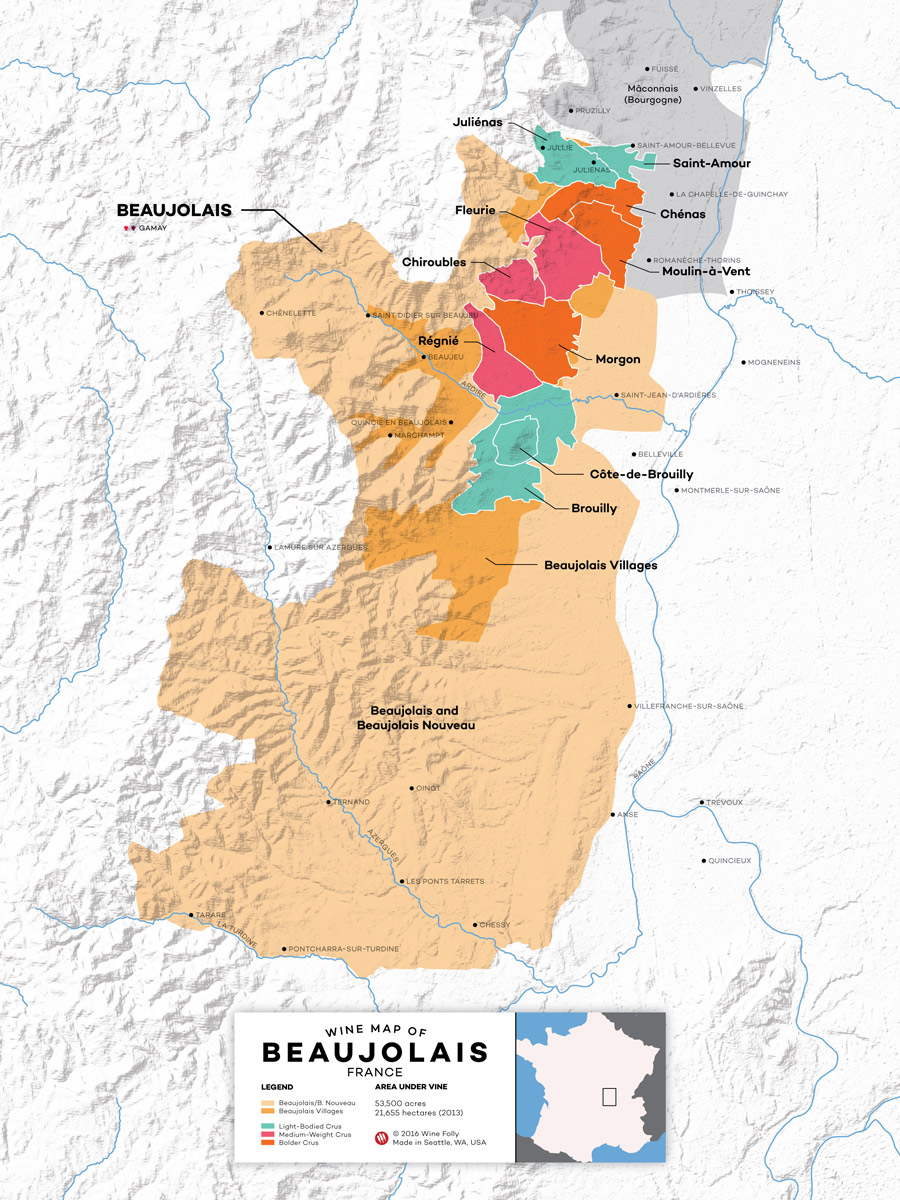
Beaujolais is the name of a little area in France just south of the Burgundy region. It is one of the few wine regions of France that has a more casual approach. Historically, Beaujolais has been considered a part of Burgundy, but today it stands alone producing high quality, signature wines. The more serious cru designations of Beaujolais drink very much like a red Burgundy (Pinot Noir). Beaujolais is arguably one of the lightest reds you will encounter.

Where is Beaujolais?

  • Bordered by Burgundy to the North – the Saône River (which leads to Côtes du Rhône) to the East – the “Gastronomic Capital of France”, Lyon, to the South – and the Monts de Beaujolais (the hills of the Massif Central) on the West.
  • Beaujolais is just 34 miles long and 7-9 miles wide.
  • Divided into two sections by the Nizerand River, with different soils on each side.
  • Beaujolais’ flavor is in the soil. There are mostly granite and schist (decomposed rock) to the North and clay-based soils (marl) to the South.
  • All of the Beaujolais Cru vineyards are located on the northern side of Beaujolais.

10 Beaujolais Crus

The crème de la crème of Beaujolais!

There are 10 Crus of Beaujolais – all in the north and producing only red wines. The wine labels will simply state the name of the Cru, like Fleurie.

Each Beaujolais cru has its own distinct personality – climate, soils, altitude, aspect, and a host of other factors that are unique. These wines tend to be more complex and known to age well.

The Romans were the first to plant vineyards – to keep legionnaires happy! – followed by the Benedictine monks in the Middle Ages.

It was the Dukes of Beaujeu who made the wines fashionable. Originally, the town of Lyon was the main market for Beaujolais wine.

When the railroads were built in the 19th century, Beaujolais spread to Paris. This marked the start of its popularity.

Some of my regional favorites below, which may be partly due to their distribution and accessibility in the states.

Moulin-à-Vent

Considered “The King of Beaujolais,” this sub-region’s vineyards are grown on decomposed pink granite and soft flaky quartz giving the wines a dark ruby/garnet color, good structure and complexity. These are the most tannic and full-bodied wines of all the Cru.

When they’re young you’ll notice lots of plum, cherry and violet notes, but if you can allow the wine to age up to 10 years you’ll be rewarded with more ‘Pinot’ style – dried fruits, earthy truffles, meat and spice. Moulin-à-Vent gets its name from a local windmill.
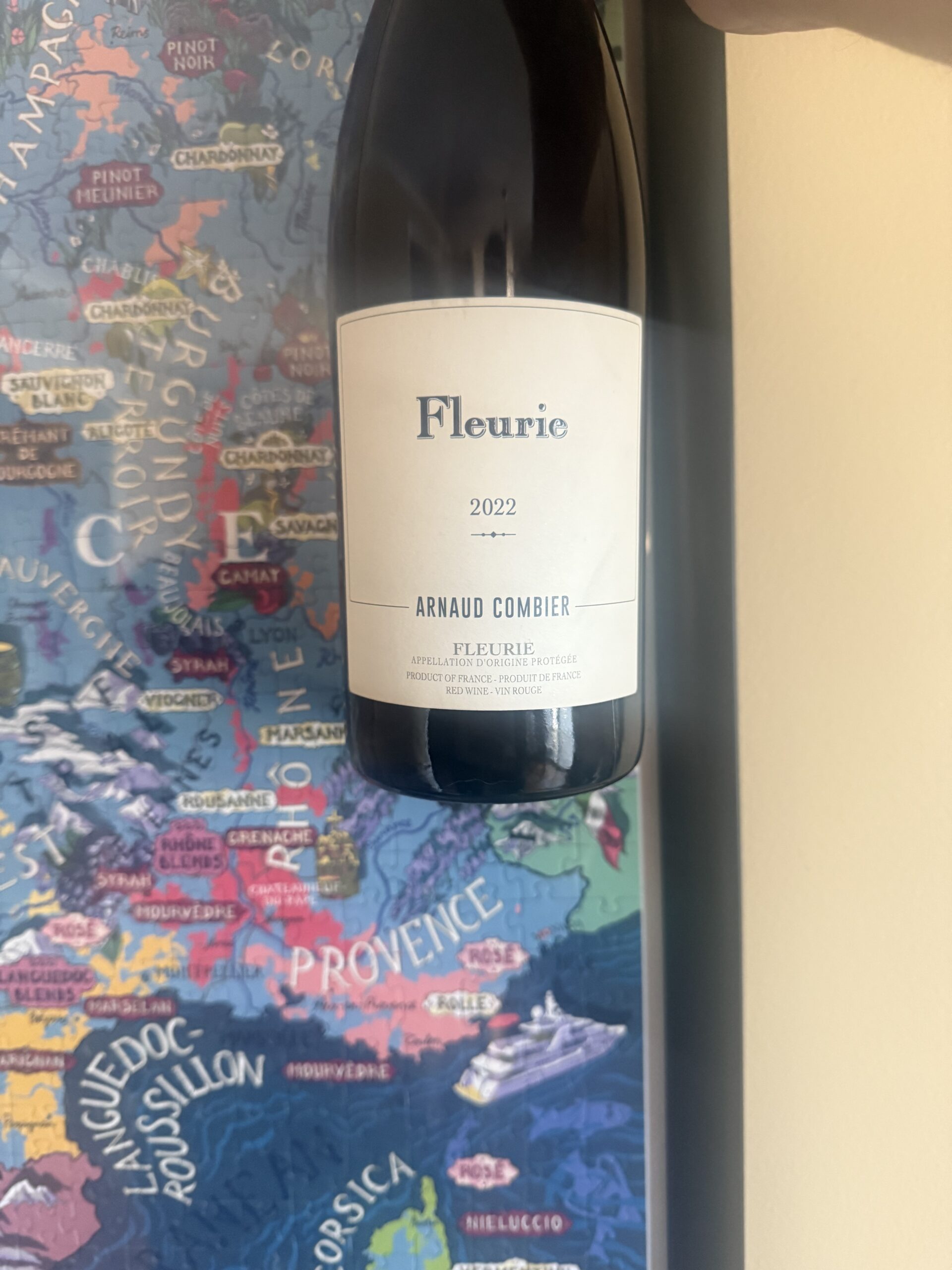
Fleurie

“The Queen of Beaujolais.” The vineyards are planted at a higher altitude on the steep slopes at the foot of La Madone.

The wines are lighter in style and highly aromatic with a ’feminine’ quality. Think roses, iris and violet along with some ripe red fruits and peach. If you’re just getting into Beaujolais, the wines of Fleurie are a great place to start. This one pictured from Angel’s Share in Clay NY is fantastic!

Morgon

The second largest of the Crus, Morgon is comprised of six climat all with slightly different styles. Their unifying feature is the decomposed “rotted rocks”. The locals believe this contributes to the ripe cherry aromas found in all the wines.

These wines are intended to age at least 5–10 years. The young, fleshy palate of peach, apricot, cherry, and plum will develop into a more earthy wine reminiscent of Burgundian Pinot Noir, similar to a Moulin above.

Why Does Beaujolais Taste Like Bananas?

One of the things that sets Beaujolais apart is a particular style of winemaking that is extremely well suited to the Gamay grape. Most of the wines of Beaujolais are produced through a method known as semi-carbonic maceration that highlights the amazing fruity aromas of the wine. You see this technique being used more often in cool climate reds around the world. Regionally, you see it done with Cabernet Franc and Pinot Noir.

The grapes are harvested and then, instead of being crushed, the whole clusters are placed in a vat or tank. The pressure of the fruit begins to crush the grapes near the bottom of the vat, expressing their juice. When the juice comes into contact with the indigenous yeast on the grape skins, the juice starts to ferment creating CO2 gas – aka carbon dioxide – which forces the oxygen out of the tank. Often, a lid is placed on the tank to help eliminate the oxygen as well.

After a short maceration period of around 4-8 days, the juice is racked off (the ‘free run”) and the remaining juice is pressed from the skins (the ‘hard press’), then the two are blended together. From this stage the juice will finish fermentation and completed as a ‘regular’ wine.

This style of fermentation is also responsible for the distinctive aromas of banana, candied fruits, pear, raspberry and cranberry in the finished wine.

(I know this is technical stuff that many of you, unless you’re a wine geek, don’t have an interest in. I bring it up to help you better understand what makes this wine different from others.)

I hope you enjoyed this little primer on Beaujolais wine and the Gamay grape. If you come across any of these wines, please share with me. As you know, I’m always on the lookout for new wines, but especially light reds. Btw, this style of red wine is very approachable, a great intro to red wine, and for those who don’t like red wine. It is also perfect to sip in the summer months and very food-friendly with its acid content and light style. Grab a bottle for Thanksgiving and let everyone try it.

Cheers,

Michael
What am I pouring and drinking right now?

October
22
2025

This post is dedicated to my friend and colleague, Sonya, who has been following and supporting my wine journey since I arrived in upstate NY six years ago. I had the wonderful opportunity to work with her for a brief time at Empire Merchants when I was running the wine program as the GM at Portico Restaurant.

As a champion of local wine, Sonya loves being informed about what’s trending in the local wine scene whether it be the latest and greatest of new wine releases, under the radar wines, winery news, and local events. She is also interested in seasonal sips and my favorite wine to drink each week. As I’m sure with other wine aficionados, wine tasting and drinking is a very spontaneous activity, especially when you take into account what food you are serving or eating.

For this week’s edition of the Pour, I will share the process of my wine selection, which includes the season of the year, occasion/drinking establishment, under the radar or discovery of a new grape/wine, recent wine reviews/ratings, and general feeling and mood. For the latter, the relationship between wine and psychology is a very powerful thing. As a psychology major, former bartender, and current wine steward, I can attest to the psychological implications of what to drink and when to drink it.

Many years ago, I did a piece on drinking personalities based on my experience as a server and consumer of alcohol. Although a novelty piece and not grounded in actual science, there was a lot of truth to its experiential analysis. Maybe I will re-up that story for my audience here sometime. I will discuss what factors contribute to what wine I’m drinking right now and then a little bit about those wines.

Being a wine club member at several Finger Lakes, NY wineries and a local and NYS wine expert, there is a good chance I will be sipping a local favorite or a yummy library wine. By the way, Congratulations to the Finger Lakes Wine Region for being named 2025 Wine Enthusiast’s “Best American Wine Region”.

When people ask me what wine to pair with the food they are having, I immediately provide them with an official answer. But unless they are having a formal wine dinner that costs $100/person or trying to impress their guests, wine collector, or hard to please father-in-law, I will always say “Drink what you like” or “Drink what you are in the mood for”. I know that doesn’t sound very wine snobbish or pretentious of me, but it’s my wine rule. Food and wine pairings are a massive topic, so I won’t focus too much on them for this post.

When selecting a bottle of wine, think “what I’m in the mood for”, “what am I eating”, and “who am I with”. Is the occasion casual or special? Will the bottle be finished? If not, will I or others finish it in the next few days?  Similarly, if you’re feeling adventurous and open to trying something new, choosing a bottle gets way more complex, but exciting at the same time. As long as you’re willing to poke around and do a bit of research—or better yet, take some advice from yours truly, the journey promises to hold a myriad of interesting wines ahead.

If you’re having guests over, take into consideration that everyone’s palate responds differently to flavor profiles—being respectful of that will set you up for a successful selection. Refreshing rosé and sparkling wines set a festive tone—having some of both on hand is never a bad thing. And they are delicious year-round.

When choosing a wine to bring to a dinner party, showing up with bottles that have been chilled properly in advance and stored in a cooler while you travel to your destination allows you to enjoy them upon arrival. Take note of the optimal serving temperatures of the wine and plan ahead. If you need help with, please let me know. Start a wine journal – jot down the winery name, vintage, varietal, and how you served it. Don’t forget to snap a photo of the label to make finding it even easier in the future.

During the fall season (see previous blog post on fall wine pairings), I like to slowly transition my palate to heavier/more medium-full bodied, darker fruit wines, particularly single varietal reds or oaked Chardonnay. As I approach the winter season, I will tend to reach for a bottle that speaks to coziness, warmth, complexity, and festive in nature. Think sparkling (festive), red blends, ports (warm and heavy), dessert wines (sweet and cozy), and fortified wines (sweet, heavy, and strong).

Within those wine choices, I like to grab an obscure wine from a small region that is moderately priced, has good value, and contains a grape that I’m not overly familiar with. There are tons of international and hybrid grapes I have never tried. How to spot a good value wine is by market research, subscribing to a wine publication, like Wine Spectator or Decanter, or looking at the consensus or user ratings from multiple forums and sites.

For budget considerations, my rule of thumb, for example, for a typically high-priced Burgundy from France or Cabernet Sauvignon from the Finger Lakes, is under $30 USD and received a 90 plus score. For a lower-priced varietal, like a Rose or Riesling, with a score of 90 plus, I will look at under $20 USD.

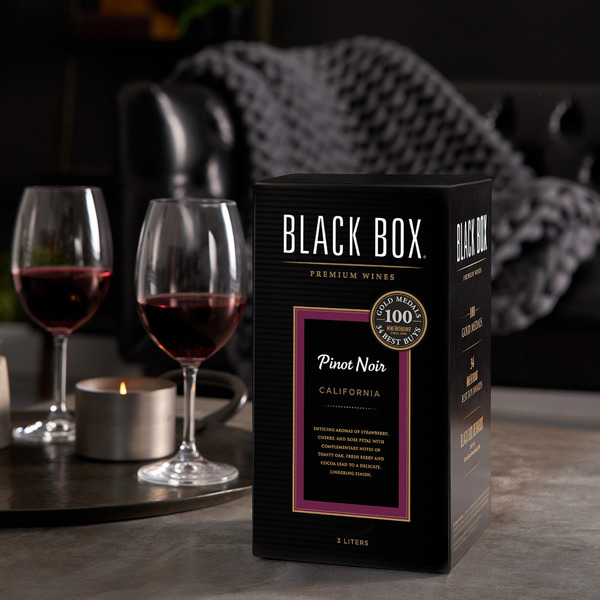
The reality is that, even though I’m a wine purist, I will always recommend drinking your favorite grape/wine for any occasion and if it makes you happy and pairs well with your grub, then that’s a bonus. Don’t think less of me, but I’ve been drinking a reputable box wine called “Black Box”. Not all box wine is created equal. if I want to have something to drink over the course of a week, drinking alone, or just need to unwind, then a $24 USD box (three standard bottles of wine/box) satisfies. Who am I trying to impress? Maybe I should invest in a Coravin so I can drink better wine.

Cheers,

Michael

michael@michaelpour.com

Seasonal Spotlight – Wine Pairings & Ham

holiday ham wine pairings
December
17
2022

Welcome to my first blog post on this new platform just in time for the holidays. Hope you have fun in here. Please keep following and bookmark this page.

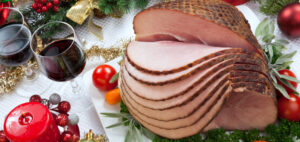
If you traditionally have ham for Christmas dinner, here are some basic rules to pairing wine with your favorite holiday ham.

As a general rules, go with fruity wines. Ham, with its sweet-and-saltiness, pairs best with wines that have a touch of sweetness, a substantial amount of acidity and ample, bold fruit. Great wines with ham are Riesling, Moscato, Chenin Blanc, Rosé, Lambrusco, Grenache, and Zinfandel, but don’t stop there. There are so many wines to choose because ham is very versatile.

The general profile of ham is sweet, salty, textured and rich, but you will find variations depending on the style of ham and the way the ham is prepared.

Dry-Cured, Aged Ham

Thinly-sliced, bold flavored hams with a chewy texture and typically higher salt content.

A classic example of this style of ham, that nearly all of us know, is the Italian favorite, Prosciutto. You’ll find ham in this style typically served in micro-thin layers that melts in your mouth as an appetizer.

Examples – Prosciutto, Bayonne Ham, Serrano Ham

Recommended Wines:

The high saltiness factor and dryness of this ham screams sparkling wine. You’ll also do very well with a sparkling Rosé or even a sparkling red. Other great pairing options include table Rosé, crisp, high minerality and herbaceous white wines, like Gruner Veltliner, dry Sherry (Fino or Manzanilla), and dry Madeira (known mostly as a cooking wine).

Savory and Smoky Ham

Medium to thick cut sliced ham with a medium to bold flavor that’s not sweet.

This style is typically smoked but ranges in size from full-sized fresh hams that you bake in the oven to pre-sliced ham that you buy at the grocery store. This is a less-sweet style of ham so the best wine pairings will be different. Since this style of ham is juicier and not as salty as a dry-cured ham, it is one of the better choices to match with lighter red and rose wines.

Examples – Black Forest Ham, Country-Cured non-glazed Ham, Mortadella, Spam (processed, if you’re into that)

Recommended Wines:

With less sweetness and more texture, you will love this with a medium-bodied fruity red that has moderate acidity. There is a great range of wines to choose from in this style and here are a few favorites to know – Garnacha or Grenache-based reds (such as GSM Blend from Rhone Valley in France), Zinfandel, new-world style Pinot Noir from Oregon or California, Zweigelt (from Austria), Dornfelder (Germany), deeply colored Rose, the Corvina-based red wines of Italiy – Valpolicella, aged Tempranillo (Spain), Nebbiolo (Italy), Sangiovese (Italy), Primitivo-Negroamaro blends from Puglia, Italy and “Secco” (dry) Lambrusco (Italy).

Sweet and Salty Ham

These are typically medium to thick cut hams with a chewy texture and noticeably sweet flavor.

Think Canadian bacon. Since this style of ham is sweet and often served with breakfast and Eggs Benedict, you want to match with wines that are also pretty sweet or have a strong fruitiness on the palate.

Examples – Canadian Bacon, Honey Baked Ham, Glazed Baked Hams, Mortadella

Recommended Wines:

The best way to pair with foods that have sweetness is to have a wine with sweetness too. On the dry side, pick a Riesling, Chenin Blanc or White Zin/Merlot. On the sweeter side go for Moscato, Brachetto d’Acqui (Italy), Vin Santo (sweet dessert wine) and White Port. You can probably get away with more new-world style reds including Australian Shiraz, South African Pinotage and American Petite Sirah.

Have a great holiday season!

Cheers,

Michael Nagy

Wine Glass

DON’T MISS A DROP

Get notified when new articles are poured

We don’t spam!