Wine of the Week: A Hot Trip to Italy’s Boot

Piluna Primitivo 2021
January
13
2025

I wanted to get this “wine of the week” out to you before I take a road trip to Saratoga, NY this week. With the recent loss of my precious Marty kitty this past week, I need a change of scenery. 

For this week’s wine of the week, I take a trip down to the hot climate of the Puglia region along the Adriatic Sea in southeast Italy where the Primitivo grape is widely produced. Puglia is a dry, sun-drenched region that has one of the most intense sun in all of Italy. The entire east side is along the coastline bordering the Adriatic Sea.The climate is moderated by the Adriatic and Ionian seas, which provide constant, cooling maritime winds. 

This unique climate helps produce exquisitely balanced fruit and is well-suited for the production of concentrated, fruity and spicy red grape varieties, like Primitivo. Puglia’s Mediterranean climate and iron-rich, calcareous soils support the native Primitivo by producing an inky, spicy, and brambly ripe red wine.

About half way down, the region becomes the Salento Peninsula. This peninsula, bordered by water on three sides, receives moist, nighttime, sea breezes that bring a welcome cooling effect to the region, where little rain creates a challenging environment for its vines. The region is named for the Italian expression, “a pluvia,” meaning “lack of rain.”

Loved for its fruit-forward wines, the Primitivo grape originated in Croatia. Here it was named from the Latin word, primativus, meaning “first to ripen.” Nobody knew until the early 90’s that Primitivo and Zinfandel were actually the same genetic grape. The grape is better known outside of Italy as Zinfandel, especially California. 

California Zinfandel tends toward a sweeter, fruitier style than Primitivo. This is due to areas like Lodi that are hot during the day, and don’t really cool off that much at night. Napa Valley, and the Dry Creek Valley of Sonoma County, and in parts of New York state also produce it, but are usually lighter-bodied. Both can have a slight sweetness from ripe fruit, but Primitivo is usually made in an earthier, more tannic style.

The main traits of most Primitivo wines are fruity with notes of cherry, strawberry, blackberry, and raisin, earthy and rustic, big and jammy, high in alcohol, chewy tannins, and sometimes a sweet finish. It is no longer an obscure blending grape in Italy. It has become a symbol for high quality, inexpensive single varietal wines unlike many Italian red wines. Primitivo’s ripe fruit and full body make it a great partner with rich, meaty dishes. 

Castello Monaci Piluna Primitivo 2021

I was first introduced to this lovely wine in 2023 when I was the General Manager at Portico Restaurant, high end Italian steakhouse, in del Lago Resort & Casino. Based on the recommendation from my sales rep and upon tasting, I was sold. I decided to add it permanently to my extensive wine list as well as “by the glass” program at a very moderate price.   

Tasting Notes –

Aromas of ripe black fruit, dried red fruit, strawberry, and toasty vanilla and pepper spice. On the palate, hints of cherry, chocolate, and a berry basket. Medium bodied (most Primitivo is heavier), light-medium tannins (with bottle age, tannins have softened out today from my first tasting in 2023), low-medium acidity, and a fruity character at the end of the palate followed by an earthy finish. Even with some age and dried characteristics, it still has some freshness to it.

This featured wine from producer Castello Monaci, with its sustainability philosophy, stands out in the heart of the Salice Salentino DOC, which is located in Puglia in the “heel of the boot” of farthest southeast Italy. Each vineyard section is always cultivated and harvested at night to ensure the best quality of grapes. It has consistently received a 90-point rating from international reviewers overall several vintages. Drink now – not age worthy. Look for the 2023 vintage available now. 

Cheers,

Michael

Wine of the Week: Little Known Red from Austria

Zweigelt Wine of the Week
January
6
2025

I had the pleasure of sipping this wine over the holiday season with in-laws. It was a nice change of pace from what I typically drink even though it reminds me of a nice Pinot and Lemberger all in one bottle.

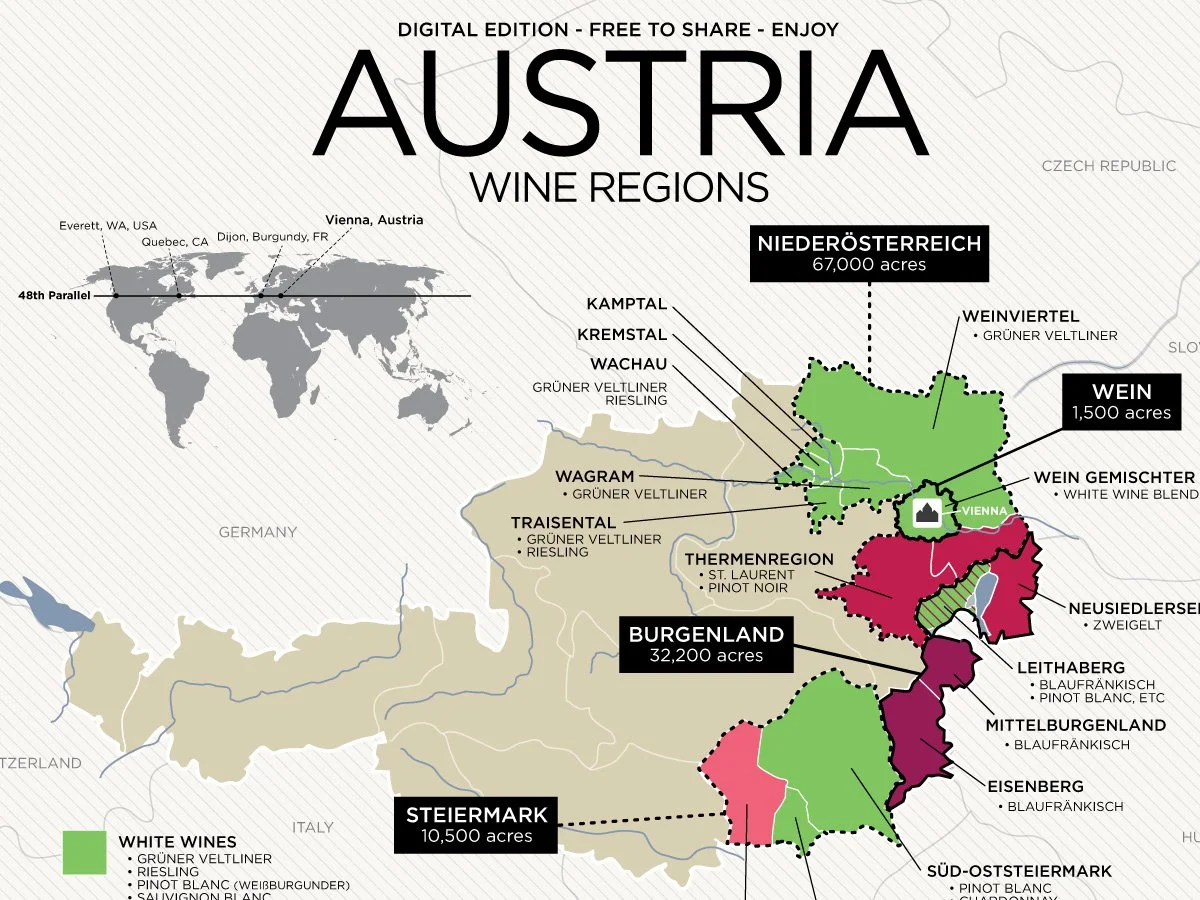
Did you know that the country of Austria produces some really good wine? Can they grow red grapes and produce red wine in their cold climate? Although Austria is better known for its white wine, it does grow and produce some surprisingly good reds that are unique to the red wine world.

Austria as a whole is still white wine country, but of the 30% or so red vineyards, the most widely planted grape is Zweigelt by far. Zweigelt (pronounced TSVY-galt) and other reds are nothing like the new world reds in California, Chile, Argentina, and Australia nor old world reds in France, Italy, and Spain. Austria’s reds are very similar in style to Germany reds.

Austria is a landlocked country in Central Europe, bordered by eight countries – Germany to the northwest, Czech Republic to the north, Slovakia to the northeast, Hungary to the east, Slovenia to the south, Italy to the southwest, and Switzerland to the west

Zweigelt is a relatively young grape variety, having been created in 1922. The grape is a cross between the St. Laurent and Blaufränkisch grape varieties, which are native to Austria. It is a versatile grape that is grown throughout Austria’s wine regions. It is well-suited to Austria’s cool climate, as it ripens early and is resistant to cold temperatures. This allows the grape to be grown in cooler, higher-altitude vineyards, which are not suitable for many other grape varieties. 

Weis Vineyards Zweigelt

When you go to buy red wine and looking for something new and different, consider Zweigelt, and in particular the one I’m featuring in this post as well as one from Weis Vineyards, German winery off Keuka Lake located in the beautiful Finger Lakes, NY. Weis also produces a Dry Rose from the Zweigelt grape. Check them out! They are one of the best wineries in New York State.

The grape generally produces medium-bodied wines with moderate acidity and tannins. The wine has a vibrant ruby color and aromas of dark berries, such as blackberry and black cherry, as well as spicy notes of pepper and cinnamon. On the palate, it has a smooth, velvety texture with flavors of dark fruit, warm spice, vanilla, and sometimes even a hint of chocolate.

Zweigelt is a very food-friendly wine that pairs well with a variety of dishes. It is especially good with meat dishes, like roasted pork, beef, lamb, and duck, as well as with hearty vegetable dishes and warm stews in the winter.

Zweigelt is also an excellent choice for those looking for a more affordable alternative to some of the more well-known red wine varieties. While it is not as well-known as some other grape varieties, Zweigelt is gaining popularity among wine lovers, both in Austria and abroad. 

Austrian wine, in general, has gained a reputation for high quality and unique flavors, and Zweigelt is no exception. In recent years, Austrian winemakers have increasingly focused on producing high-quality Zweigelt wines, and the grape has been gaining recognition and awards at international wine competitions. 

In all, Zweigelt is a versatile, affordable, and high-quality red wine grape variety that is gaining popularity among wine lovers worldwide. With its unique flavor profile and food-friendly nature, it is definitely worth trying for anyone looking for something new and exciting in the world of wine. 

.

Schlosskellerei Gobelsburg Zweigelt, Niederosterreich, 2019 (cover photo)

Btw, German and Austria wines have very long wine names and sometimes hard to pronounce. This bottle of Zweigelt brings forth a nuttiness of almonds and dark cherries and berries on the nose along with a spicy and peppery aroma. It has a light-medium body and well balanced with enough acidity, although not crispy.

This Zweigelt offers a toasty character from some oak, but still fresh and youthful on the palate. It is a juicy, but elegant, energetic red wine with a nice aroma that lasts through the palate and medium finish. 12.5% alcohol.

It has reached its age of maturity in 2025 (not an age-worthy wine by tradition so drink now when it’s good). It is most likely at its peak for drinking.

Try this wine or search for more at your fine wine shop. Most local wine shops only carry 1-2 Zweigelts in inventory so call beforehand or just order this one online. You will not be disappointed! My rating is 8 out of 10 (very good). I won’t feature a wine unless it receives a score of 7 (good) and above. My personal rating system is out of 10; different from most professional ratings….Cheers, M

Drink Spotlight: What are the Drink Trends for 2025?

Espresso Martini
January
3
2025

Welcome 2025! The month of January not only marks the beginning of a new year, but also an opportunity for beverage consultants and wine and cocktail businesses like mine to look at what’s trending in the drinking world and pass it onto consumers. Whether it be the ever-growing world of mocktails/low ABV/non-alcoholic cocktails, spirit-less spirits, experimental and up and coming wines, specifically from lesser-known regions, new spirits, or bar trends, look for these drink trends to pop up in 2025.

The year of 2024 saw the continued uptick of spritzers comprised of bitter and herbal elixirs and specialty Martinis, like the Espresso Martini (not really a martini in the classic sense), Dirty Martini, and whatever you can find to throw into a martini glass. This trend doesn’t appear to be slowing down any time soon. There was also a substantial increase in mocktails, creative no-and low-ABV requests and on drink menus, carbonated, bubbly, coffee cocktails, and high-priced cocktails, wines by the glass and by the bottle, especially in high end restaurants.

And it’s possible that prices might further spike with the new administration’s pending tariffs. Going out to drink is already pretty expensive. We suspect that this new reality and economic factors will determine how and when we go out, and whether or not we choose to drink at a restaurant at all. Why not stay at home with friends and co-workers for a cocktail hour, wine tasting, party, or dinner and choose “The Michael Pour”, a less expensive, much safer, more convenient option with exceptional customer service. No sticker shock, avoid traffic, exorbitant parking fees, and unpredictable bad weather in CNY.

The Michael Pour and I sincerely hope for a successful campaign in 2025 by providing you with excellent, useful, and informative content on the blog and top-shelf, comprehensive, and dynamic wine and cocktail services for your parties, events, dinner parties, company events, and special get-togethers. Please reach out to learn more at michael@michaelpour.com. 717.877.2729, or contact form on the site. Even though we are based in Syracuse and Central NY, we provide virtual and in-person services near and far.

Okay, back to The Martini. People in the industry as well as new drinkers have joined in the martini craze. Gin or vodka, an olive or lemon twist, shaken or stirred, wet or dry, or ‘on the rocks’ have been ordered. Bars have been getting creative and coming up with their own concoctions. Many of these martinis are incorporating gastronomy (science of food) with infusions and the use of herbs, spices, and food products from the kitchen. Will we see new takes on other classic martinis, like the Gimlet, Gibson, and Vesper?

Mindful drinking has been on the rise over the last several years. Hence, the addition of mocktails to cocktail menus. Although many drinkers have good intentions of drinking in moderation, there’s a new trend circulating that may be more effective in promoting moderation in 2025. The term “zebra striping,” as people are now calling it, is a strategy that involves subbing a non-alcoholic beverage between each alcoholic drink. Sipping an entire glass of water or a club soda with lime between cocktails is a great way to stay hydrated and avoid the dreaded hangover. Don’t be surprised when you hear bar guests or people announcing they are zebra striping at your next party.

While small-production artisanal spirits spiked during the pandemic, but the category niche has seen a significant slowdown, as sales declined in 2024 for the first time in many years. The outlook for these brands in 2025 is unclear with continued issues in the supply chain and high interest rates. Plus, as consumers start to feel the effects of rising prices, they might opt for bigger, well-known brands on the shelf.

Tourism in Japan reached record highs in 2024. With many U.S. travelers returning from recent trips to the country, we expect more drinkers will be eager to imbibe on sake more often than just at the sushi counter. Wine experts have been advocating to have sake placed alongside wine on restaurant menus. Some big city raw bars and bistros are featuring it now, even by the glass, and most likely will stick.

Red wine’s long reign over white wine may come to an end. While Cab, Merlot, and other reds got a boost in popularity from its health benefits and high antioxidant content, red wine’s health impact has subsided and drinkers are now looking to its lighter, lower-ABV counterparts like white wine. Big production and commercial wine companies are acquiring more traditional white wine producers to meet this trend.

Shots and shooters are starting to appear in more high-end and fine dining restaurants as a more casual, more playful way for guests to start a meal or to end a meal with dessert. Sweet shots to pair with desserts are becoming an alternative to hot spiked coffees, ports, sherries, and spirits on the rocks. As more diners look for restaurants to provide a full night-out experience for them, expect more “fancy” restaurants to have a little fun with shots.

Other notable trends – Guinness draft is on the rise in the beer world becoming more accessible in different types of watering holes and restaurants. Coffee as a main ingredient in everything from beer, cocktails, Martinis, Manhattans, and Old-Fashioneds.

Cheers,

Michael Nagy

michael@michaelpour.com

Seasonal Spotlight: Cozy Up with these December Cocktails & Mocktails

Holiday punch
December
3
2024

December brings a whole new element to the cocktail and mocktail world. As the weather gets colder, the wind is blistering, and the snow begins to fall, the choice of what to drink at home, serve at holiday parties, and sip Christmas Eve and Christmas Day with family and friends becomes paramount. The season is brimming with holiday cheer with decorations, Christmas cookies, and a renewed gathering with family. To add to the celebration, why not enjoy a spirited winter cocktail or mocktail or a hot beverage that will warm you up?

You can mix up batched drinks, hot drinks, after-dinner drinks, brunch drinks, punches, or sangrias featuring classic holiday flavors like gingerbread, peppermint, cranberry, citrus, pear, cinnamon, apple, pomegranate, and sugar cookie or make a cozy drink that warms your soul. If you’re a fan of hot drinks, try spiked hot chocolates, hot toddies, or hot buttered rums. Think of a Bloody Mary made with tequila instead of vodka or a martini with pomegranate, blood orange, or cranberry flavors. Pull out a nice brandy, cognac, or whiskey to add to your hot drink or warm it up over a snifter glass filled with hot steaming water.

No matter what type of drink you choose, now is the time to make use of seasonal winter fruits, juices, and syrups listed above to concoct a non-alcoholic winter drink, Christmas drink, or punch the whole family and guests can enjoy.

Below you will find some cocktail options for the month of December, Christmas, and the holiday season. If you don’t drink or prefer a non-alcoholic option, there are variations listed in the drink recipes to make mocktails. If you would like help creating your own holiday drink menu or want to plan an event this winter, please feel free to reach out by email, DM on IG, or contact form on website. Cheers!!!

Hot Toddy

Toasty Toddy: A Classic Reinvented 

Let’s kick things off with a twist on a timeless favorite. The Hot Toddy is the epitome of cold weather cocktails, but here is joyful spin to it, making it bolder and brighter. It is simple yet sophisticated, capturing the essence of celebration. Just combine the whiskey, honey, and lemon juice into your favorite glass and top it with hot water and stir until the honey is dissolved. Add the cinnamon stick, lemon slice, and cloves for garnish, and enjoy the warm embrace of this elevated classic.

Use Scotch, Irish whiskey, Rye, Bourbon, or Blended Whiskey. The brown spirit is often what leaps to mind when people think of a Hot Toddy’s boozy base because the spirit’s roundness complements the cocktail’s other ingredients well. But any spirit is a good Toddy base. Truly. Rum, being a kindred brown-spirit cousin of whiskey, works well. Try agave-based spirits like tequila and mezcal, or even gin, if you prefer. The endgame is different with each spirit, but the warming results are not.

  • Boiling water to fill an Irish coffee mug or thick mug
  • 4 cloves
  • 1 lemon peel or wheel
  • 2 teaspoons demerara sugar or brown sugar
  • 1/4 oz lemon juice, freshly squeezed
  • 2 ounces whiskey (bourbon, rye, Irish or scotch) or go for a dark or spiced rum

Prep –

Fill a mug with boiling water and let stand for a minute or two to warm. Meanwhile, stick the cloves into the lemon peel or wheel and set aside. Empty the mug and fill about halfway with fresh boiling water. Add the sugar and stir to dissolve. Add the prepared lemon peel or wheel and stir. Add the lemon juice and whiskey, and stir again.

Sparkling Winter Cosmo

Sparkling Winter Cosmo

This boozy, vivid, orange spritzer with the addition of Champagne, particularly rosé Champagne, takes on the personality of everyone’s favorite Cosmo and Margarita.

This vivid orange spritzer gets its striking color from blood orange and rosé Champagne. The tart juice blends lovingly with tequila and further enhanced by the brandy-based orange liqueur, Cointreau and two dashes of orange bitters. St.-Germain, an elderflower liqueur, adds sweetness and floral notes, amplifying the drink’s complexity and depth and a little lime juice helps balance the acidity and sweetness.

Rosé Champagne is generally on the dry side and with lots of berry notes and an aroma of baked brioche, it’s the best sparkling option. Plus, it is a great celebratory sparkler for the holidays. Cremant sparkling rosé wines from across France can be a replacement at a lower price tag.

Another great option is Spanish cava, which offers a number of fantastic rosé options.

The United States is producing some quality sparkling rosé, with states like Washington, Oregon, California, New Mexico, New York, and even Texas getting in on the action. Just be sure to avoid any bottles that are too sweet, or it will throw off the balance of the drink. To make mocktail, replace alcohol with spirit-less spirits, sparkling grape juice or sparkling mixed berry soda water for Champagne, and sparkling elderflower beverage.

  • 1.5 oz reposado tequila
  • 1/2 oz Cointreau
  • 1/2 oz St-Germain Elderflower Liqueur
  • 1/2 oz blood orange juice
  • 1/2 oz lime juice, freshly squeezed
  • 2 dashes orange bitters
  • Rosé Champagne, chilled, to top (approximately 3 oz)
  • Garnish: blood orange wheel

Prep –

Add the tequila, Cointreau, St-Germain, blood orange juice, lime juice and bitters into a shaker with ice and shake until well-chilled. Strain into a wine glass filled with fresh ice. Top with the rosé Champagne. Garnish with a blood orange wheel.

Michael’s Holiday Punch

This warming punch is perfect for winter entertaining with cold weather flavors of pear, cinnamon and citrus. While apples are typically the star of fall cocktails, pear liqueur adds fruity depth and flavor without being overly sweet or sour. This punch serves 12, but if you have more or less guests, adjust accordingly. It does require a significant amount of prep and time in the kitchen, but it is so worth it for your holiday parties or get togethers. To make mocktail, remove Cognac, replace pear liqueur with pear puree, and replace Champagne with sparkling white grape juice or soda water.

  • Three 3-inch cinnamon sticks, broken into pieces, plus whole cinnamon sticks for garnish
  • 1/2 cup sugar
  • 12 oz Cognac
  • 12 oz pear liqueur
  • 9 oz fresh lemon juice
  • 6 oz triple sec
  • 12 oz chilled Champagne
  • Orange wheels for garnish
  • Lemon wheels for garnish

Prep –

  • Add broken cinnamon sticks to a medium sauce pan and cover with 1 cup of water. Bring to a boil and simmer over moderately low heat until reduced by half.
  • Stir in the sugar until dissolved. Let cool, then strain through a fine sieve into a bowl; refrigerate until chilled.
  • Add crushed ice to large punch bowl. Using a long stirrer or spoon, slide orange and lemon wheels against the inside of the punch bowl.
  • Combine one-fourth each of the cinnamon syrup, Cognac, pear liqueur/pear puree, lemon juice and triple sec or not in a cocktail shaker. Shake well.
  • Add one-fourth of the Champagne/sparkling grape juice and shake once, then add to the punch bowl. Repeat the shaking 3 more times with the remaining ingredients. Serve the punch in glasses, garnished with cinnamon sticks and orange and lemon wheels.

Michael’s Winter Party Sangria

Cover photo. Most people think of red sangria (made with red wine) during the cold months, but this white sangria will satisfy all your guests who prefer white wine or like sangrias. It does require a significant amount of prep and time in the kitchen, but it is so worth it for your holiday parties or get togethers. To make mocktail, replace Pinot Grigio with white grape juice.

  • 3 large oranges
  • 1 small lemon, plus lemon wedges for rims of glasses
  • 1 (2-inch) piece fresh ginger, peeled, halved lengthwise, and smashed (optional). For ease, you can leave out or sub crystallized 1/2 oz ginger liqueur, ground ginger (very potent so use very little)
  • 1 cup granulated sugar, divided
  • 2 (750-ml) bottles dry Pinot Grigio
  • 5 whole star anise
  • 2 cinnamon sticks
  • 1 teaspoon vanilla extract
  • Pinch of kosher salt

Prep –

  • Using a vegetable peeler, remove peel in wide strips from 2 oranges and from half of the lemon. Juice lemon to equal 2 tablespoons juice; set juice aside.
  • Heat orange peels, lemon peels, ginger (opt), and 1/2 cup sugar in a large saucepan over medium-high. Cook, stirring and scraping bottom and sides of pan constantly with a wooden spoon, until sugar crystallizes and turns golden brown, 7 to 9 minutes. (The sugar will melt and then crystallize, forming small pebbles.) Slowly stir in 1 bottle of wine/grape juice Slowly stir in second bottle of wine/grape juice; add star anise, cinnamon sticks, vanilla, and reserved 2 tablespoons lemon juice. Reduce heat to medium-low, partially cover, and bring mixture to a vigorous simmer. Reduce heat to low, and simmer 10 minutes. Remove pan from heat and let mixture steep 20 minutes.
  • Meanwhile, grate remaining orange to equal 1 packed tablespoon grated zest. Combine orange zest, salt, and remaining 1/2 cup sugar in a small bowl. Using the back of a spoon, stir and crush mixture until mixture is fragrant and has an orange tint; set aside.
  • Return pan to heat over medium, and cook, stirring occasionally, until warmed through, about 4 minutes. Pour wine mixture through a fine wire-mesh strainer into a large heatproof bowl; discard solids.
  • Rub rims of heatproof glasses or mugs with a lemon wedge; dip rims of glasses into orange zest–sugar mixture. Carefully ladle mulled wine into glasses, and serve warm.

If You Love Pinot Noir, Try These & Other Seasonal Wines

Thanksgiving Pinot Noir
November
26
2024

If you haven’t picked up your Thanksgiving wine yet, then use this guide for your shopping. There are many options, whether it be white, red, rose, or sparkling, for all your guests’ diverse palates. Because of the season, I tend to focus on reds for the holiday season now through Christmas. Of course, the holidays are a celebratory time for many so a sparkling or that special bottle in the cellar would suffice.

If you prefer whites or roses that would pair well with turkey dinner or is your go-to, then you are set. I have the snob-less philosophy of drinking what you and your guests like regardless of the food, season, or what the wine snobs say. After the holiday is over and your guests depart, you are left with wine you can enjoy yourself.

I may be a little biased (I write about it a lot), but I feel that Pinot Noir is a happy medium no matter what you like. Not only is it a lighter and medium style of red with low to medium tannins and good acidity, but is food-friendly and pairs incredibly well with all the Thanksgiving fixings and turkey. It is also approachable for non-red wine drinkers and those who prefer not to sip a heavy, tannic red with or without food.

In the realm of Pinot Noir, there are many different styles produced around the world (some of which are new and upcoming regions rarely explored) with varying flavor profiles that won’t require you to spend upwards of $30. The price point on good quality Pinot from Burgundy, California from Russian River Valley, and some Oregon from Willamette Valley will cost you. See my previous Pinot posts on the blog. If price isn’t an issue and you prefer those styles of Pinot Noir, then go for it. 

Below you will find my value PN recommendations for the holiday season along with other reds and whites that will match your menu and satisfy your guests regardless of their wine preferences for under 30 bucks. Most Pinot Noir enthusiasts know about and have tried Pinot from California, Oregon, and Burgundy, but who else in the world produces fine Pinot that actually fits the season better and won’t cost you an arm and leg? 

I have recently discovered some excellent PN from Germany and the Alsace region of France, both of which are well known for Riesling and the latter for sparkling wine as well, which often contains a percentage of Pinot Noir in its blend or 100% Pinot Noir. Some other countries and regions produce excellent Pinot Noir which can be drunk all year long, but ones from these places are ideal right now and throughout winter.  

Bright, juicy, and easy to drink Pinot Noir from Alsace in the northeast corner of France is definitely under the radar. If you’re not a wine scholar, you may not be familiar with PN from France not named “Burgundy” or “Bourgogne”. It has grown in Alsace since the Middle Ages. Pinot Noir was considered a table wine at the time so it was overlooked in the original 1975 decree of the Alsace grand cru designation as well as in later revisions, until the designation changed in 2022. Wow! that’s recent!

Created as a pure expression of the fruit, Alsatian Pinot Noir is generally made in an unoaked style and is the only red variety allowed to be grown in the regional cru, or vineyard classification system, in Alsace. 

The wines from here are medium-bodied and offer fresh red berry notes of strawberry, raspberry, and cherry. When some oak is used, the wines are well-balanced and add warm baking spices to the red berry flavors. 

Many Alsatian Pinot Noir wines reflect a Burgundian style of winemaking showing elegance and the ability to age for a decade or two. These Pinots offer awesome value when compared to average price points of wines from Burgundy. Alsatian wines are also leaner than wines from warmer regions, like California and Australia. They also offer more red berry fruit than the dark, cherry flavors found in Oregon Pinot Noir.

Cremant d’Alsace rosé, or pink sparkling wine from the region made in the traditional style using 100% Pinot Noir grapes, is a light and lively sparkler with soft aromas of strawberry and cherry blossoms with some round peach, floral, and raspberry notes on the palate.  

What about German Pinot Noir? Did you know that Germany produces Pinot Noir? Well, it makes sense considering the climate and overall geographic location and proximity to Alsace. Alsace and Germany are close neighbors. German PN is not well known and goes unappreciated due to the lack of exposure worldwide, lack of exports, and what it is sometimes called. It is a very splendid style of Pinot right now.

The German word for Pinot Noir is Spätburgunder, translating to “late” (spät), referring to the grape’s later ripening when compared to other Pinot clones, and Burgundy (Burgunder), the antiquated term for Pinot Noir. 

German Pinot Noir is typically light in color, body, and tannins, with flavors of cranberry, cherry, baking spice, and a stony minerality. Some can be earthy and savory, but the general consensus is that it contains a bigger fruit and more acidity than most Pinots. Traditional German Pinot Noir is lighter than Pinot Noir from warmer climates and Alsace, but some contemporary winemakers are producing fuller-bodied wines similar to Alsace.

Other great styles of wine for the season include:

Reds – Beaujolais/Gamay/Gamay Noir (France), Cabernet Franc (France, NY, Virginia, Chile), Zinfandel/Primitivo (California, Italy), Blaufrankisch/Lemberger (NY, Germany, Austria)

Whites – Riesling/Semi-Dry Riesling (NY, Mosel, Germany, Austria, Alsace, France, Washington State), Gewurztraminer (Alsace, France, NY, Italy), Gruner Veltliner (Austria, NY)

Any Sparkling/Champagne – Blanc de Noirs (Pinot Noir) from NY, France, and California and Rose Champagnes are excellent choices.

Shopping List 

Check your wine rack or cellar for the wines above, but if you are looking to stock up for the holidays and season, then look for these wines by grape varietal, country, and region. The list below includes Pinot Noir, Beaujolais, Cabernet Franc, and Riesling.

Pinot Noir

Jürgen Leiner ‘Handwerk’ Pinot Noir 2022 (Germany), $24

Borell-Diehl ‘BD’ Pinot Noir 2021 (Germany), $14

August Kesseler ‘The Daily August’ Pinot Noir 2022 (Germany), $27

Terres d’étoiles Pinot Noir 2023 (Alsace, France), $22

Allimant-Laugner Pinot Noir 2022 (Alsace, France), $20

Domaine Bechtold Obere Hund Pinot Noir 2021 (Alsace, France), $29

Other red wines (under $30)

Maison L’Envoye Fleurie Château Vivier 2022 (Beaujolais, France), $21

Domaine Dupeuble Pere et Fils Beaujolais 2022, $20

Lamoreaux Landing T23 Unoaked Cabernet Franc 2022 (Finger Lakes, NY)

Macari Lifeforce Cabernet Franc 2022 (North Folk Long Island, NY)

Heron Hill Winery Classic Cabernet Franc 2020 (Finger Lakes, NY)

Whites (Under $30)

Anthony Road Finger Lakes Dry Riesling 2020

Thirsty Owl Wine Company, Dry Riesling 2019

Weis Vineyards Reserve or Dry Riesling 2019

Wine Glass

DON’T MISS A DROP

Get notified when new articles are poured

We don’t spam!