What wines are we drinking right now?

Fall wine
October
29
2024

Does the season of the year guide our wine preferences? 

Short answer, yes, absolutely! Is it socially acceptable to drink your favorite or go-to wine even if it is technically a seasonal sip? Yes! My recommendation is always – drink what you like, first and foremost, then consider expanding your palate to accommodate what you are feeling at the moment or what foods will best accompany the wine.

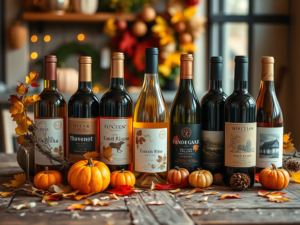
In the spring and summer months, many wine drinkers tend to drink rosé and whites for their lightness, aromatics, crispness, floral components, and refreshing traits. In the northern hemisphere, the release and anticipation of the new vintage of rosé wine coinciding with the beginning of spring. In the fall/winter months, wine drinkers will transition to drinking more red wine, heavier whites, like oaked Chardonnay, and fuller bodied wines.

The seasonal nature and availability of produce and food also dictates our pallet and wine pairing choices. For this fall, try different oaked chardonnays from around the globe, orange wines (more on these later), and red wines, like Pinot Noir, Merlot, Sangiovese, Valpolicella, Cabernet Franc, and Malbec. If you’re a fan of bubbly, you can drink it anytime.

Fall wine glass

What wine would you recommend for Fall? 

Being a wine lover, I certainly have my preferences as I’m sure you do as well, but I like to explore new wines, styles, and regions. I will reach for that bottle of red most of the time, but if I’m having wine with food, I will definitely try to enhance the experience by choosing a wine that pairs well.

For fall, I like to drink Rhone varietals such as Grenache (red), Syrah (red), and Viognier (white, similar in style to Chardonnay), and most reds, although I prefer lighter to medium styles most of the time. You can find really good Rhone blends (called GSM blends with the ‘M” referring to Mourvèdre) or single varietals from the US, France, Barossa Valley in Australia and South America.  More widely available than ever. Stylistically, all these Rhone varietals have vibrant fruit balanced with savory, spice, earthiness, herbal and vegetal flavors that pair very well with the flavors of fall, like cool climate vegetables that can be roasted, braised, or sauteed. Don’t be afraid to venture out and try different red wines, especially for your holiday events and gatherings. I think Cabernet Franc is a lovely turkey day wine with all the accompaniments and a very underrated wine overall. I like CF all year long.

Classic Reds

Classic reds are always in style and continue to be the season’s most popular wine choices. Not just because they are ‘red’ and are bolder and fuller than whites, but because the rich flavor profiles that can range from dark fruits to earthy undertones, robust reds provide the perfect accompaniment to the season’s hearty dishes like roasts, stews, and casseroles and holiday celebrations. These classics include Cabernet Sauvignon, Merlot, Pinot Noir, or a red blend, like Bordeaux blend. If you opt for one of these, then try to find high quality ones (not necessarily the most expensive ones) in their category. Low quality vs. high quality fuller, red wines offer a very different experience.

Don’t forget about winter whites

Just because the sun and warm temperatures have hibernated for the season doesn’t mean you have to ditch white wine altogether. There are plenty of full-bodied, cozy whites that will work just as well as heavier reds with your fall cuisine and to drink by themselves. As mentioned earlier, an oaky Chardonnay always has a place at any holiday table. I look to Burgundy, France, Washington State, US, or South Africa for my Chard and Chablis for lighter/hybrid styles. Some trendy whites, like Viognier and Chenin Blanc are on the rise. When choosing your white wine in cooler weather, look for flavor profiles and textures that are rich, chewy, nutty, or creamy. These types of wines are usually fermented and/or aged in oak barrels and undergo malolactic fermentation, which gives them those traits.

Orange Wine

What other wines are trending right now? 

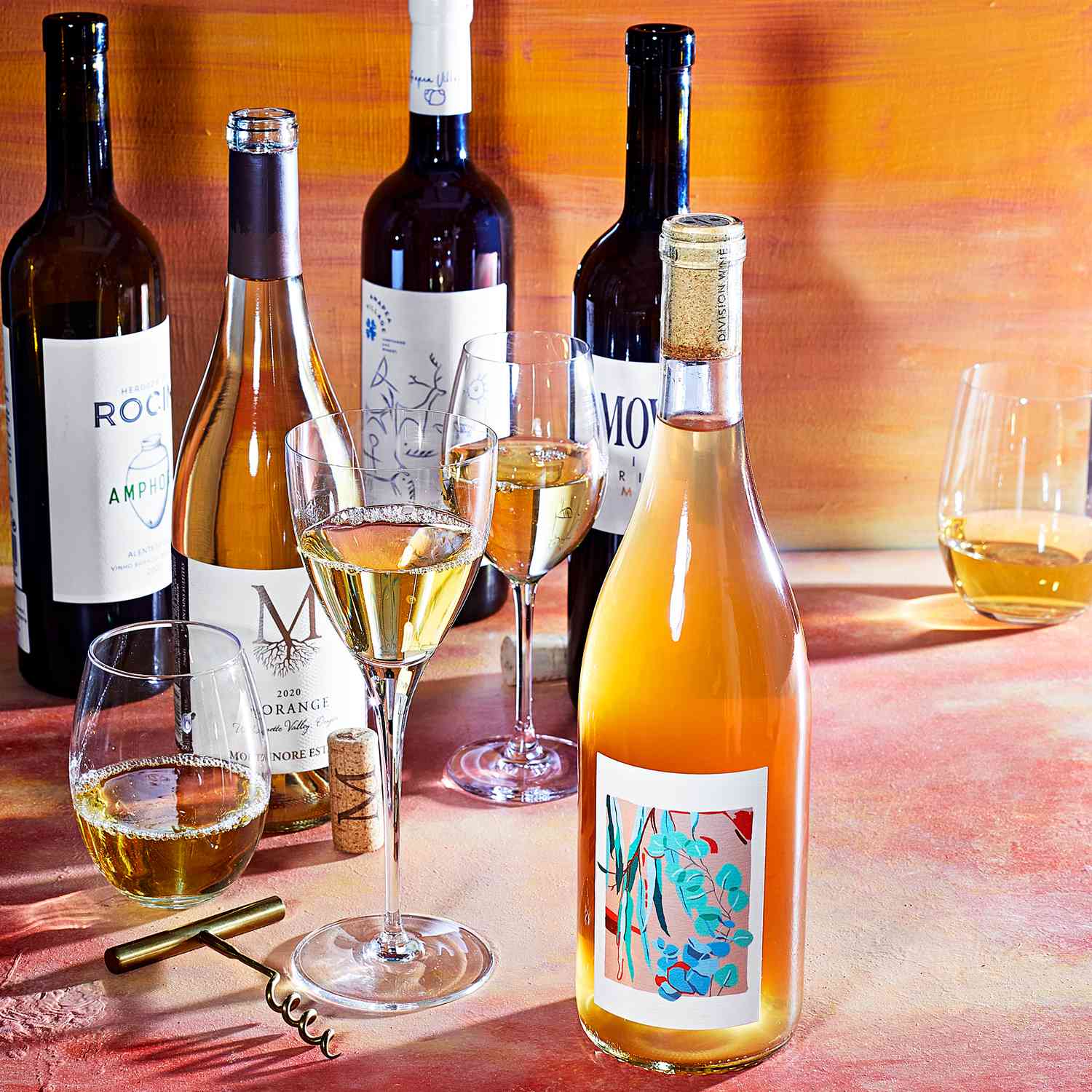
Orange wines have been growing trend the past few years. Orange wines have been around for a long time, dating back over 8000 years when, without modern wine making technology, all wines were fermented on the skins of the grapes, which is what gives wine its color. They were left in a pot to stew and ferment and the skins turned them a dark amber shade. Wine making was modernized in the 60s and 70s and the skins were removed to produce the lighter, fresher, cleaner style of common crisp whites like Sauvignon Blanc and Pinot Grigio we know today.

They are considered a ‘white wine’ that has been fermented with the skins on. Orange wines undergo a similar wine making process as reds where they are in contact with the skins during fermentation, so they take on the intensity of the colors and tannins, giving them a richer, heavier body. Today, there is a demand for orange wines to be less macerated, lighter, and fruitier, but still have some color and tannin structure. You will have to search hard to find orange wines in the marketplace, but if you like fuller bodied white wine, give them a try.

What else is trending in the wine world?

There is definitely a conscious shift toward natural, organic, vegan, and biodynamic wine and what that means. People are conscious about sulfite content, agricultural practices, and the environment. The grape skins used for orange wines are usually thicker and more resistant to pests and disease, so they are not treated as much and the tannins help protect them from oxidation, so they don’t need as much manipulation, sulfur or other preservatives. If this info is important to you, look for it on the back or front label or do a search online for bottles that are environmentally conscious.

Rosé wine is becoming more popular year-round evidenced by the hashtags #roseallday #roseeveryday all over social media and the internet. Many wineries are now producing different Rosés every year and experimenting with different grape combinations for them.

The public is more open to canned wine options these days, which started out of convenience, but has since lead to wineries putting higher quality products into this accessible format because of its popularity.

Pét-Nat (short for Petillant Natural) is a sparkling wine that has really taken off in colder climates. Unlike traditional champagne, it finishes its fermentation in the bottle and is not disgorged. Many different white grape varieties are used for this style of wine and can be a white blend.

Stocking your cellar/wine rack for Fall

The first thing you should do, as with other seasons, is to stock wines that you love to drink. From there, add wines that your family and close friends like just in case they visit unexpectedly or you have a last minute dinner party. Don’t be afraid to stock obscure wines or wines that seem interesting to you. Have fun with it! Take a chance – you might find something you never heard of and like it. I’m often asked what my favorite wine is. To me, it’s a loaded question because I like a lot of different wines (even though I will pull a red most of the time) and really depends on the occasion, what you’re feeling, and season (which is what this post is all about). Since most of my audience and guests are probably not wine experts, I try to introduce the world of wine to them one glass at a time. It’s amazing the excitement derived from people when they discover a new wine or style.

Try to curate your fall cellar with as many different wines as you can. Start with the most well-known grapes and wines and go from there. Here is an example – Pinot Noir, Cabernet Franc, Merlot, Cabernet Sauvignon, Champagne/Sparkling Wine, Rosé, Sauvignon Blanc/Sancerre, Pinot Gris/Grigio, Chardonnay (oaked), and Riesling (dry and semi-dry). If you would like to know what specific region or country of origin is best, just reach out. For the holiday season, chilling a nice dessert wine, like a Sauternes, ice wine, late harvest Riesling, or fortified wine, like Port, for dessert, is a nice touch and would impress your guests.

Some additional wines to stock up on for the season (reds) – Malbec, Syrah/Shiraz, Carmenere, Zinfandel, Grenache, Gamay/Beaujolais, Nebbiolo, Chianti, Lambrusco, Primitivo, Tempranillo/Rioja

We all look forward to holiday feasts and celebrations that come with the fall and winter months. Because no true celebration is complete without the perfect bottle or bottles of wine for you and your guests, I wanted to share these trends and options.

Follow me @themichaelpour on Instagram and The Michael Pour on Facebook to see more wine recommendations, advice, and inspiration. Sign up on the homepage with your email to receive notifications when articles are poured. Share with others who may enjoy this content.

Cheers,

Michael

The Era of the Mocktail: Creating Delicious NA Beverages

mocktails cover
September
24
2024

In recent years, there has been a growing trend of mindful drinking and the reduction of alcohol consumption. People are choosing to take a break from drinking or reducing their consumption. Customers expect to have non-alcoholic or mocktail options on the menu.

Mocktails can provide an alternative to traditional cocktails that offer all the flavor without the buzz. Any cocktail can be transformed into a mocktail by knowing the cocktail ingredients and the flavor profile of the cocktail. To find the right balance, pair ingredients that go well together. 

Mocktails do not have to be cloyingly sweet or boring. On the contrary, they can be fun, fruity, creative, and refreshing. The use of homemade syrups, mixers, modifiers, shrubs, infusions, and craft, spirit-free spirits gives you a lot of options. Give your customers a vibrant and tempting no-alcohol option.

Mocktails can also offer a wide range of benefits to your customers and business. They are more inclusive, allowing those who don’t drink alcohol, or who have a limited capacity to drink, to feel included in the social scene. For those who do consume alcohol, mocktails can be a great way to pace their intake while they can still enjoy the flavors they love.

It also gives you the opportunity to show your business creativity that helps you stand out from the crowd. Having a diversified menu is a great way to appeal to your current and future customer base and is a responsible and profitable endeavor.

batched mocktails

Decide on the type of mocktails you want to serve. Whether it’s for an intimate gathering of friends, a family get-together or a corporate event, mocktails can provide the perfect range of flavors and appeal. Consider a selection that will appeal to everyone. Have fun experimenting with different flavor combinations like watermelon and mint.

Creating alcohol free beverages allows you to show your creativity with flavor while also providing a low-alcohol beverage option that everyone can enjoy. Incorporate non-alcoholic spirits that you can substitute for tequila, gin, whisky, rum and more, such as brands: Lyre’s, SeedLip, and Spiritless. 

Choose a wide selection of garnishes for your mocktail bar. Go with organic fruits and vegetables to create healthier drinks for your guests. Some of the most popular garnishes used in cocktails are citrus fruits such as lemon, lime, grapefruit, and orange. The acidic juices from these fruits help to balance out the flavors of a cocktail, adding brightness and acidity to the drink.

Fresh herbs like mint or basil can add an aroma to a cocktail. Try dehydrated garnishes as an alternative to fresh fruit for your next event. They are cost effective with a high shelf life and add a different twist to the beverages.

private party

Prepare the ingredients before guests arrive. It is one of the most important aspects of hosting an event or running an efficient bar. Make sure to have all the necessary ingredients ready, including non-alcoholic spirits, juices, mixers, syrups, garnishes, ice, bar tools, and glassware.

Having too much of something is better than too little, especially in the case of ice. Stock a variety of glassware to use for the different types of mocktails on your menu. 

From shakers and strainers to jiggers, zesters, peelers, muddlers, and bar spoons, having all the necessary bar tools on-hand helps make sure that any mocktail you concoct is made accurately and properly. Bar tools can save you time and can add a presentation factor to the finished beverages.

“Mocktails by Michael”, a division of The Michael Pour, is creating mocktails for you. We will prepare and bring a batched mocktail with garnishes, glassware/cupware, napkins, straws, etc… to your next party or event.

We can also provide bartending service and setup onsite. Inquire within! Booking available under the contact form tab. Would you like some spring mocktails or summer mocktails at your pool party or a mocktail bar at your wedding, bridal shower, company event, or special event?

Array of Mocktails

Cheers,

Michael 😉

michael@michaelpour.com

717.877.2729

Grape Spotlight: Celebrating Pinot Noir Day

Oregon Pinot Noir
August
15
2024

International Pinot Noir Day is celebrated worldwide on August 18, 2024. If you’ve spent time with me, you know that it is my favorite wine. It all started back in my early days when I had the opportunity to try many different styles of Pinot from a nice, curated wine list at Marriott International. My love for Pinot took off when I was able to experience the magic of this grape when paired with food and dessert.

From there, I often advised companies and individuals with Pinot Noir recommendations for their events and weddings. Years later, I decided to pursue my advanced wine certifications and specialty certification in French wine, including Burgundy, where Pinot Noir hails supreme.

Working in the cool-climate Finger Lakes wine region has allowed me to appreciate it even more. If you haven’t tried some of the excellent Finger Lakes and New York State Pinot Noir out there, you would be pleasantly surprised. Stylistically, they compare well to classic Burgundy, France Pinots and their application in food pairings. Unfortunately, they haven’t received the national recognition they deserve. Sure, there are some wonderful Pinot Noirs coming out of California that are readily available in all markets, but I appreciate those coming from smaller, lesser-known places.

Enjoy this guide to the classic and noble grape! At the end of the discussion, look for my PN recommendations that hold great value, i.e. won’t break the bank, and from small, local producers and cooler regions.

Pinot Noir is one of the world’s most revered and popular red grapes. While the variety originated hundreds of years ago in France’s Burgundy region, it has spread across the globe, much like its White Burgundy counterpart Chardonnay. Wine enthusiasts can enjoy Pinot Noirs from California, particularly Sonoma Coast and Russian River Valley, Oregon’s Willamette Valley, New Zealand’s Marlborough and Central Otago, New York, and many other regions.

While versions from different countries and appellations can vary in style, a few things are the same for most Pinot Noirs. Generally, these red wines are beloved for their easy-drinking qualities, lower levels of tannins (that bitter stuff at the end), abundant red fruit flavors, floral accents, generous acidity, and earthiness.

The name “Pinot” derives from the French word pineau (“pine”), meaning that Pinot Noir’s name translates literally to “black pine”. According to French linguistics, this name refers to the vine’s dark grape bunches, which are shaped like pinecones.

Pinot Noir is related to Pinot Gris/Grigio and Pinot Blanc grapes, which are a gray and white colored mutation of the variety, as well as the red Pinot Meunier grape. (Pinot Noir is also the ancestor of several other well-known varieties, such as Syrah.) A number of these Pinot Noir clones are grown throughout the world.

While Pinot Noir is best known for making red wines, its grapes can also be used to produce incredible rosé wines (for instance, Sancerre and Cabernet Franc rosé in France’s Loire Valley), white wines and sparkling wine. Pinot Noir and Pinot Meunier are two of the three approved grapes used to make Champagne, as well as sparkling Franciacorta wines in Italy.

Pinot Noir’s grape skins are thin, and the vines prefer cooler climates with long growing seasons. Pinot Noir is considered a delicate, unpredictable, and temperamental grape requiring much attention in the vineyard and TLC. With its thin skins, it doesn’t stand up well to extreme heat, too much sun exposure, too much rain, hail, or frost as thicker-skinned grapes, like Cabernet Sauvignon.

In addition, because the grapes clusters are close together, they are more prone to mildew and rot in very damp conditions. However, it thrives in sandy loam, clay, and limestone soils and often benefits from sites that have morning fog. Limestone and clay help retain water and drains well, which leads to brighter acidity and wines that age well, while sandy loams help keep out pests. When successful in growing Pinot Noir, the vines produce grapes with great potential and complexity, concentrated and layered flavors.

One of the most celebrated aspects of Pinot Noir is its ability to express its “terroir” (sense of place, literally), through the flavors and traits of its resulting wines. For instance, if Pinot Noir in Burgundy is grown in two different sites with distinct soil types, elevations, sun and wind exposures, the grapes from those vineyards can produce noticeably different styles of wine, even when the vineyard practices and winemaking techniques are the same. One Pinot Noir might be richer, with riper fruit flavors and a rounder texture, while the other might be more elegant with more acidity and a distinctive minerality accompanying the fruit.

In the Middle Ages, winegrowing monks in Burgundy allocated different vineyard sites for making distinctive styles of Pinot Noir after many centuries of experimentation. Many of these sites are still used today as Burgundy’s grand cru and premier cru vineyards (the sources of the region’s most acclaimed wines), as well as other top vineyard sites.

What are the flavors of Pinot Noir?

Is Pinot Noir “a good wine”? The answer is “absolutely!” If you ask me, it’s the best and the most interesting. Not only is Pinot Noir one of the world’s most noble grapes, but it accounts for some of the best and age-worthy wines in the world for drinking young and cellaring.

Pinot Noir is a dry, still wine. They are often light to medium-bodied with low levels of tannins and moderate to high levels of bright acidity. As for the alcohol content, the minimum ABV level is usually around 12% with the maximum ABV can be between 13.5 percent to 15 percent, depending on where and how the wine was made.

The most common descriptors for Pinot Noir are bright red fruit flavors of cherries, strawberries and raspberries, often with floral accents, such as violet or rose, and tea notes. Styles from traditional sites from Europe, particularly Burgundy, are likely to display additional notes of earthiness, minerality or spice. Outside of Europe, in California, for example, may show riper, darker, more generous fruit flavors of black cherries, plums or blackberries.

However, Pinot Noir from Oregon, a major New World region for the grape, are often closer in style to styles in Burgundy. Any winery in a region may choose to produce Pinots that are stylistically similar to those from another region through clone selection and vineyard management. Certain regions and appellations (cooler climates) are required by law to use 100% Pinot Noir grapes labelled “Pinot Noir” on the label, i.e. Burgundy and New York. Other regions, like California and Oregon, do not have to include more than 75-80% of the grape in the resulting wine, which means blending with other grapes may occur resulting in darker hues and increased body.

When young, Pinot Noir is juicy and approachable. The best versions can develop elegant complexity as they age, taking on dried fruit flavors and savory accents such as leather and a mushroom and earthy note often described as “forest floor” (official wine tasting term).

How to serve Pinot Noir?

You probably know that red wine should be served at “room temperature”. Well, Pinot Noir and other lighter-red wines, like Gamay and Frappatto, are best slightly below room temp between 50° to 60° F. This will help bring out the wine’s complex notes and refreshing character.

While specialized wine glasses exist for just about every major grape variety, you don’t need to invest in them. A set of “Burgundy glasses,” which have the widest bowl among red wine glasses and a more tapered opening to capture the most delicate of Pinot Noir’s aromas. In contrast, less tapered “Bordeaux glasses” are best for Cabernet Sauvignon and Merlot because they are more robust and not as aromatic.

Why is Pinot Noir so popular?

For centuries, Pinot Noirs have been among the most sought-after wines in the world. Why? Pinot Noir is accessible and very drinkable in their youth, not requiring years of cellaring, and are extremely food friendly. Sommeliers often choose these elegant reds when trying to pair with cuisine ranging from fish to beef. But it’s so much more than that.

In 2004, Pinot Noir gained fame far beyond the wine world when it was featured in the critically acclaimed film Sideways as the favorite wine of main character Miles. The movie sparked a tourism boom in Santa Barbara County in Cali, the setting for the movie. In 2005, sales of Pinot Noir had spiked, and they continued to grow in many years to follow. The reputation of Merlot, which was depicted as a terrible wine, suffered from the negative PR by Miles.

Both Pinot Noir and Merlot originate in France, though Merlot comes from Bordeaux in Southwest France, not Burgundy. Both Pinot Noir and Merlot display red fruit flavors and, when aged in oak, spice accents like vanilla. However, Merlot generally has more body, higher levels of tannins and lower levels of acidity than Pinot Noir. The fruit flavors and textures of Merlot are more pronounced than those of Pinot Noir. Merlot also makes some of the most coveted wines in the world. Neither grape is better than the other; they just suit different palates, food pairings and occasions.

From its historic home in France’s Burgundy region to the rising stars of Oregon, New York, and Germany, Pinot Noir is generally made in cool-weather countries and regions. Earth’s changing climate means that areas that struggled with inconsistent vintages are now finding more consistent success (and often riper styles) while other areas that were previously considered too cool for growing red grapes are producing Pinot Noir. Australia, particularly the island of Tasmania in the southern hemisphere, New Zealand, Chile and South Africa are up and coming regions for outstanding and great value Pinots.

Burgundy is the first name that comes to mind when thinking about Pinot Noir. After all, Burgundy is where the grape originated and is home to many of the most collectible, age-worthy Pinot Noirs.

But beyond Europe, Pinot Noir’s best-known home is California. The grape has become important to winemaking in California’s cooler regions, including subregions such as Carneros, Sonoma’s Sonoma Coast and Russian River Valley, Mendocino’s Anderson Valley, Santa Barbara County’s Sta. Rita Hills, Santa Maria Valley and Monterey. Over the years, winemakers have discovered ideal sites for growing Pinot Noir vines. Stylistically, these wines range from types similar to Burgundy’s (leaner, with firmer tannins and earth and mineral accents) to fuller and riper versions with rich dark fruit and spice notes, and styles in between.
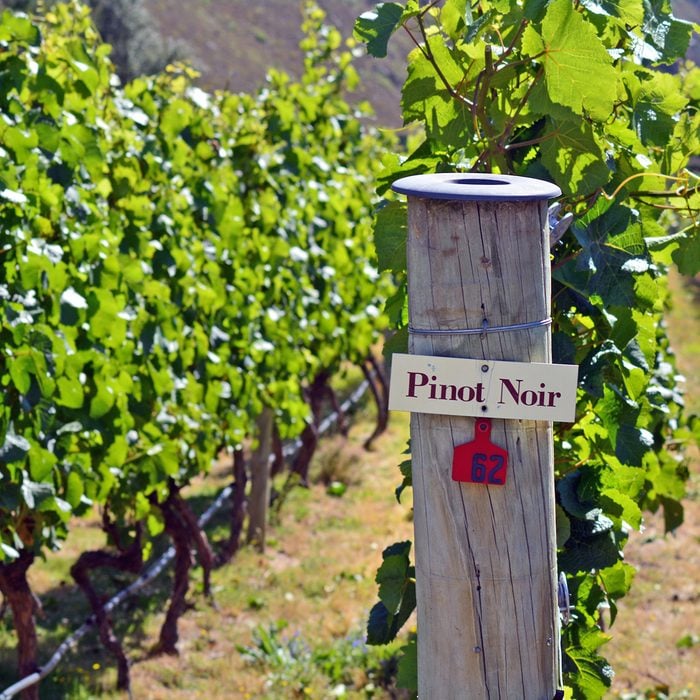
Pinot Noir vineyard sign

New Zealand

New Zealand is home to Pinot Noir’s influence the Southern Hemisphere, with several subregions of Martinborough on the North Island and Central Otago and Marlborough on the South Island. These areas offer vibrant and rich versions of the grape with generous fruit notes.

Oregon, US

It is no surprise that Oregon has become one of Pinot Noir’s best regions: Its climate offers similar conditions to those in Burgundy. A number of wineries in Oregon’s Willamette Valley have established excellent reputations with Pinot Noir in recent decades, producing wines that are comparable in style and quality to those of Burgundy. 

What foods pair well with Pinot Noir?

Pinot Noirs are incredible wines to serve and pair with range of cuisines, thanks to its bright acidity, red fruit notes and low to moderate levels of tannins. Classic pairings traditional in Burgundy include beef Bourguignon and coq au vin, but these reds are great for chicken, duck, game, pork, salmon and other fish, pasta, beans, mushrooms and grilled vegetables. Try it with hot dogs or pork BBQ at your next summer cookout. It also really good with hard cheeses with milder flavors, such as Gouda and Cheddar.
Wine Recommendations

My Pinot Noir favorites (in no particular order)

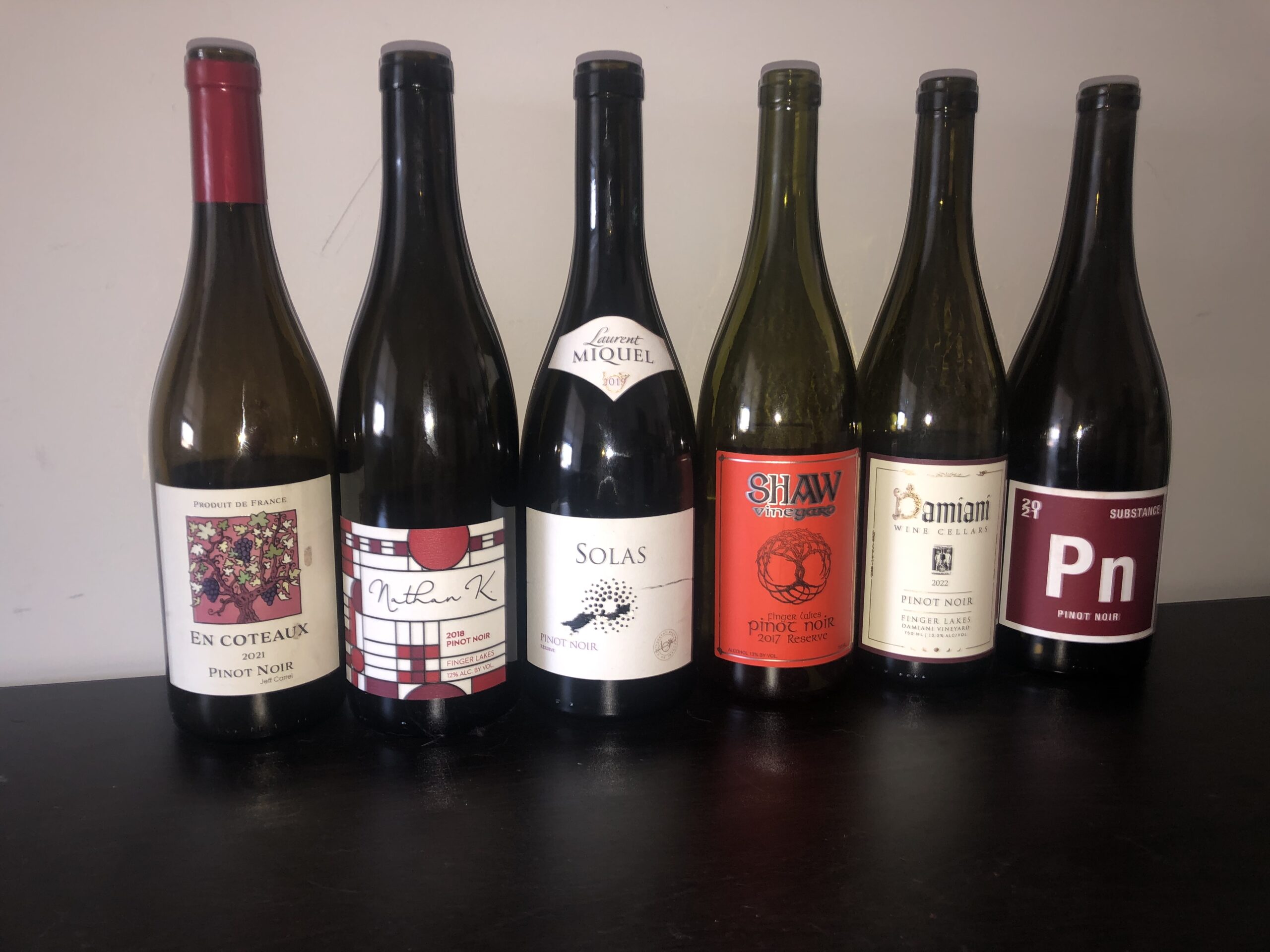
As mentioned in the opening, here is my personal list of wines from mostly small, local producers, especially in NY, that hold great value (under $40) from the past year. Some wines may be sold out or are past vintages, but these producers have been consistent for Pinot. Look for some of these rare and highly rated finds –

2017 Shaw Vineyard Pinot Noir Reserve, Finger Lakes, NY, US (aged)

2022 Damiani Wine Cellars Pinot Noir, Damiani Vineyard, Finger Lakes, NY, US

2021 Nathan K. Pinot Noir, Finger Lakes, NY, US

2020 Dr. Konstantin Frank Old Vines Pinot Noir, Finger Lakes, NY, US

2019 Laurent Miquel “Solas” Pinot Noir, Languedoc-Roussillon, France

2019 Louis Latour Mercurey, Burgundy, France

2019 Domaine Besson Givry Le Petit Pretan Premier Cru, Givry, Burgundy, France

2019 Maison Chanzy En Rosey, Rully, Burgundy, France

2021 Johan Vineyards Estate Pinot Noir, Willamette Valley, Oregon, US

2021 Child’s Play Pinot Noir, Willamette Valley, Oregon, US

2022 Planet Oregon Pinot Noir, Willamette Valley, Oregon, US

2023 Gala Estate White Label Pinot Noir, Tasmania, Australia

2021 Mac Forbes Pinot Noir, Yarra Valley, Victoria, Australia

2022 Johnson Estate Freelings Creek Reserve Pinot Noir, Lake Erie, NY, US

2021 Borghese Vineyard Select Pinot Noir, North Folk of Long Island, NY, US

2021 Macari Vineyards Pinot Noir, Long Island, NY, US

2021 Millbrook Vineyards & Winery Pinot Noir, Hudson Valley, NY, US

2016 McCall Wines Pinot Noir, North Folk of Long Island, NY, US (aged)

2020 Amayna Pinot Noir, Leyda Valley, Chile

2022 Ernest Pinot Noir Hasher Family Estate, Upper Hemel-en-Aarde, South Africa

2017 Maison L’Envoye Pinot Noir, Central Otago, New Zealand

2022 Babs Wine Company Pinot Noir, Santa Barbara County, California, US

2022 Chalk Hill Pinot Noir Sonoma Coast, Sonoma Coast, California, US

2022 The Calling Pinot Noir, Russian River Valley, California, US

2021 Foxen Pinot Noir, Santa Maria Valley, California, US

Cheers,

Michael Nagy

Summer Mocktails: Coconut Kiwi Cooler

Kiwi Coconut Cooler mocktail
July
16
2024

Here is a refreshing and healthy mocktail to sip during the hot and humid summer months. It will require some prep time and overnights, but a great addition to your pool party or outdoor event. It is easy to turn this drink into a ‘cocktail’ by following the instructions below. Enjoy!

Ingredients:

  • 0.5 ounces of freshly squeezed pineapple juice, from a can, or freshly squeezed pineapple chunks
  • 1 ounce of coconut water
  • 4 ounces or 1/2 cup of quality ginger ale, like Fever-Tree
  • 2 kiwi wheels to decorate
  • 1 pineapple leaf to decorate
  • ice cubes
  • Optional – for cocktail, add 1 ounce of Parrot Bay Coconut Rum and reduce ginger ale to 3 ounces

Kiwi Shrub:

  • 12-15 kiwi, peeled and quartered (more or less kiwis depending on size of party/adjust sugar and vinegar accordingly)
  • 2 cups of sugar
  • 1.5 cups of apple cider vinegar

Instructions:

  1. To make the kiwi shrub, add the kiwi and sugar to a mixing bowl and mix well. Cover and chill in the fridge for 1 hour.
  2. Muddle the mixture, replace the cover, and refrigerate overnight.
  3. Strain the mixture and add the vinegar, shake well, and refrigerate overnight. Strain through a cheesecloth of handheld strainer into a clean jar.
  4. When ready to serve, place 1 ounce of the kiwi shrub into a cocktail shaker with the pineapple juice, coconut water, ice cubes. If making a cocktail, add 1 ounce of Parrot Bay Coconut Rum.
  5. Strain into a highball glass or 12 oz glass or cup filled with ice. Top off with ginger ale and gently stir.
  6. Garnish with kiwi wheels with or without skin and pineapple leaf (optional) and serve immediately. Store leftovers in fridge up to 1 month.

Cheers,

Michael

Mocktails By Michael: Healthy Non-Alcoholic Cocktails

Array of Mocktails
July
14
2024

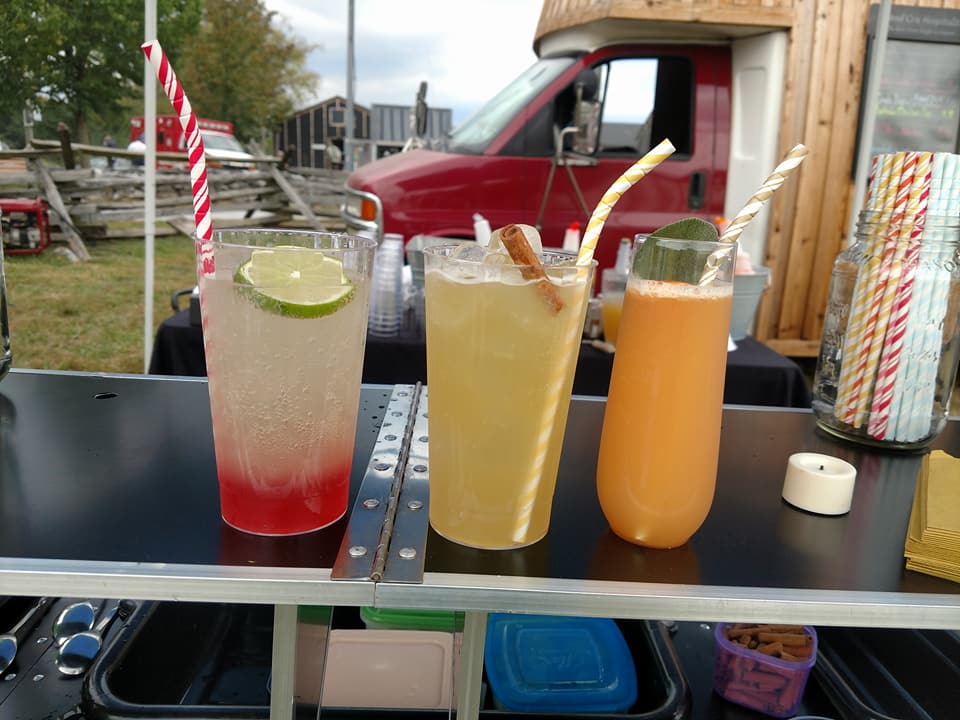
I’m excited to bring back my “Mocktails By Michael” beverage program, sub-division of “The Michael Pour”. Here are some images from events in the early years. Creative, fresh, handcrafted, and on-trend non-alcoholic offerings/#mocktails for #parties, #events, and #weddings from a drink truck and pop-up events.

Any #cocktail can be transformed into a #mocktail with the right knowledge and marriage of #flavors, textures, and balance. Alcohol is not the center of attention for these #drinks and can stimulate your taste buds, add sparkle to your #event or #party, and help you live cleanly. Batching #mocktails also available. I will be posting updates from time to time. #Bookings available right now throughout Upstate & Central NY.

Inquire within or by email at michael@michaelpour.com. Sign up for email newsletter from homepage so you don’t miss a drop. 

Wine Glass

DON’T MISS A DROP

Get notified when new articles are poured

We don’t spam!