Wine Spotlight: What happened to Pinot Grigio?

March
3
2026

If you consider yourself a novice wine drinker or sip your customary glass of wine at a wedding, gala, or a home party, you probably tried that once popular Italian white wine called Pinot Grigio.

At one time, it was almost always on the wine menu because it was a huge crowd pleaser. Easy going, uncomplicated, not complex, and cheap. Pinot Grigio is a light-bodied wine that gets along with most everyone. Yes, it’s an entry level white wine, but is it still popular?

If you’re well studied in wine, you know of it, but is it a wine you would recommend? If you ask wine professionals, they most likely would say ‘no’ and not suggest it or recommend it for most wine drinking occasions or as an excellent food pairing. Often perceived by consumers and sommeliers as a safe, uninteresting, and safe restaurant choice rather than a nuanced wine experience.

Pinot Grigio’s decline in popularity stems from a reputation for being flavorless, watery, and mass-produced, leading consumers to seek more flavorful, aromatic, or trendy alternatives, like Sauvignon Blanc, Chenin Blanc, and dry Rosé.

They have shifted to more vibrant, aromatic, or flavorful white wines such as Sauvignon Blanc or Riesling. In fact, Rosé has largely overtaken Pinot Grigio as the preferred, fashionable, casual summer, easy-drinking wine over the last decade or two.

The Pinot Grigio market has also become saturated with low-quality, generic, overproduced, and often overly acidic or manipulated, cheaper options. Leaner versions of Pinot Grigio are more refreshing, generally more popular, and will cost over the standard $15 price tag. Look for over $20 at least. And if you avoid mass-marketed brands in favor of smaller, quality wine producers, you would be in for a light and refreshing experience.

However, high-quality, authentic Pinot Grigio filled with personality still exists, particularly from regions like Italy’s Alto Adige and Friuli in the northeast. The Friuli region offers the best in the world with nice aromatics and hint of bitter almond, a signature trait of PG. I will discuss other regions producing Pinot Grigio later in the article along with its counterpart “Pinot Gris”, with same name, but quite different for comparative analysis.

Italian Wine Regions & Styles

In Alto Adige, Pinot Grigio is all about ripe stone fruits (peach and apricot), notes of ginger, floral aromas, and refreshing acidity. Alto Adige produces some world-class, cellar-worthy (very unusual for this grape) Pinot Grigio, and is one of the most beautiful wine regions.

sun goddess pinot grigio

In Friuli-Venezia Giulia (short version Friuli), it is known for its textured Pinot Grigio and the unique ‘Ramato’ style (skin contact wines), Friuli’s wines also feature ripe stone fruits, floral hints, but with a subtle spice. The refreshing acidity is still present but encased in a fuller body.

If you want to learn more about ramato-style wines, please let me know. They are fascinating! For purposes of length, I didn’t include here. I had a wonderful Ramato last summer pictured above.
Wine Production

Pinot Grigio is harvested early and gets bottled and distributed within three months of fermentation. It is wine meant to be drunk as soon as possible. These wines possess entrancing aromatic qualities, zippy acidity, and fruit flavors that diminishes over time.

Enjoy it now and don’t let it sit around on your rack or in your cellar. A general rule for this wine is to drink it within one to two years of the vintage date, similar to Rose. There are rare occasions that allow PG to last longer, especially it’s oaked and has exceptional balance.

Food Pairing

The light, crisp flavor of Pinot Grigio makes it great for a lot more than just casual sipping. This dry white wine is ideal for cooking lighter dishes by adding brightness and acidity to the mix. It is known to pair well with fatty fish, like trout, tuna, and salmon helping to balance out the taste and texture of the main ingredient. 

Pinot Grigio is a perfect wine choice for summer sipping because of its lightness, tartness and acidity due to being grown in cool climate regions, like those in northern Italy. The lower temperatures help slow down the ripening process causing less sugar developing in the grapes.

Additionally, as mentioned earlier, the grapes are harvested early on in their ripeness, and then stored and fermented in stainless steel tanks retaining crispness. All of this helps give Pinot Grigio a fresh, highly acidic and sometimes citrus quality, that is preferable than its fuller and deeper competition with summer and light cuisine. Planted Pinot Grigio vines at a vineyard in Friuli Region of Italy.
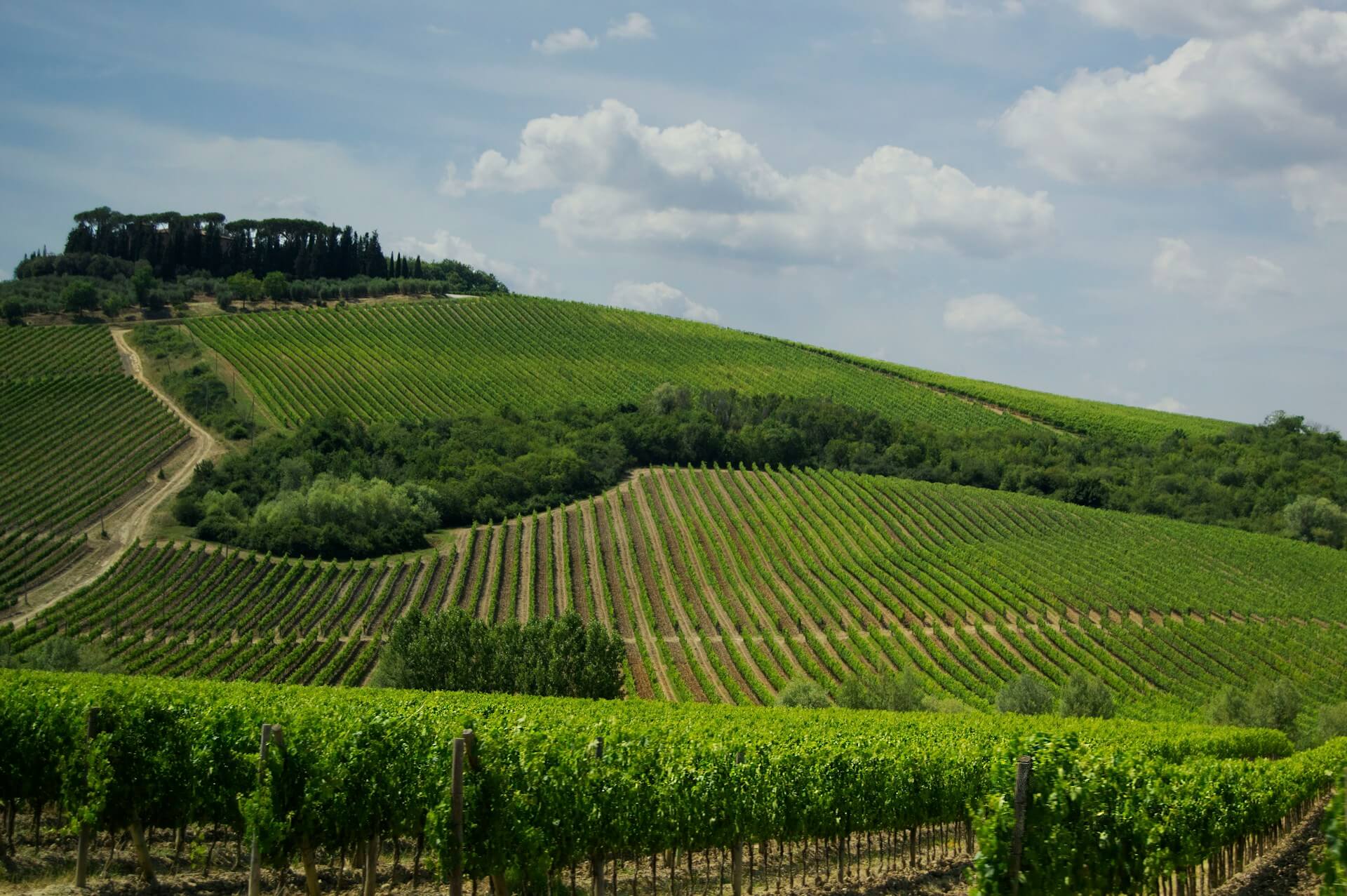
Pinot Gris vs. Pinot Grigio

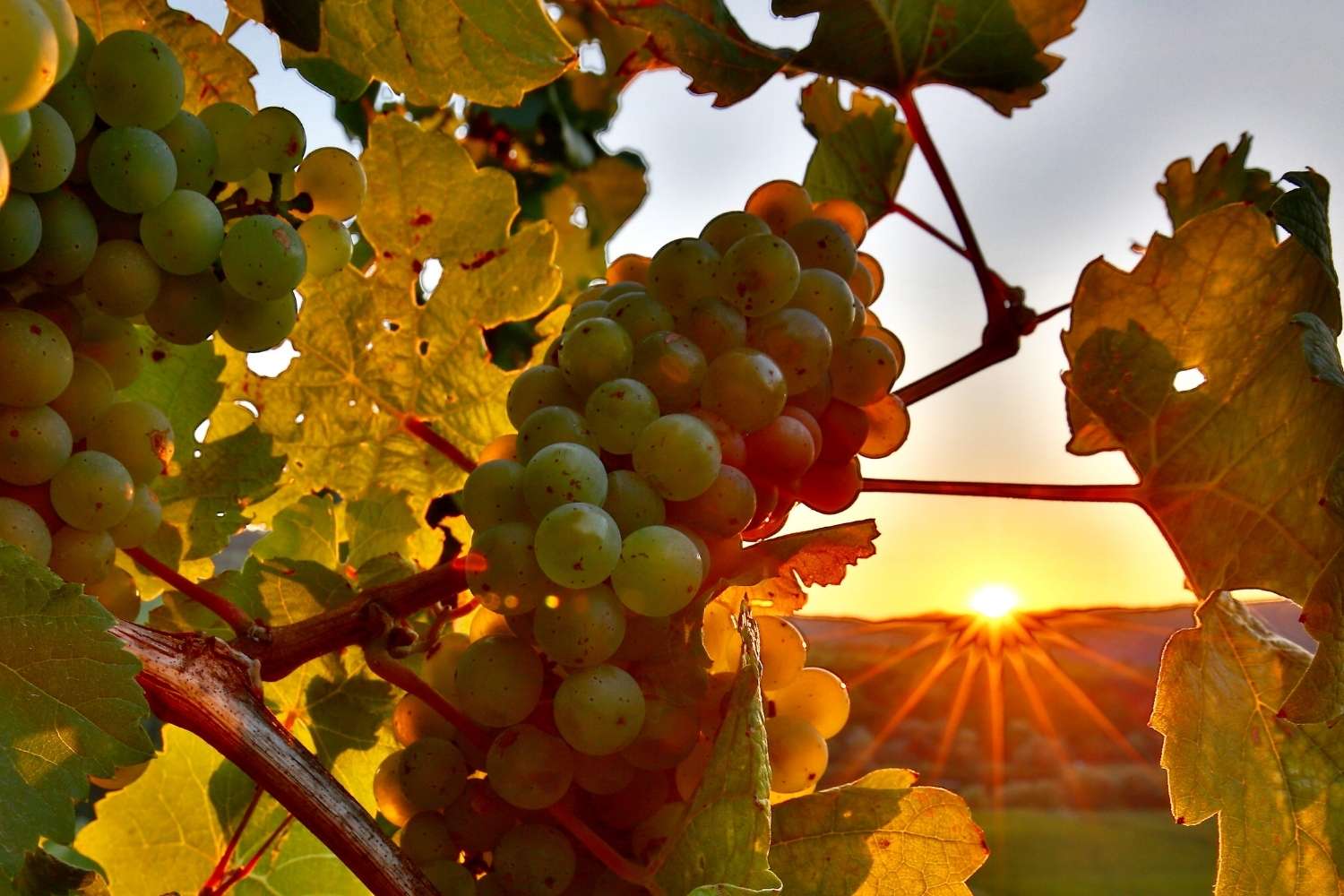
Pinot Gris (aka Pinot Grigio) is a pinkish grape mutation of Pinot Noir. ‘Gris’ is the French word for gray and ‘grigio’ is the Italian word for gray.

The same grape is used to produce Pinot Gris in France (mostly in the Alsace region) and Pinot Grigio in Italy. However, the two wines have different styles and with their own unique traits. Pinot Grigio tends to be crisper and lighter-bodied with strong fruit and floral notes.

Pinot Gris is more full-bodied than its Italian counterpart, with a deeper, richer flavor, and even spicy notes depending on the winemaking style. Additionally, Pinot Grigio is typically drier than Pinot Gris. Despite its French origin, the largest producer of Pinot Gris is actually Italy.

Pinot Gris has a touch of honey on the palate from naturally occurring botrytis/noble rot (fungus) common in the Alsace region. The botrytis concentrates sugars and flavors, which can lead to creating excellent dessert wines. Pinot Gris is also used for sweet, orange, rosé wine in northern Italy, Alsace, Oregon, and Germany.

Italian Pinot Grigio tends to be easy drinking compared to French Pinot Gris and others. The misnomer out there is that Pinot Grigio and Pinot Gris are the same wine. They cite the only difference being that one comes from Italy and the other comes from France. Pinot Grigio and Pinot Gris do have similarities because they are produced from the same grape, but stylistically they are not.

The grape is usually referred to as Pinot Gris because it was first developed in France’s Burgundy region. However, once the grape made its way to Italy, it was used to develop what we know as Pinot Grigio. The difference, therefore, lies more in how the grapes are grown, vinified, and managed and how these two different countries produce noticeably different wines.
Pinot Gris

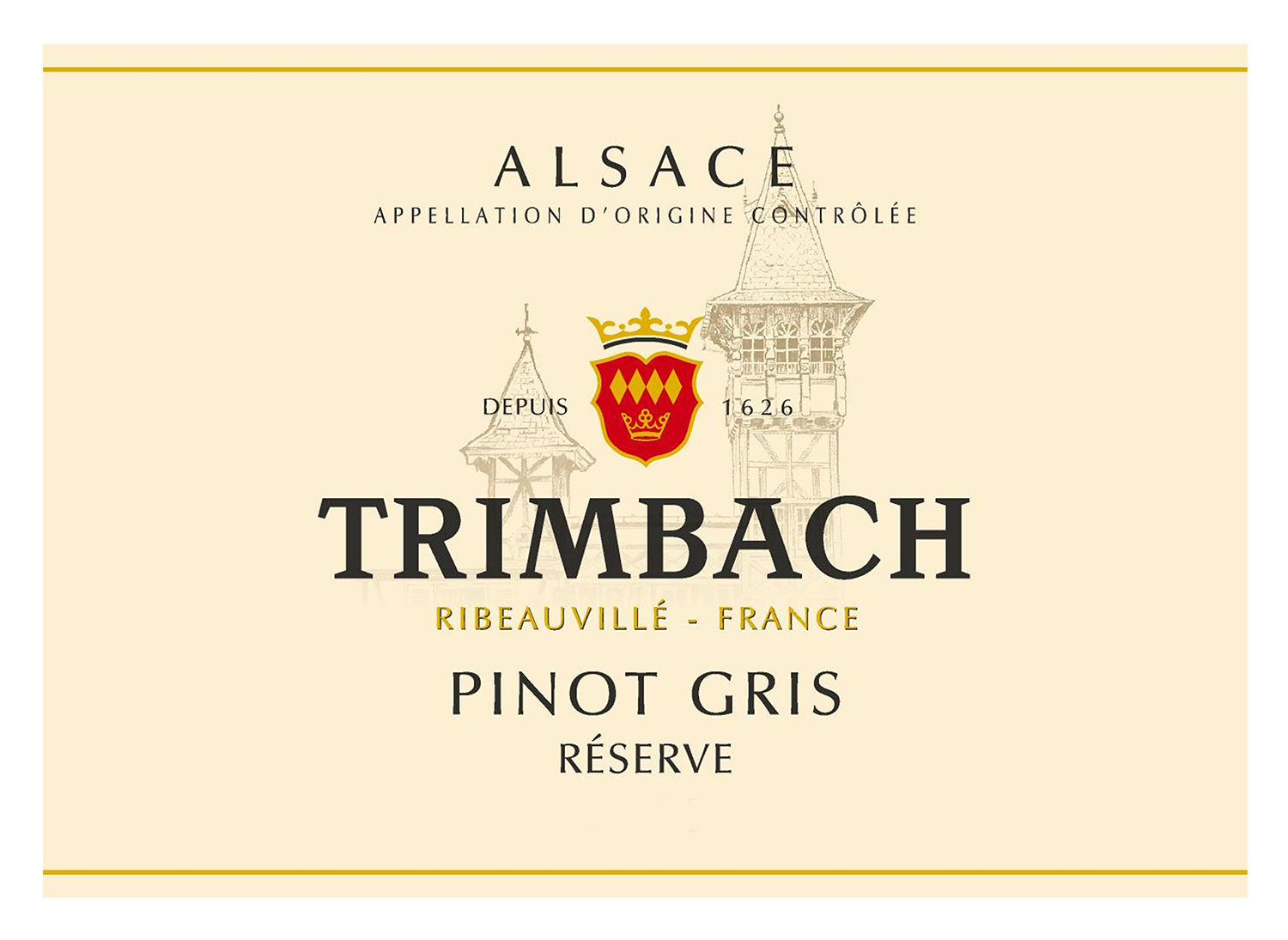
Considered to be the homeland of Pinot Gris, Alsace showcases a rich, full-bodied style with ripe orchard and tropical fruit flavors and minerality. It often possesses a delicate smokiness and spice, especially in aged versions, adding depth to the vibrant fruit character. Look for “Grand Cru” on the label for the best wines.

American versions often have more exaggerated fruit flavors and less acidity than their European counterparts. Primarily grown in the cool-climate Willamette Valley in Oregon, it presents a balanced profile of fresh citrus and ripe orchard fruit flavors.

The wines are typically medium to full-bodied, with a refreshing acidity and often a hint of mineral or spice. Its versatility and expressive character reflect the region’s diverse microclimates and innovative winemaking techniques.

Food Pairing

The versatile Pinot Gris pairs well with many dishes. Lighter, zesty styles are phenomenal with seafood, salads, and mild cheeses, while full-bodied or orange versions complement rich meats like roasted chicken or pork. Sweet and late-harvest expressions perfectly match fruity desserts or even on their own. Pinot Gris rosé is an excellent appetizer wine and pairs nicely with light pasta, charcuterie, or salty snacks.

Its diverse range matches the broad variety of world cuisine. Pinot Gris and Pinot Grigio alike are perfect wines to cut through salty cheese like feta or goat cheese, nuts, and any other snacks you’ve prepared for your summer picnics.
Here are the major growing regions and style of Pinot Grigio/Pinot Gris –

Alsace, France (rich version, Pinot Gris)

Veneto, Italy (crisp, neutral flavor, cheaper/mass produced, great for weddings and large format)

Friuli, Italy (crisp, more aromatic, some of the best Grigio on the planet)

Alto-Adige, Italy (crisp, more aromatic, second to Friuli for Grigio)

Willamette Valley, Oregon (fuller version, citrusy/minerally, both)

Look for these producers –

Cantina Tramin (Alto Adige, Italy)

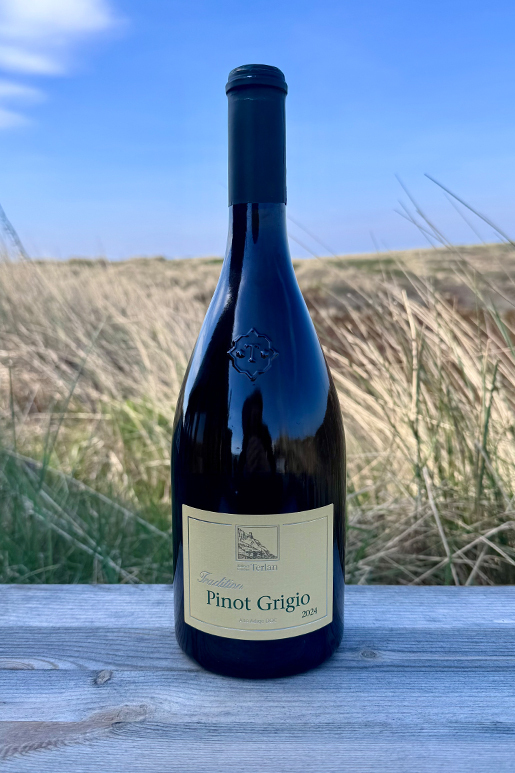
Cantina Terlano (Alto Adige, Italy) – pictured

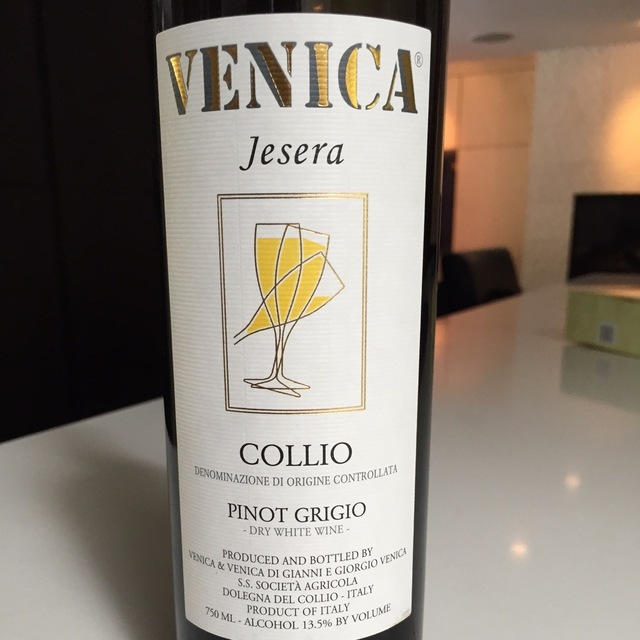
Venica & Venica (Friuli, Italy) – pictured

Neumeister (Styria, Austria)

Trimbach (Alsace) – pictured

Zind-Humbrecht (Alsace)


Cheers,

Michael

michael@michaelpour.com

Wine & The Moon: The Lunar Influence

February
24
2026

I’ve always had an interest in astrology, oracle, alchemy, and the occult sciences. Recently I’ve been fascinated with how it applies to wine and wine tasting. Let’s take a closer look! As one subscriber stated, “This is so interesting, Michael! None of this ever occurred to me, so I find it quite enlightening.”~ Trie

Do you remember all the hype about the Blood Moon during the lunar eclipse? Maybe not, unless you typically follow this kind of stuff. It made me think about the moon and the universe’s impact on wine drinking. You don’t have to be a ‘wine witch‘ to be interested in it. Do you enjoy reading your daily horoscope and believe in what the universe is telling you?

The moon actually plays a crucial role in viticulture, influencing key vineyard activities such as pruning and harvest, as well as (for many) the best times for wine tasting. If you believe that wine is a living organism, then it’s reasonable to think that it is affected by the moon just as much as other living things.

The focus on the moon and how it affects life on earth goes as far back as 1st century Roman naturalist, Pliny the Elder, who said the moon “replenishes the earth; when she approaches it, she fills all bodies, while, when she recedes, she empties them.”

The lunar calendar has been used for centuries by farmers to determine when to plant and harvest. Other professions, like gardeners, religious leaders, and fishermen use it in their work. The Old Farmer’s Almanac uses the same lunar calendar to recommend planting schedules. Professional astrologers use lunar cycles for scheduling major life events, such as weddings, funerals, opening businesses, etc…

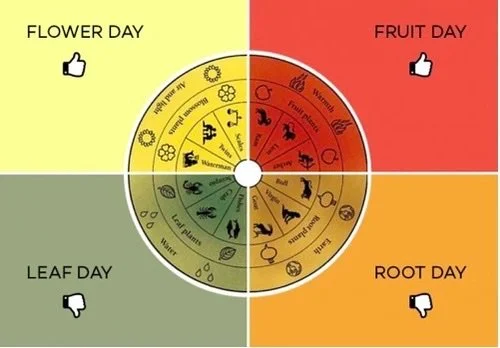
Rudolf Steiner, who created the biodynamic farming system in the 1920s, saw vines linked to the four elements – earth, air, water, and fire. Each element is favored when the moon passes into the constellations associated with it, thereby determining when a wine tastes best.

This concept was later expanded upon by Maria Thun in the 1960s. She developed a calendar indicating the best days for tasting wine—a theory further refined by her son, who authored When Wine Tastes Best, which is now an app. Check it out!

The principle suggests that not only do plants respond to the positions of the moon, sun, and planets, but that we can enhance various aspects of winemaking by considering these celestial alignments. Many of the best winemakers in the world swear by it. For example:

Fire constellations direct energy towards fruit-bearing, making them prime harvesting days.

Earth constellations focus a plant’s energy on its roots, making these ideal days for pruning.

The lunar calendar also suggests that wine can taste different depending on the day you drink it. Here are the basics. What is your sign and element?

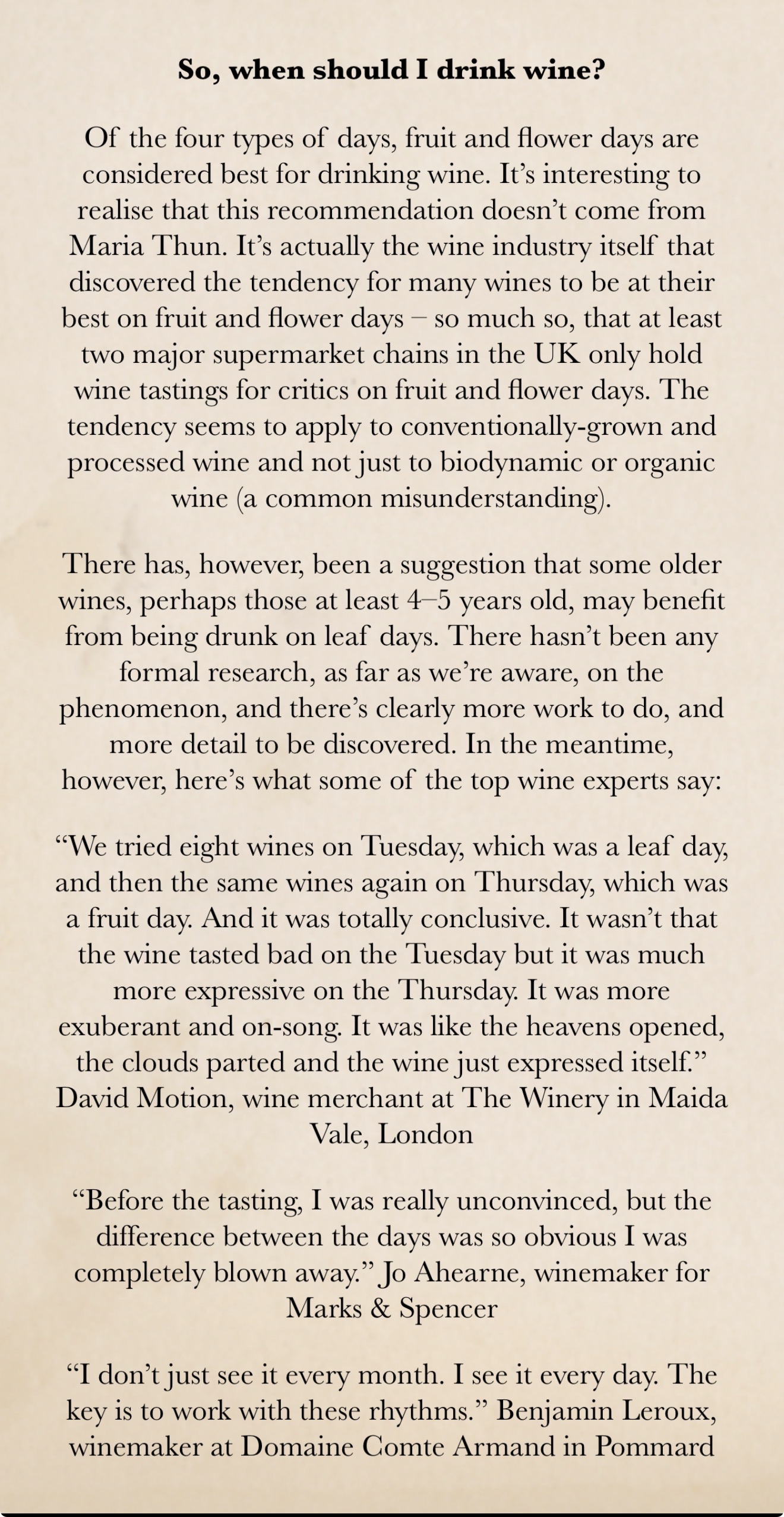
Fruit Days: Wines are at their most expressive, showcasing a full range of aromas and flavors. These are the best days for wine tastings or enjoying a special bottle. Fruit days are when the moon is in any of the Fire Signs, such as Aries, Leo, and Sagittarius. Fruit days are the most optimal wine tasting days.

Flower Days: Wines highlight their delicate floral notes, making these days ideal for appreciating aromatic white wines and elegant reds. Flower days are when the moon is in any of the Air Signs, like Gemini (moi), Libra, and Aquarius. Flower days are recommended for enjoying aromatic wines, such as Viognier or Torrontes.

Leaf Days: Wines may exhibit more vegetal and herbaceous qualities, which can be intriguing but might not be ideal for your finest bottles. Leaf days are when the moon is in any of the Water Signs, such as Cancer, Scorpio, and Pisces. Leaf days are days when the plant is focused on producing chlorophyll, and are generally not recommended for enjoying wine.

Root Days: Wines often taste more subdued, with heightened tannins and earthy notes. Generally considered the least favourable for tasting. Root days are when the moon is in any of the Earth Signs, such as Capricorn, Taurus, and Virgo. If you follow the lunar calendar for wine tasting, root days are not good days to enjoy wine.

Node Days: Occurring when the moon crosses the Earth’s orbit, these are typically days when wines are more ‘closed’ and less expressive.

Does the moon really affect how good a bottled wine tastes? Is this wine tasting trick the reason why the same bottle sometimes doesn’t taste as good the next time you open it?

Some days you may taste a wine that you know well, and nothing really impacts you, while other days, one wine is better than the next. Instead of blaming it on the wine, think about it from a human perspective. We humans are susceptible to full moons, high pressure, and so on. Do the wines change based on the planets, moon, or alignment of the stars? Or is it that our perceptions may change?


Above is an excerpt from the app. For some beyond-logical reason, red wine seems to taste better on a “fruit day.” White aromatic wines really seem to sing on a “flower day.” So maybe if you’re anxious to pop open that vintage Bordeaux you’ve been waiting to open for years, you should consult the free When Wine Tastes Best app on your phone.

Is Today a Flower Day? Here is the link to the Lunar Calendar for all things – Lunar calendar for today – live in the rhythm of nature

Share your astrological sign and element under comments here or on social media. It will be fun! Just a reminder, if you signed up for the free newsletter, you would have automatically received this story when published.

Cheers,

Michael (Gemini & Air)

michael@michaelpour.com
(cover photo courtesy of Scott Harvey Wines)

Wine of the Week: Cono Sur Pinot Noir Organic 2022

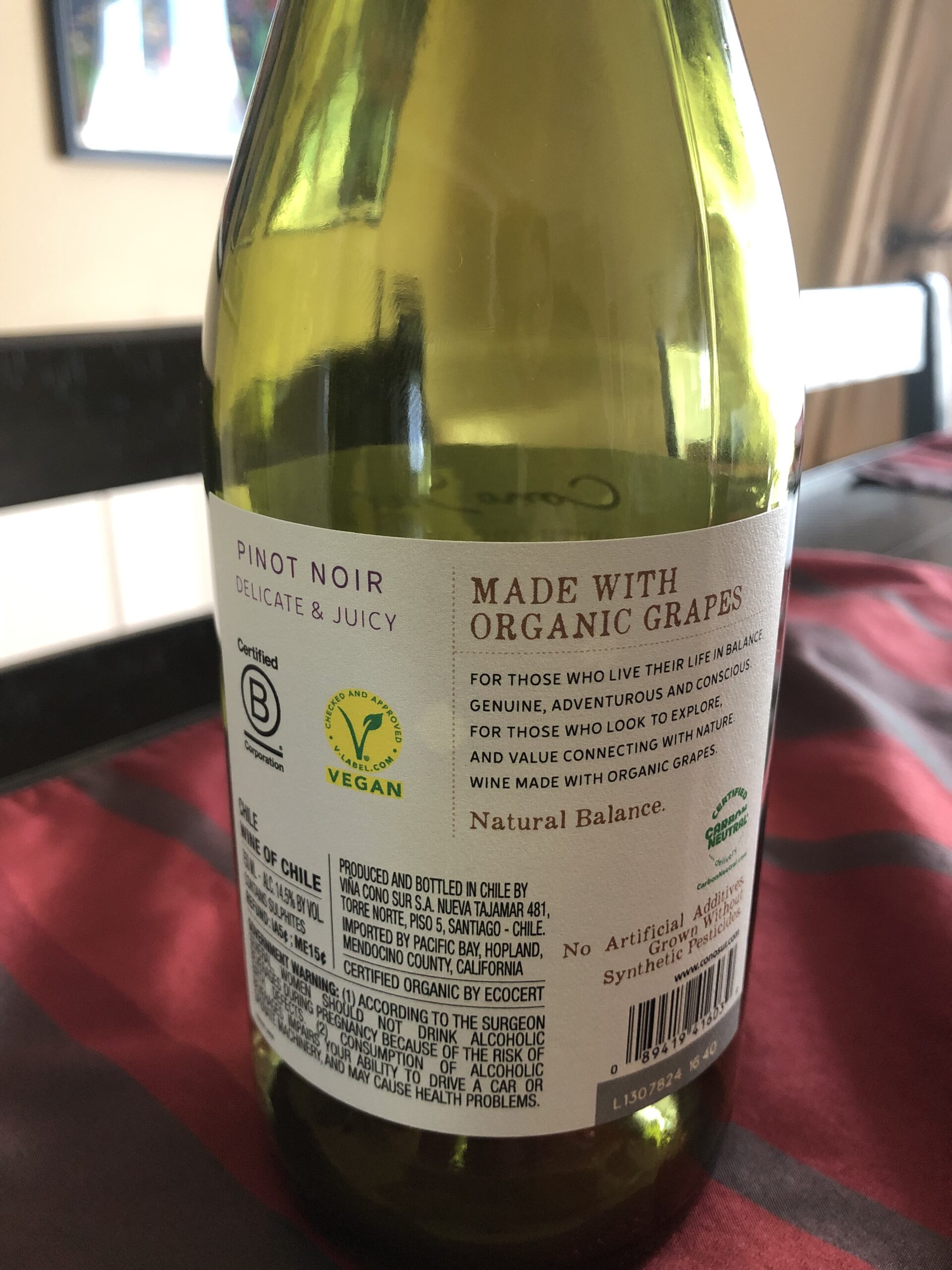
Cono Sur Organic Pinot Noir 2022
October
15
2024

This week’s featured “wine of the week” returns to the new world wine country of Chile, South America with my favorite varietal, Pinot Noir. Not every wine I try becomes a wine of the week, but with careful research, looking for a great value, knowing the region and country of origin along with the varietal, and my handy ‘delectable’ app, I am confident that my choice will be a good one.

What makes this wine special is the fact that it is organic, vegan, and is under $15. The organic wine category in the wine industry is booming. The demand for organic wine is on the rise. It represents about 4% of the worldwide wine consumption, and it is becoming more and more relevant. It is expected to be one of the biggest growing categories in the wine business, which can lead to a decrease in price in the future. Producers are committed to a minimal environmental impact. This means a conscious use of natural resources, like water, and natural products that replace chemical agents.

Some benefits of organic wine include protection against harmful chemicals. The organic product excludes the use of pesticides.If you’re allergic or sensitive to sulfites, organic wines are a good option, since they usually have smaller concentration of sulfites. The consumption of organic wine is a way of promoting the use of green technologies that favor the care of the planet.

How much does organic wine cost? Organic wine may cost a little more compared to “conventional” wine as a result of production costs. The use of chemicals in the vineyard helps reduce costs in traditional wine growing. However, you can find high quality organic wines at reasonable prices (this wine, for example), which allows conscious and frugal consumers to give it a sip.

Cono Sur Organic Pinot Noir 2022

Viña Cono Sur was born around the first Pinot Noir vines planted in the Colchagua Valley of Chile. In the 60s, the region was considered a cool climate area and ideal for the variety. And that inspired them to adopt Pinot Noir as their flagship variety and established a goal of producing the best Pinot Noir in Chile. Cono Sur was the first Chilean winery to export Pinot Noir and currently produces different styles of Pinot, organic (fairly new from their product line), non-organic, single vineyard, and reserve. The labels on the bottles depict the brand’s iconic bicycle.

Cono Sur (Spanish) translates to “The Southern Cone”, which is a geographical and cultural subregion composed of the southernmost areas of South America, mostly south of the Tropic of Capricorn. 

Made from organically grown grapes sourced in the Colchagua, San Antonio and Bio-Bio valleys, this well balanced, delicate, and surprisingly juicy is brimming with floral, fig, red fruit, in particular cherry, savory, and earthiness. With soft medium tannins, medium flavor intensity, medium body, it was a joy to drink. This bottle does have a whopping 14.5% alcohol content, which is on the higher end of PN. I love the winery’s commitment to the environment. On the back label, there’s a certification stamp for being carbon neutral as well.

Serve it with grilled mushrooms, baked salmon, pork, goat cheese and pizza (a favorite of mine). Highly recommend! Look for it online or at your favorite shop.

Cheers,

Michael

The Era of the Mocktail: Creating Delicious NA Beverages

mocktails cover
September
24
2024

In recent years, there has been a growing trend of mindful drinking and the reduction of alcohol consumption. People are choosing to take a break from drinking or reducing their consumption. Customers expect to have non-alcoholic or mocktail options on the menu. Mocktails can provide an alternative to traditional cocktails that offer all the flavor without the buzz. Any cocktail can be transformed into a mocktail by knowing the cocktail ingredients and the flavor profile of the cocktail. To find the right balance, pair ingredients that go well together. 

Mocktails do not have to be cloyingly sweet or boring. On the contrary, they can be fun, fruity, creative, and refreshing. The use of homemade syrups, mixers, modifiers, shrubs, infusions, and craft, spirit-free spirits gives you a lot of options. Give your customers a vibrant and tempting no-alcohol option.

Mocktails can also offer a wide range of benefits to your customers and business. They are more inclusive, allowing those who don’t drink alcohol, or who have a limited capacity to drink, to feel included in the social scene. For those who do consume alcohol, mocktails can be a great way to pace their intake while they can still enjoy the flavors they love. It also gives you the opportunity to show your business creativity that helps you stand out from the crowd. Having a diversified menu is a great way to appeal to your current and future customer base and is a responsible and profitable endeavor.

batched mocktails

Decide on the type of mocktails you want to serve. Whether it’s for an intimate gathering of friends, a family get-together or a corporate event, mocktails can provide the perfect range of flavors and appeal. Consider a selection that will appeal to everyone. Have fun experimenting with different flavor combinations like watermelon and mint. Creating alcohol free beverages allows you to show your creativity with flavor while also providing a low-alcohol beverage option that everyone can enjoy. Incorporate non-alcoholic spirits that you can substitute for tequila, gin, whisky, rum and more, such as brands: Lyre’s, SeedLip, and Spiritless. 

Choose a wide selection of garnishes for your mocktail bar. Go with organic fruits and vegetables to create healthier drinks for your guests. Some of the most popular garnishes used in cocktails are citrus fruits such as lemon, lime, grapefruit, and orange. The acidic juices from these fruits help to balance out the flavors of a cocktail, adding brightness and acidity to the drink. Fresh herbs like mint or basil can add an aroma to a cocktail. Try dehydrated garnishes as an alternative to fresh fruit for your next event. They are cost effective with a high shelf life and add a different twist to the beverages.

private party

Prepare the ingredients before guests arrive. It is one of the most important aspects of hosting an event or running an efficient bar. Make sure to have all the necessary ingredients ready, including non-alcoholic spirits, juices, mixers, syrups, garnishes, ice, bar tools, and glassware. Having too much of something is better than too little, especially in the case of ice. Stock a variety of glassware to use for the different types of mocktails on your menu. 

From shakers and strainers to jiggers, zesters, peelers, muddlers, and bar spoons, having all the necessary bar tools on-hand helps make sure that any mocktail you concoct is made accurately and properly. Bar tools can save you time and can add a presentation factor to the finished beverages.

“Mocktails by Michael”, a division of The Michael Pour, is creating mocktails for you. We will prepare and bring a batched mocktail with garnishes, glassware/cupware, napkins, straws, etc… to your next party or event. We can also provide bartending service and setup onsite. Inquire within! Booking available under the contact form tab. Would you like some ghoulish mocktails or mocktails at your Halloween party or festive Christmas party?

Array of Mocktails

Cheers,

Michael 😉

Mocktails By Michael: Healthy Non-Alcoholic Cocktails

Array of Mocktails
July
14
2024

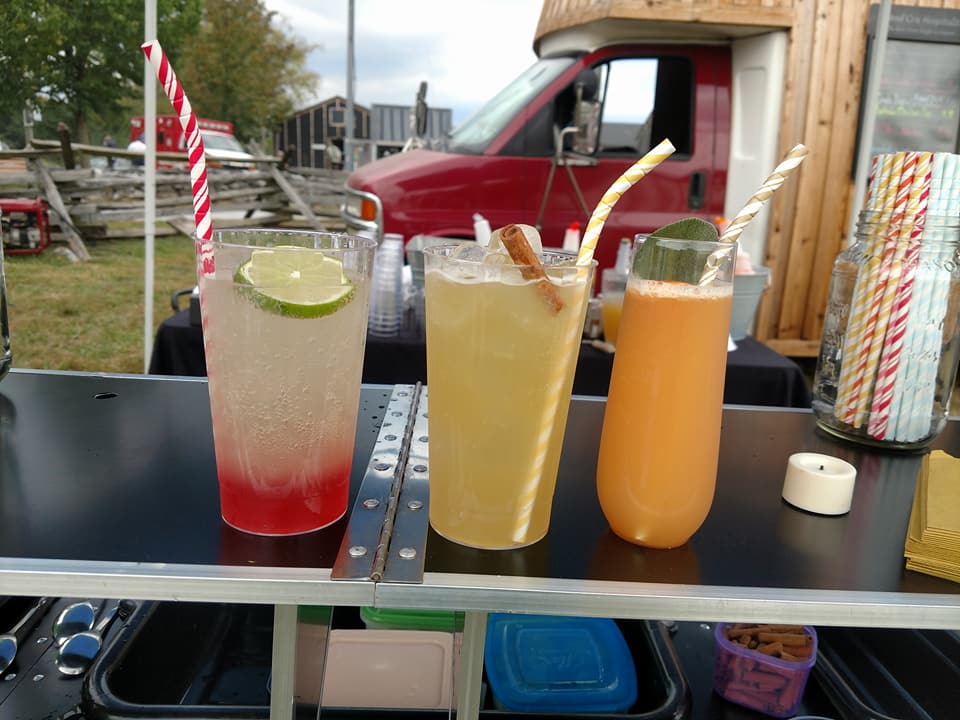
I’m excited to bring back my “Mocktails By Michael” beverage program, sub-division of “The Michael Pour”. Here are some images from events in the early years. Creative, fresh, handcrafted, and on-trend non-alcoholic offerings/#mocktails for #parties, #events, and #weddings from a drink truck and pop-up events.

Any #cocktail can be transformed into a #mocktail with the right knowledge and marriage of #flavors, textures, and balance. Alcohol is not the center of attention for these #drinks and can stimulate your taste buds, add sparkle to your #event or #party, and help you live cleanly. Batching #mocktails also available. I will be posting updates from time to time. #Bookings available right now throughout Upstate & Central NY.

Inquire within or by email at michael@michaelpour.com. Sign up for email newsletter from homepage so you don’t miss a drop. 

Wine Spotlight: Riesling Primer, Riesling Day & Recs

International Riesling Day
March
10
2024

To get things started, let’s discuss a topic that I am passionate about – wine #grapes and the #wines they produce. As we approach spring and celebrate annual “International Riesling Day” on March 13th, what better time to talk about the noble grape, #Riesling, which happens to be the signature grape of the Finger Lakes, NY where I call home.

It is so popular here that they dedicate a whole week of events centered around Geneva, NY, located at the northern tip of Seneca Lake. The week-long event is called “FLXcursion” or The Finger Lakes Riesling Wine Conference. It is an international gathering of Riesling regions and producers from around the globe. International Riesling Day is a toast to this versatile, bright, and aromatic grape. Let’s take a closer look at this grape, which is grown and produced in many different parts of the world.

Riesling is considered by many to be the most noble and distinctive white grape variety. The grape is thought to have originated in the Rheingau region of Germany.

The best Riesling has elevated acidity, aromatic, unique sense of purity, and vivid aroma and flavor. The wine is graceful and light on the palate. It’s refined and layered structure along with mouthwatering, delicate flavors that include ripe peaches and apricots (stone fruits) to melon (tropical fruit) to lemons, oranges, and grapefruit (citrus fruits) with vibrant minerality, like the taste of clean water running over stones in a mountain stream. A dangerously easy to drink wine.

Riesling grapes

More than almost every other white grape, Riesling is temperamental about where it is planted. It doesn’t grow well in very warm places, and even in cooler locations, the quality and character of the wine can vary. The most elegant and precise Rieslings come from cooler climate regions, like New York, Washington state, parts of Australia, France, Germany, Canada, Slovenia, and Austria. You can also find great Rieslings made in cooler pockets within a warm climate. In the cool districts of the Clare and Eden valleys of Australia (tends to have more petrol notes), the top Rieslings are minerally, vibrantly fresh, citrusy, and tight (wine speak for high acidity).

It is not a wine you can just chug. Most sommeliers and wine professionals agree that you’re more likely to stop and think about what you’re drinking. If you’re having a great meal and want something to hold up to it, Riesling should be on the table. Riesling is one of the most flexible food wines thanks to its soaring acidity and is relatively inexpensive. It cuts through the acid in the food and enhances your experience.

Aged Rieslings are some of the most prized wines out there because it’s strong ability to age well with its higher acidity level and some residual sugar (sugar left over after fermentation).

A common assumption about Riesling is that it is sweet or semi-sweet. That is not correct. Unfortunately, consumers have been only exposed to the highly commercial ones available in the US, which tend to be on the sweeter side. If you live in Finger Lakes wine country, like I do, you will find most of the Rieslings are dry. In fact, most of the top Rieslings in the world are dry, except for those that are made intentionally made sweeter, like ice wines and late harvest wines.

Some of the confusion about the sweetness levels of Riesling happens because when you discover a wine that is fruity, you assume its sweet. It’s easy to confuse fruitiness with sweetness. Quick tip – when you sip a wine, hold your nose, and if the wine tastes sweet on the tongue (specifically the tip of the tongue), then it is a sweeter wine. If not, then it has little residual sugar and is therefore fruity. Another way to determine sweetness is to look at the alcohol content. Once you go above 12%, it gets drier. Look for the word trocken “dry” on the label.

To help clarify where a Riesling stands in terms of its taste (for shopping purposes and to get what you want), the International Riesling Foundation (IRF) created a scale/taste profile chart based on the ratio of sugar to acid in the wine. This could also be helpful to those who are diabetic or don’t want to consume a lot of sugar. You will find the chart on the back label of many Rieslings. The spectrum shows from dry to medium dry to medium sweet to sweet and pinpoints where that wine falls on the spectrum.

Try these foods with dry Rieslings

Raw, cured and smoked fish, particularly salmon and trout though any selection of smoked fish should work well as you’ll see from this pairing for cured salmon. Also sushi, particularly with the slight touch of sugar you get in sushi rice.

Fresh or lightly dressed shellfish, prawns, shrimp, fresh crab, or seafood cocktail. Fish dishes with a creamy sauce.

Pork, particularly fatty cuts like pork belly, better if with some kind of apple or bacon chutney or sauce.

Poultry

Goat cheeses. Young Riesling with young goat cheese, but an aged Riesling with a mature goat cheese is better.

Try these foods with medium dry or off dry Rieslings

Just think spice. So many spicy dishes work with an off-dry Riesling – Thai, Vietnamese, even Indian. The hotter the dish the sweeter the Riesling, basically.

Asian-style salads, Thai beef salad, spicy noodles, goose, duck, pork, roasted and aromatic veggies, cucumber soup

If you would like to learn more about Riesling and the specific regions it hails from, please let me know. This post would be a dissertation if I discussed every aspect of the grape and the wine. If you would like wine recommendations, just reach out. There are so many different styles for every palate out there. Because my body can’t tolerate high acid wines, I tend to drink more semi-dry Rieslings than dry because it has a lower acid content. Personally, I am more of a Pinot Gris, Sauvignon Blanc, and Chardonnay wine fan. If you would like wine recommendations, just reach out.

I listed some highly rated local (pricier than most world Rieslings) and worldly Rieslings (great value too) to enjoy with food and during spring and summer months. Look for these online or at your favorite winery and shop. Your feedback is always welcome and encouraged.

Finger Lakes

Hermann J. Wiemer Flower Day Riesling 2022

Hermann J Wiemer Semi-Dry Riesling 2022

Nathan Kendall ‘Nathan K.’ Dry Riesling 2021

Anthony Road Wine Company Dry Riesling 2021

Forge Cellars Riesling Classique Finger Lakes (every vintage since 2015)

Weis 2019 Dry Riesling Finger Lakes

Hillick & Hobbs Estate Dry Riesling 2021

Boundary Breaks Dry Riesling Finger Lakes No. 239, 2019

Dr. Konstantin Frank Dry Riesling Finger Lakes (every vintage)

World

Dandelion Vineyards ‘Enchanted Garden of the Eden Valley’ Riesling 2022 (Australia)

Best’s Great Western Riesling 2022 (Australia)

Koehler-Ruprecht Kallstadter ‘Saumagen’ Riesling Kabinett Trocken 2021 (Germany)

Leon Manbach Riesling Grand Cru Frankstein 2019 (France)

Weinhaus Ress Riesling Trocken 2021 (Germany)

Trefethen 2019 Estate Grown Dry Riesling Oak Knoll District (Oregon)

Montinore 2019 Almost Dry Riesling (Oregon)

Fess Parker 2019 Rodney’s Vineyard Riesling (California)

Enjoy! Sante! Cheers! Prost!

Michael

Weekly Spotlight: Return of the Blog & Cocktail Trends for 2024

Cocktail Sign
March
5
2024

I am back!!! It’s been almost eight months since the last post from “The Pour”. Over the past eight months, I have focused my time and energy on working as the general manager and sommelier at a high-end casino Italian steakhouse. I am excited to make this blog an epicenter for everything wine, cocktail, bar, and #beverage. Ideally, I would like the content to be driven by you, the consumer, so I encourage you to submit your questions and offer feedback on what you want to learn more about via social media posts, blog comments, or direct contact with “The Pour” by text or email. Whether it be on #wine education, local or worldly wine reviews, craft #cocktails, #trends, #bar operations/etiquette, #party/#event planning, #consultation, etc…, I am here to serve you.

For this week’s edition of “The Pour”, let’s immerse ourselves in the ever-changing world of cocktails and the trends that are popping up all around us. What’s hot !?!?!?

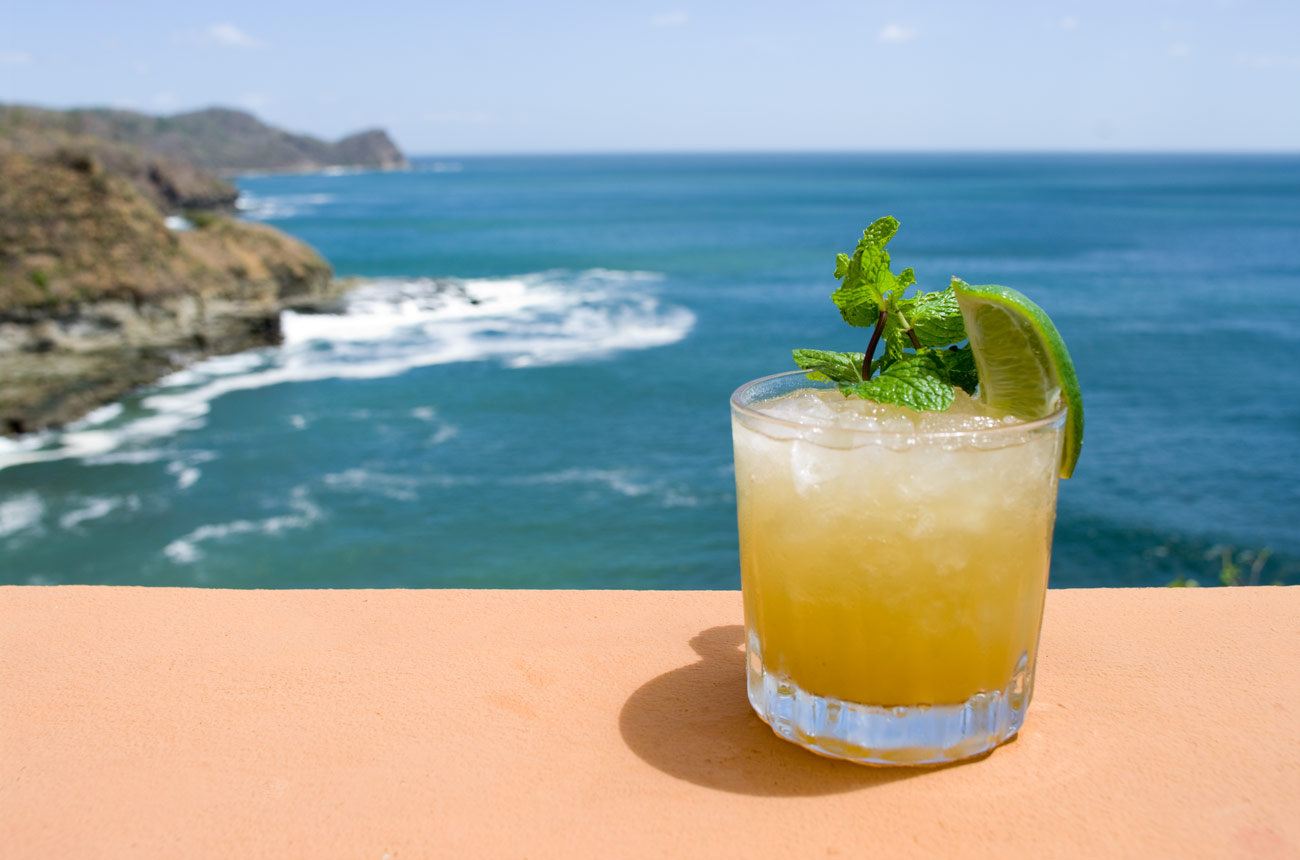
Carribean cocktail

The demand for fresh, well-balanced, creative, and innovative cocktails in 2024 is evident in today’s cocktail and culinary culture. It is not just reserved for big city bars, speakeasys, high-end restaurants and hotels anymore. The palates of consumers have evolved to healthier, plant-based, sugar-free/low sugar, canned cocktails, and low alcohol/alcohol-free options. Bartenders and mixologists serving behind the stick as well as those sitting at the bar or in the restaurant are experiencing this trend. If you’re looking for cocktail menu ideas for your bar, restaurant, public or private party/event, home party, or for your own weekend escapade with the guys or girls, this cocktail trend discussion will tipple your fancy.

For 2024, our cocktail shakers and glasses will be filled up with ingredients from the past (the 1990s to be more precise). The term “retro cocktails” has become fitting. Remixed classic cocktails, infusions, synergy between food and drink, smoked cocktails, fancy ice cubes, dehydrated food, etc… has become a part of the cocktail-drinking experience. These are some of the drinks you will be toasting this year!

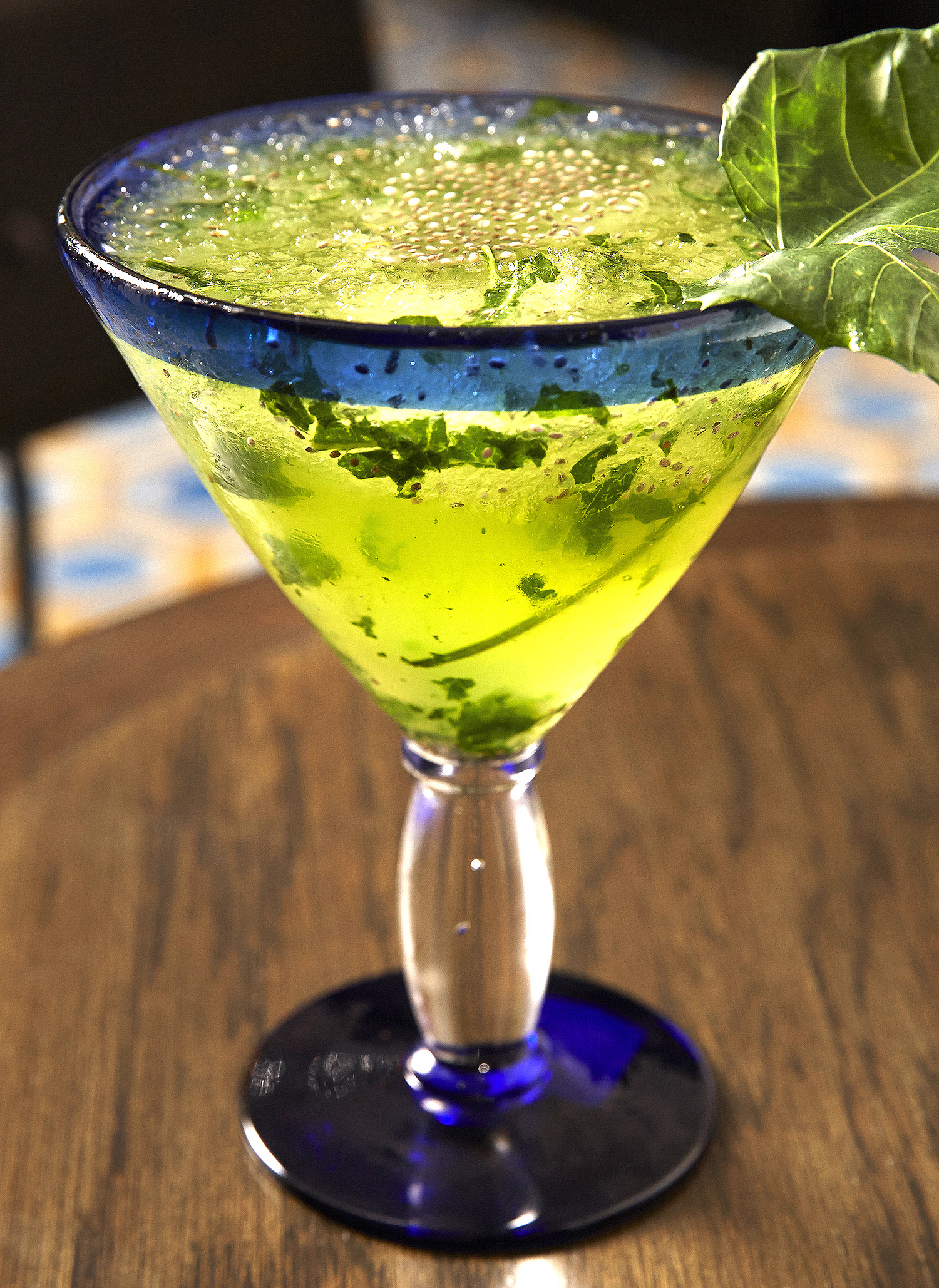
1) Savory and spicy cocktails are becoming increasingly popular, as people are looking for more complex and interesting flavors in their drinks. Popular savory cocktails include the classic Bloody Mary or Bloody Maria and Dirty Martini, while spicy cocktails include the Jalapeño Margarita and the Ginger Basil Smash or the addition of a chipotle, tajine, or chili salt rim.ChayaandChiaSeedMargarita

Spicy cocktails have become a hit with the social elite. There is a long list of spicy cocktails to try if you want to knock your socks off!

Harvey Wallbanger

2) The 90s called and it wants its drink back… “the ‘Tini”. The espresso martini continues to be a strong favorite among those wanting a little pick-me-up during an evening out. Fresh takes on the coffee-based cocktail will include using local high-quality cold-brew coffee or espresso, adding subtle notes such as vanilla, honey, or caramel, and switching out the vodka for whiskey.

3) The Apple Martini is also making a huge comeback, a sour cocktail that will be made from fresher ingredients in 2024 than in the 90s. And if you have a ‘salt-tooth’ then perhaps the briny Dirty Martini with olive juice will be more your thing.

Spellbound smoked cocktal

4) Fancy Ice Cubes – A trend for mixologists and the home bar alike! Long gone are the small square ice cubes we use. This is the year that we get creative with ice. From giant cubes to specialty shapes, to herb or fruit-infused beauties. Ice is more than for merely keeping your trip cool, it’s a way of decorating your cocktail and adding even more flavor. Treat yourself to some quirky molds and experiment with adding flavors like lavender, thyme, lemon, cucumber & mint, or coffee to your ice cubes.

5) Experiential Cocktails – Ever heard the phrase “eating with your eyes”? Turns out we drink with them too! The experience-seeking culture of Millennials and Gen-Zs with their insatiable appetite to capture unique moments for their social media has led to the trend of cocktails becoming experiential. Cocktails have always been a thing of beauty in their presentation, but now mixologists must also think about the performance and producing a ‘wow’ moment for the drinker.

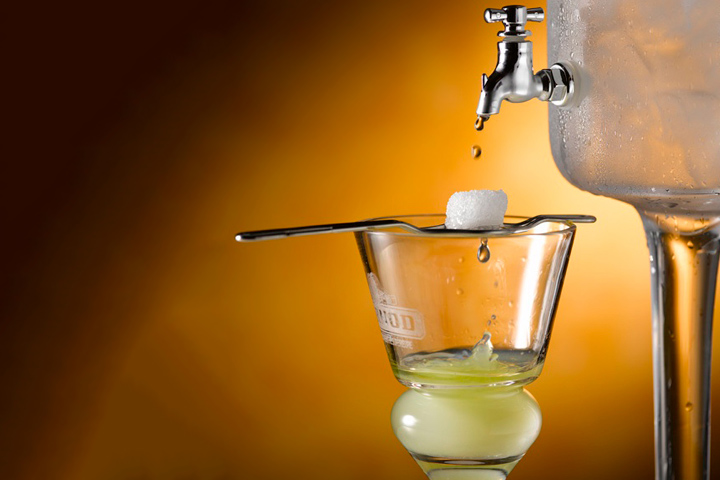
absinthegreenfairy

Be it the captivating view of the mixologists at work, or the cocktail itself, which can be achieved by mastering molecular cocktail making. Molecular mixology is the practice of mixing drinks using science to manipulate ingredients on the molecular level. It was inspired by molecular gastronomy, which employs similar techniques to food.

Cocktail trends also have a growing consumer market for delicious low-abv and virgin options which are just as satiating as their alcoholic counterparts. Expect to see a growing list on the non-alcoholic section of the cocktail menu and bartenders are putting much more thought and creativity into their taste and presentation.

Over half the world’s population abstains from alcohol. This percentage is more like a third of the population in Western countries, but significantly growing. Consumers are looking to find convivial moments in moderation throughout the year, especially as the weather warms up in the spring and summer and daytime drinking occasions are more common.”

6) Spiked Slushies – French syrup producer Monin has named slushies, Tequila and Mexican-inspired drinks as its top trends for 2024. They found that a Frozen Cosmo Slushie suggested as a possibility for dominating the vodka-based version of the cocktail, a Frozen Piña Colada fronting the rum-based category, and a Frozen Strawberry Margarita presented as a trend for the Tequila-based slushie serve. As a bartender, I hope this doesn’t become a trend lol.

7) Mixers Matter – In 2024, bartenders are paying more attention than ever to the mixers they use in their cocktails. This means that we can expect to see more house-made syrups, shrubs, and bitters on bar menus. Bartenders are also using more unusual mixers, such as kombucha and fermented juices (another nod to the general drinks trends). For example, the Turmeric Tonic is a refreshing cocktail that uses turmeric syrup and tonic water.

With so many new and exciting flavors, I hope your cocktail experiences this year exceed your expectations or just book me as your cocktail consultant.

Cheers,

Michael

Wine Glass

DON’T MISS A DROP

Get notified when new articles are poured

We don’t spam!