The best cure for writer’s block? A stiff drink. Maybe they are on to something. I just may have to libate more often to unleash those creative juices.
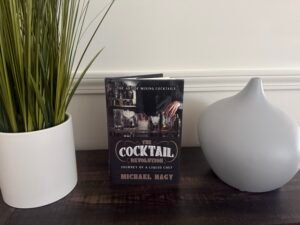
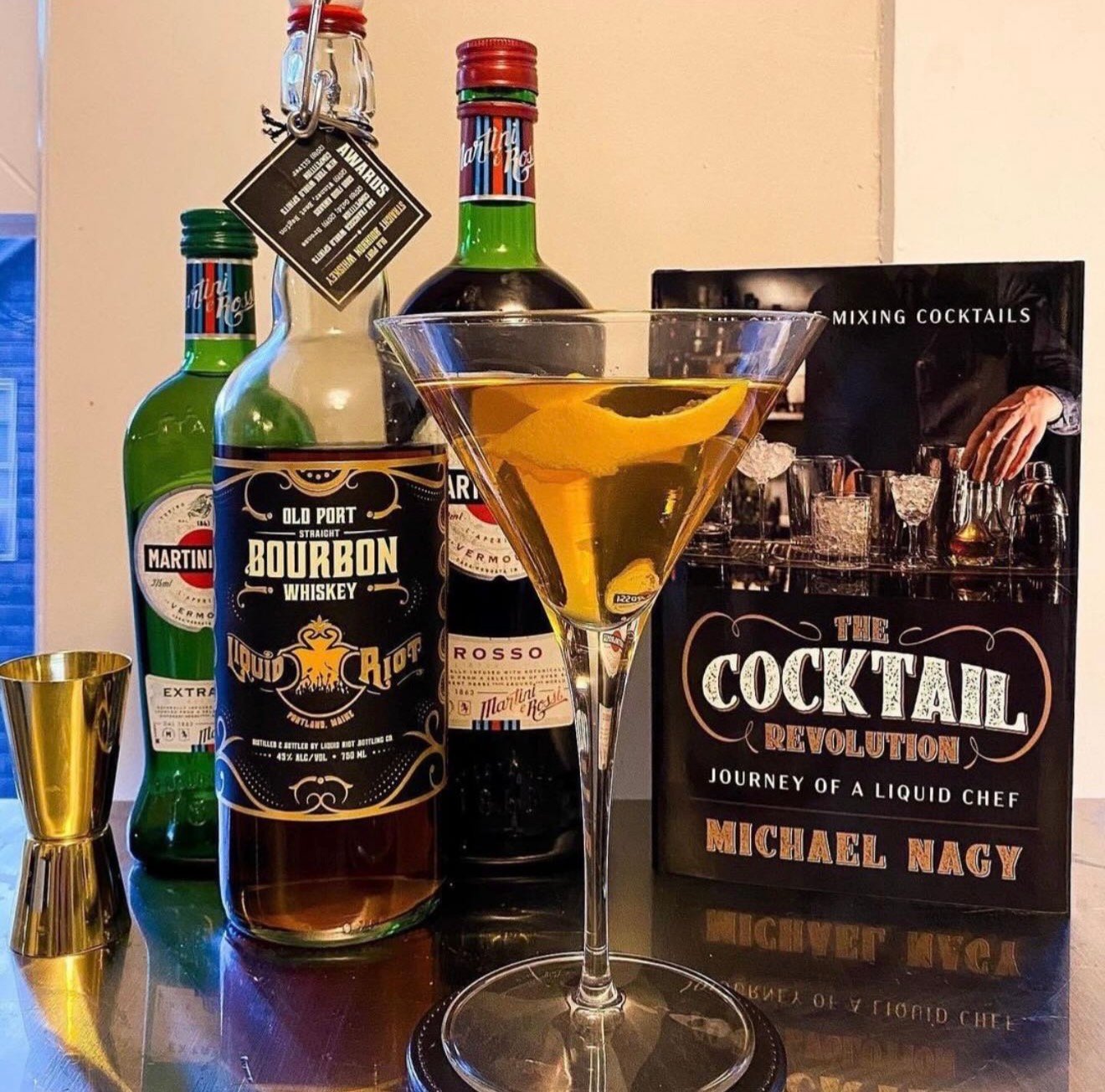
Who would have thought that the writing profession and cocktails could have synergy? This topic earned its own section in my published cocktail book in 2020 because of my love and affinity for cocktails, writing, history, and literature.
Booze and literature have long formed a close relationship – many of the world’s most famous authors were as good at drinking as they were at writing, and unfortunately, will go down in history as drunks. And the drinks they liked to imbibe made such a strong impression that many authors immortalized a great number of classic cocktails in their novels.
If you like to enjoy a well-made cocktail while reading your favorite classic novel and find out more about what is in those famous cocktails, be sure to check out below which drinks inspired the most prolific American writers over the years. You may earn a new respect for the writers (and cocktails) behind your favorite books.
No matter what the ghost of Ernest Hemingway may try to tell you as he makes an impromptu cameo that takes your nightly dreams completely off balance, you don’t need to drink to be a writer. You don’t need to, but there is no better way to dispel the demons (in whatever form they take) then with a good stiff drink or an overly elaborate cocktail. The making of which is the very definition of procrastination.
With the imbibing of alcohol, there goes the fear – the fear of a blank page, the fear of having nothing to say or the fear that the rambling I am doing now will never stop. But with a trusty scotch in my hand, let’s move along with this article and try to find the plot.
Feeling uninspired? Need inspiration? Well pick any well-known author from Shakespeare’s day to the present and see what drinks inspired them. Need to write a report for work? That calls for Dorothy Parker’s pithy one-liners and rhyming couplets, so you’re writing with the bourbon, lemon juice, and simple syrup of a Whiskey Sour.
Want to write a love letter? Well, your girl Sylvia Plath won’t let you down. Nor will her vodka martini, which is as astringent as her verse. Need to write a grocery list? That’s going to need the realism of John Steinbeck. Just pull out the Applejack and Grenadine to make yourself a Jack Rose.
There’s a stereotype woven throughout literary history, and that is the idea of the tortured and boozy writer. From the smoky cafes of Paris to the raucous New York speakeasies of the Jazz Age, the image of writers wrestling with their prose while drinking liquor is one that persists and fascinates me.
When it came time for me to write my second book, I encountered my fair share of writer’s block and so I decided to turn to some of my literary heroes and the very same cocktails that helped fuel their own stories in hopes of finding a libation that might inspire my own words to flow.
In researching the drinks of choice for some of history’s greatest writers, I realized that many of the cocktails they once enjoyed now offer a fascinating glimpse into their individual personalities, preferences, and even their writing style.
Ernest Hemingway’s custom daiquiris, for example, mirror his minimalist and direct prose; F. Scott Fitzgerald’s refreshing gin rickeys captured the bittersweet glamour of the Jazz Age he has come to represent and even made appearances in his magnum opus, “The Great Gatsby,” while his wife’s drink of choice, the vodka lemonade, was a perfect homage to Zelda Sayre’s southern belle roots.
From the smoky haze of the absinthe Oscar Wilde once loved to the strong, bracing chill of the vodka martinis Sylvia Plath would drink alongside Anne Sexton, these beverages were silent witnesses to moments of brilliance, despair, and unrelenting ambition of some of history’s most well-known writers. Without further ado…
Credit Wirestick Creators/Shutterstock
Ernest Hemingway & the daiquiri
Ernest Hemingway was one of the most influential writers of the 20th century, authoring some great classics. He was known for his clear and direct writing style, which was often characterized by an absence of flowery adjectives and excessive adverbs. Instead, Hemingway’s writing was punchy, direct, and minimalist, a style of writing that was so novel it earned him the Nobel Prize for Literature in 1954.
He may have countless other drinks associated with his name, including the Death in the Afternoon (which he invented) and the Mojito. But rest assured, Papa loved his Daiquiris—he even named one after him! Have you heard of the Hemingway Daiquiri? The drink was invented at the Floridita bar in Cuba, where Hemingway spent much of his time while America was suffering through Prohibition. The refreshing drink is perfect for summer soirees, but it is good enough to drink year-round.
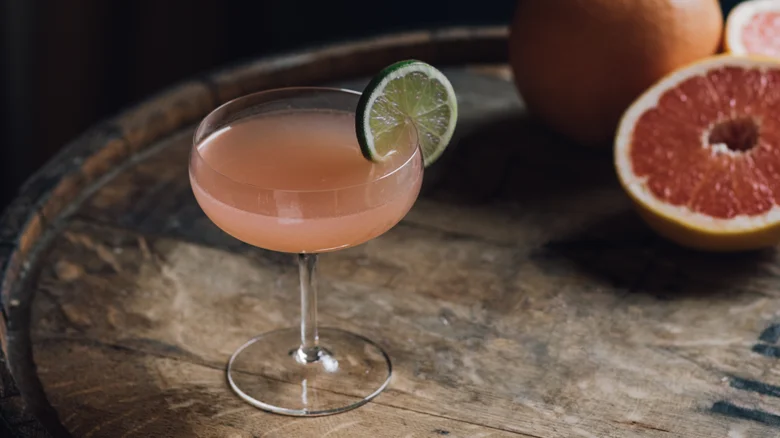
When Hemingway found himself living in Havana, Cuba, he was said to be a regular at El Floridita, where he developed a particular fondness for the daiquiri, even going on to request a custom version – no sugar, double rum, and plenty of fresh lime and grapefruit juice. Dubbed the “Papa Doble,” Hemingway’s daiquiri was a sharp, potent cocktail that mirrored his writing: it was clean, bold, and unflinching.
His preference for a stripped-down, no-nonsense drink aligned perfectly with his minimalistic approach and literary style. Hemingway claimed he could drink a dozen of these modified daiquiris without feeling drunk, a boast that reinforced his larger-than-life persona.
Credit Brent Hofacker/Shutterstock
F. Scott Fitzgerald & the gin rickey
F. Scott Fitzgerald remains one of the most celebrated voices of the Jazz Age, capturing its glamour, excess, and underlying despair in novels such as “The Great Gatsby,” “Tender Is the Night,” and “This Side of Paradise.” There has always been a fascination surrounding Fitzgerald and his glamorous, albeit turbulent, marriage to Zelda Fitzgerald, with themes of longing, loss, and alcoholism pervading his fiction. When it came to alcohol, Fitzgerald famously said, “First you take a drink, then the drink takes a drink, then the drink takes you.”
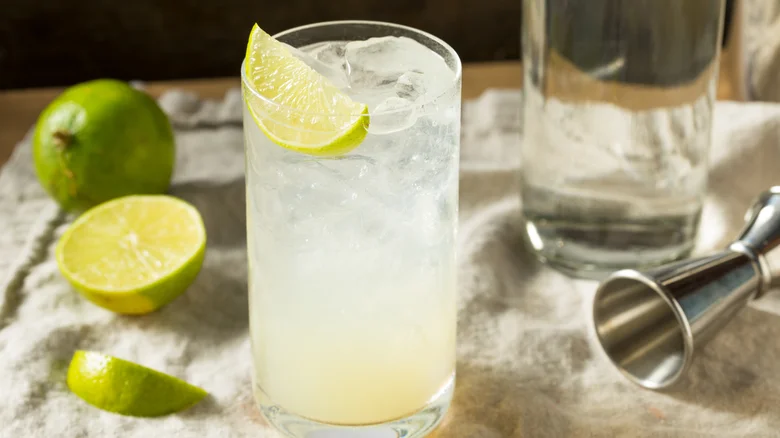
When it came to his cocktail of choice, Fitzgerald had an affinity for the gin rickey — a refreshing mix of gin, lime juice, and soda — which would have proven a fitting match for his love of high society. One reason Fitzgerald is said to have favored this light cocktail was for practical reasons: it left little lingering scent on the breath.
In the glamorous world of 1920s high society, maintaining an air of polish was crucial, and the gin rickey’s clean and tart profile, with minimal smell, would have proved a worthy writing companion.
If there’s any doubt about Fitzgerald’s reverence for the gin rickey, one need only revisit “The Great Gatsby” (one of my favorite books), where Fitzgerald’s drink of choice appears within its pages, where the characters of Tom and Daisy take “long, greedy swallows” of their gin-and-lime libations.
Sylvia Plath & the vodka martini
Sylvia Plath remains one of the most influential and haunting voices in both poetry and literature. She is best known as the author of the posthumously published poetry collection, “Ariel,” and her semi-autobiographical novel, “The Bell Jar.” Her writing would often touch on heavier themes such as mental illness, identity crisis, and existential despair with a candid intensity that helped usher in a new confessional style of poetry.
In short, Plath was a true tortured artist, and her confessional style of writing paired with her emotional honesty left an indelible mark on the world of poetry and literature as we know it today.
Sylvia Plath and fellow poet Anne Sexton (martini lover) were said to be bonded by both poetic brilliance and a penchant for vodka martinis. After poetry seminars, the two would head to the Ritz-Carlton in Boston and order at least three vodka martinis each, where they would chat about everything from their work to the instructor of their poetry seminar.
Like their poetry, their vodka martini of choice was direct and barebones, calling simply for vodka, dry vermouth, and a lemon twist or an olive garnish. Who knows how many eloquent lines came out of those meetings?
Truman Capote & the vodka screwdriver
Truman Capote is best known for his popular books “Breakfast at Tiffany’s” and “In Cold Blood,” the latter of which was a groundbreaking nonfiction novel that redefined the true crime genre by combining journalism with narrative storytelling.
While Capote was known for his flamboyant and larger-than-life public persona among New York’s high society, of which he was a fixture, his writing proved to be more nuanced and vulnerable, revealing deep wells of emotion and glimpses into the demons he unfortunately struggled with for much of his life, including alcoholism.
When it came to his drink of choice, Capote was known to appreciate the simplicity of the vodka screwdriver: a mixture of vodka and orange juice, an easy-to-sip cocktail he endearingly called “my orange drink” during his lifetime. While the vodka screwdriver is a simple cocktail, its history is a little more complex, with an unclear origin. One theory is that the screwdriver can be attributed to marines during World War II, who were said to occasionally add vodka to their orange juice.
As far as Truman Capote is concerned, while he loved screwdrivers and remained loyal to vodka, he did not remain as loyal to his mixers. On occasion, he was known to swap out the orange juice for soda and grapefruit juice.
Cocktails in Capote’s work are like masks — they help characters become who they wish to be, even if only for the evening.
Capote loved cocktails that walked the line between elegance and mischief. In Breakfast at Tiffany’s, Holly Golightly orders a White Angel cocktail at the beginning of the tale, which is described as “something new… one-half vodka, one-half gin, no vermouth” – basically a strong variation of martini.
He once said “Promise me one thing: don’t take me home until I’m drunk – very drunk indeed.”
Credit iStock
Oscar Wilde & absinthe
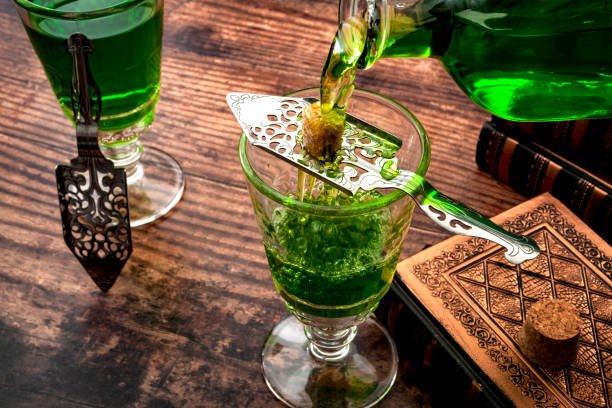
Oscar Wilde was an Irish writer, poet, and playwright who reached literary fame with his plays “The Importance of Being Earnest” and “An Ideal Husband” — both of which are celebrated for their satire and brilliant dialogue — as well as his only novel, “The Picture of Dorian Gray.” When it came to drinking, Wilde was said to have loved absinthe.
Nicknamed “the green fairy,” the hallucinogenic component of absinthe, brought on by wormwood, promised visions and inspiration that could help fuel creativity. Wilde famously described the absinthe experience in stages: “After the first glass, you see things as you wish they were. After the second, you see things as they are not. Finally, you see things as they really are, and that is the most horrible thing in the world.”
While absinthe was made illegal in the United States due to its hallucinogenic qualities (the psychoactive effects are caused by thujone, which is derived from wormwood), today you can find absinthe sold in America, provided that it is wormwood-free. In other words, the absinthe Oscar Wilde once enjoyed is difficult to find in the United States nowadays, but in Europe, you can still find absinthe containing wormwood.
Dorothy Parker & the whiskey sour
One of the founding members of the famed “Vicious Circle,” which once gathered at the Round Table at New York’s historic Algonquin Hotel back in the 1920s and 30s, Dorothy Parker was a poet, critic, and satirist celebrated for her cutting wit, caustic humor, and unflinching observations.
Her writing, which included “Enough Rope” and “Big Blonde,” often explored darker themes of loneliness and the gap between societal expectations and one’s personal reality, making for timely observations that still resonate today.
While Parker is remembered for her dazzling words, her layered writing makes her one of the most complex voices of American literature. So, when it came to her beverage of choice, it should come as no surprise that Parker gravitated towards a cocktail that struck the same complexities as her work: the whiskey sour.
This classic and historic cocktail blends whiskey, lemon, and sugar, resulting in a flavor profile that is both tart and potent. Whether she was crafting biting poems or skewering societal hypocrisy, Parker’s drink of choice tended to embody her literary voice — it was elegant, complex, punchy, and laced with just the right amount of bitterness.
While Parker clearly enjoyed her whiskey sours, it’s also worth noting that her writing mentions her love of champagne. As shown in her poem, “Inventory,” Parker wrote: “Three be the things I shall never attain: Envy, content, and sufficient champagne.”
Credit Vecteezy
Hunter S. Thompson & the Singapore Sling
Hunter S. Thompson was a journalist-turned-author who is best known as being the pioneer of “gonzo journalism,” a style of writing that blends fact, fiction, and personal experience. It goes without saying that Hunter S. Thompson was a juggernaut who broke traditional journalistic rules by placing himself at the center of a story, offering keen observations through his raw, unfiltered voice and experiences.
His book, “Fear and Loathing in Las Vegas: A Savage Journey to the Heart of the American Dream,” was by far his most famous work and one that captured the disillusionment of the American Dream through his own drug-fueled odyssey in Las Vegas.
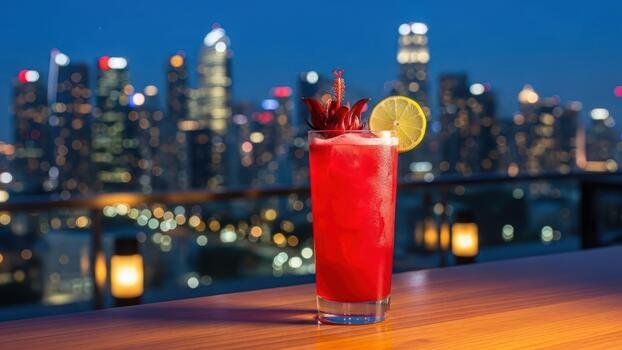
Not only does Thompson’s autobiographical novel offer a chaotic glimpse into his wild journey, but it also provides readers with a look at one of his preferred cocktails: the Singapore Sling. This historic cocktail, a colorful blend of gin, sugar, lime juice, and cherry brandy, has undergone multiple iterations, with some Singapore Sling recipes even adding pineapple, grenadine, or red wine.
In his book, Hunter S. Thompson wrote of the afternoons spent indulging in Singapore Slings, wasting away afternoons with his friends in tow: “sitting there in the Polo Lounge — for many hours, drinking Singapore Slings with mescal on the side and beer chasers.
His cocktail tastes were as bold as his prose: while he downed whisky with professional dedication, his unexpected soft spot was the Singapore Sling, a drink he associated with humid hotel bars, tropical assignments, and the illusion of calm before the next storm.
He said “Twenty‑four hours ago we were sitting in the Polo Lounge … drinking Singapore Slings with mescal on the side and beer chasers.”
Anthony Bourdain & the Negroni
By far the most recent writer on this list, the late and great Anthony Bourdain was an acclaimed storyteller, television host, chef, and travel documentarian who rose to fame following the publication of his bestselling memoir, “Kitchen Confidential: Adventures in the Culinary Underbelly,” an unfiltered look behind the scenes of professional kitchens that combined humor, grit, and poignant insight.
Following the success of his memoir, Bourdain set out to write one of my personal favorite books, “A Cook’s Tour: In Search of the Perfect Meal,” while simultaneously filming his first travel show of the same name. From then on, Bourdain’s television career as a travel host was cemented with his subsequent shows, “No Reservations” and CNN’s “Parts Unknown.”
During his lifetime, Bourdain, who spent his life connecting with cultures through food and drink, made it known that he was a devoted fan of the Negroni, a cocktail he considered perfect, even calling it one of his all-time favorite drinks.
“A Negroni is a perfect drink, as far as I’m concerned,” said Bourdain in an interview with Barron’s at its 2016 annual American Craft Council Fellowship Awards. “You know, it’s three liquors that I’m not particularly interested in. I’m not really a gin drinker, don’t like Campari, and straight vermouth leaves me cold, but put ’em together with a slice of orange … it works.” Made with gin, Campari, and vermouth, the Negroni strikes a perfect balance between bitter, sweet, and botanical notes.
Maya Angelou & sherry
Maya Angelou was a poet, memoirist, and civil rights activist whose work has become a cultural touchstone, capturing the struggles and triumphs of the Black community in the United States.
She is best known for her autobiographical series, beginning with “I Know Why the Caged Bird Sings,” and her writing style, which blends narrative with social commentary, particularly examining racism, trauma, and resilience.
In an interview with The Paris Review, Angelou shared her writing ritual, which took place in hotel rooms, accompanied by nothing more than a dictionary, an ashtray, yellow legal pads, and a bottle of sherry.
In response to the interviewer asking if the fortified wine Angelou preferred was an end-of-day tradition or something to fuel the imagination, Angelou replied simply: “I might have it at six-fifteen a.m. just as soon as I get in, but usually it’s about eleven o’clock when I’ll have a glass of sherry.”
Much like her writing, the warmth and depth of sherry seems a perfect metaphor for Maya Angelou’s rich storytelling, dripping with warmth, wisdom, and strength.
A few other notables coming from the fantasy world – J.R.R. Tolkien (Lord of the Rings) and C.S. Lewis (Narnia). They would often grab beers together at a local pub and talk about their books, and Jane Austen would write letters to her sister about the luxury of drinking a fine French wine.
Some famous literary cocktails –
The Virginia Woolf – A refreshing highball style drink combining gin, lemonade, ice, a cucumber slice, and a lime twist. Gin Austen – A literary-themed craft cocktail honoring Jane Austen made with gin, rosé, sage, lemon, and bitters.
Final Toast
These writers didn’t just write about cocktails — they lived in their glow. For some, drinking was joy or elegance; for others, escape. But in all cases, the cocktail becomes a symbol of era, of mood, of self.
So next time you mix a drink, raise a glass to these literary legends. And maybe, just maybe, start the next great novel.
P.S. You can now follow me on Substack under The Michael Pour at substack.com/@themichaelpour. There isn’t a paywall yet but is being considered. Eventually, I foresee that being my primary writing and posting forum for monetary reasons, primarily. Come follow me on there! A writer has to make a living lol.
Cheers & Sante,
Michael
michael@michaelpour.com
Cover photo courtesy of the Daily Mail