For this week’s spotlight, The Michael Pour takes you on a journey to Southern Italy along the coast of the Adriatic Sea.
Here you will find one of Italy’s best kept secrets and underrated wine regions, Abruzzo “uh-brut-sow”. Recently, I’ve learned about a new winery emerging in the region. The winery is called “Cantina di Rosina” and their wonderful story, and family history is depicted below.
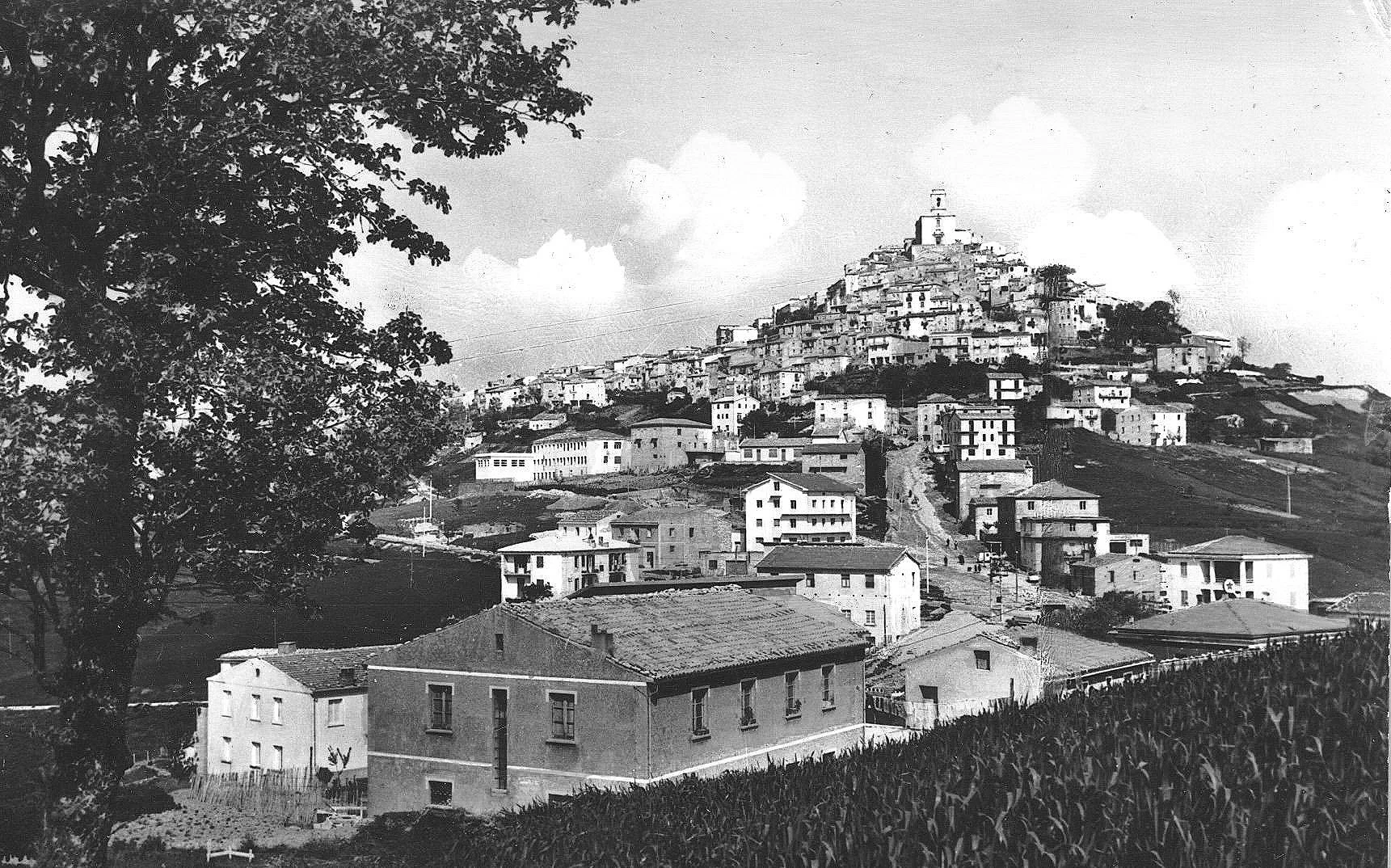
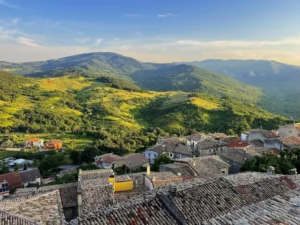
“Throughout the 18th and 19th centuries, our ancestors produced quality wine in the Southern Abruzzo region of Italy. After WWI, our grandparents emigrated from war-torn Italy to the US in search of a better life for their family. Now, 100 years later, they have returned to my beautiful ancestral village of Carunchio to carry on producing wines that are approachable, elegant, and capture the spirit of this stunning region. Carunchio is a commune and town in the province of Chieti in the Abruzzo region of Italy.
They’ve assembled a world-class team of viticulturists, oenologists, and winemakers to pay tribute to this beautiful land and all it has to offer. Great wine begins with great respect for the land. Our ongoing mission to share the beauty of Abruzzo with the world…one glass at a time.” – John, my Friend & Proprietor
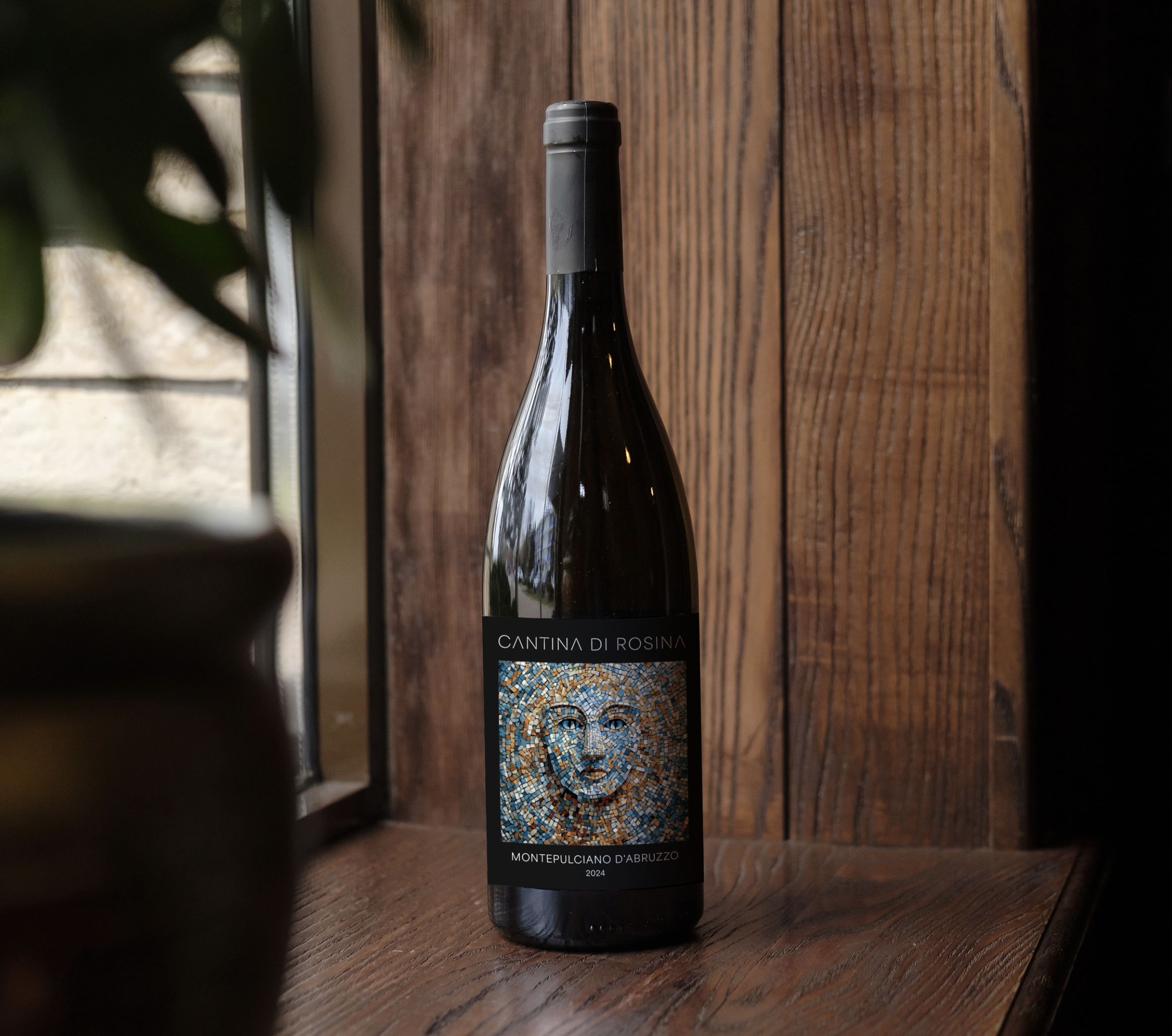
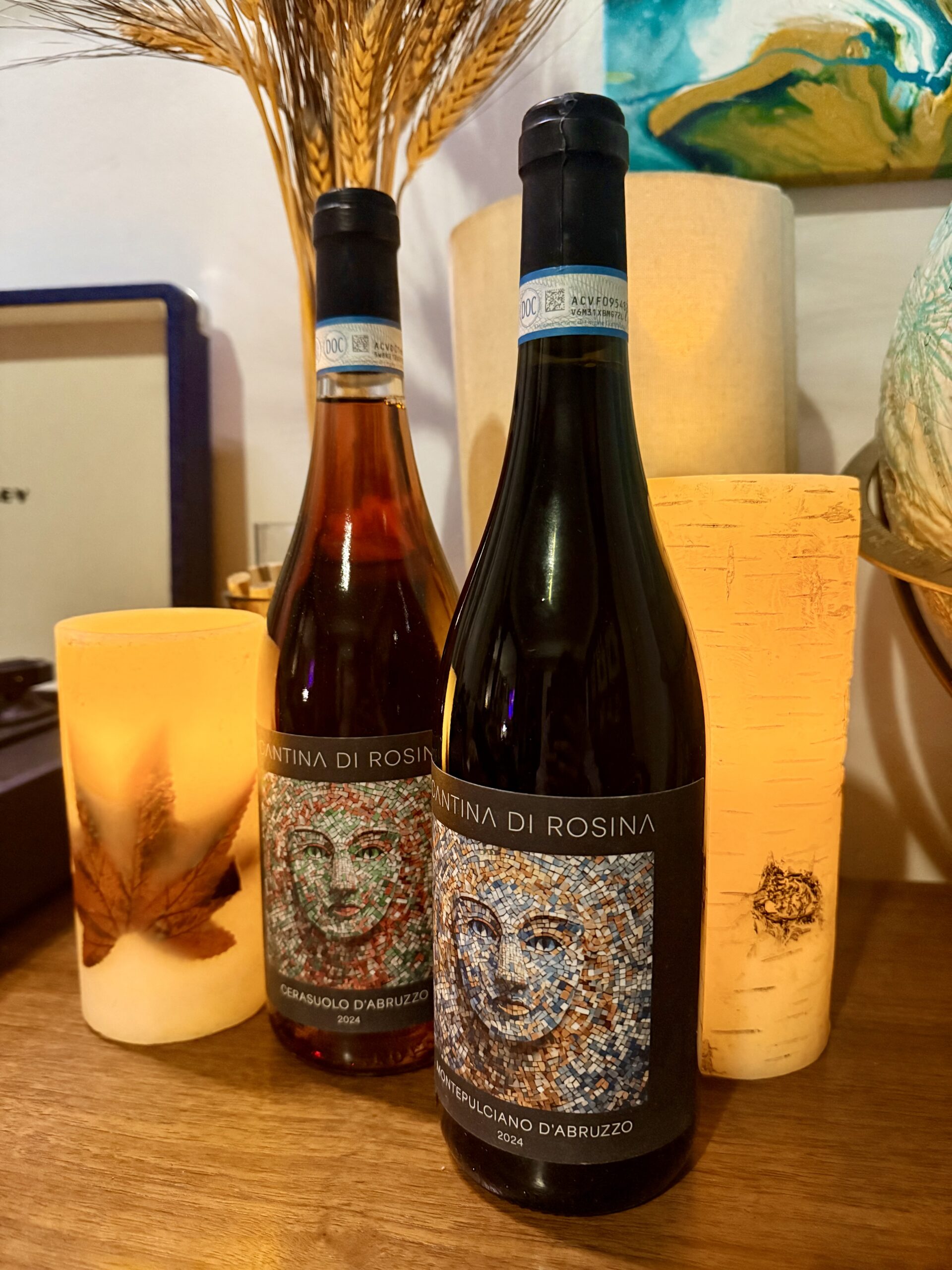
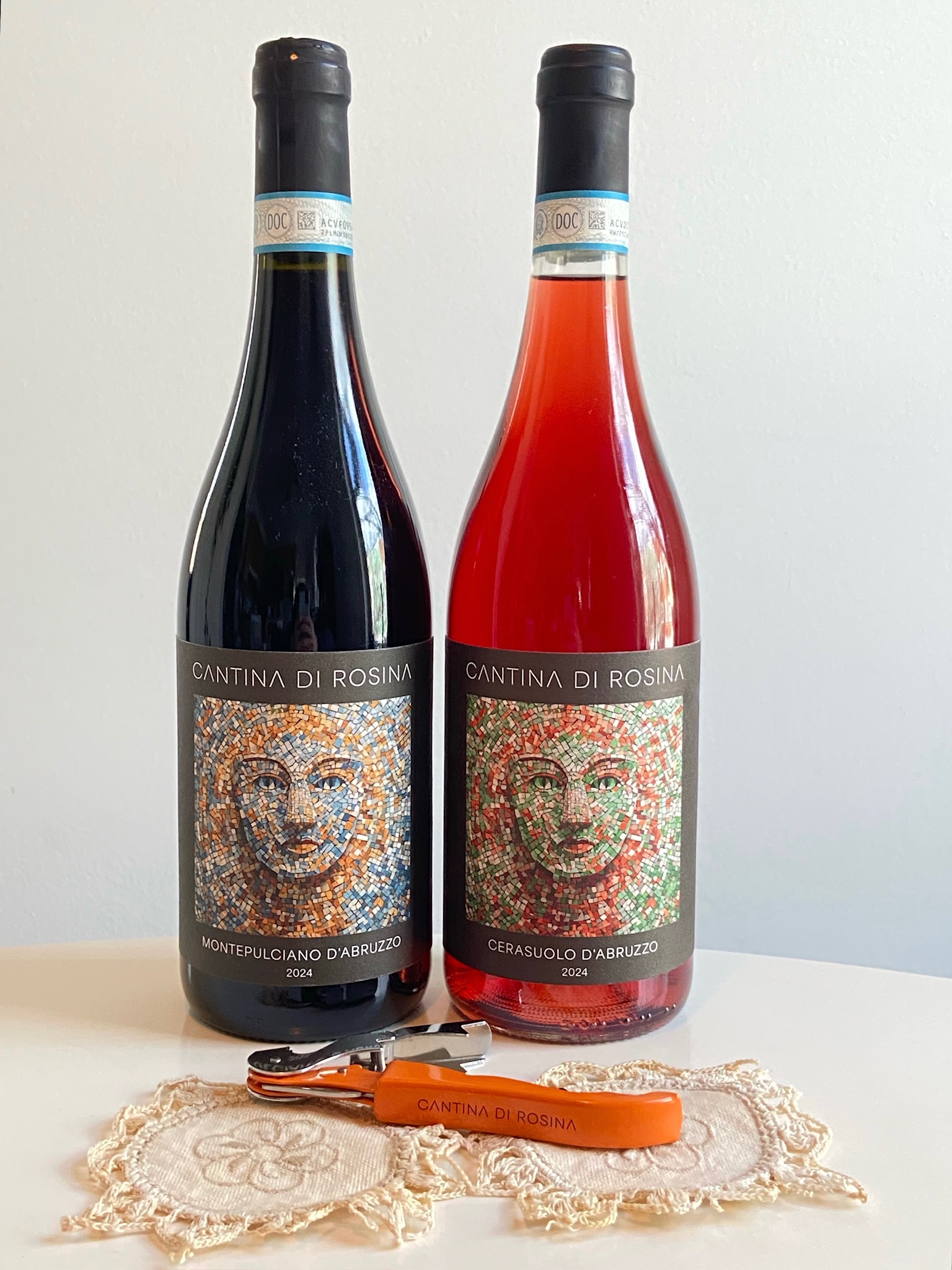
Cantina di Rosina’s first vintage was 2024. Their Montepulciano d’Abruzzo 2024 is described as being sturdy with solid structure, yet soft tannins with a long finish. It spends some time in concrete creating complexity and texture before going into stainless steel (no oak).
Flavors of dark cherry, leather, and hibiscus are exhibited. It will pair well with any type of game, grilled red meats, cured meats, and ripe cheeses. Serve it at cellar temp or slightly below room temp at 60°- 65°F. Don’t hold onto for very long.
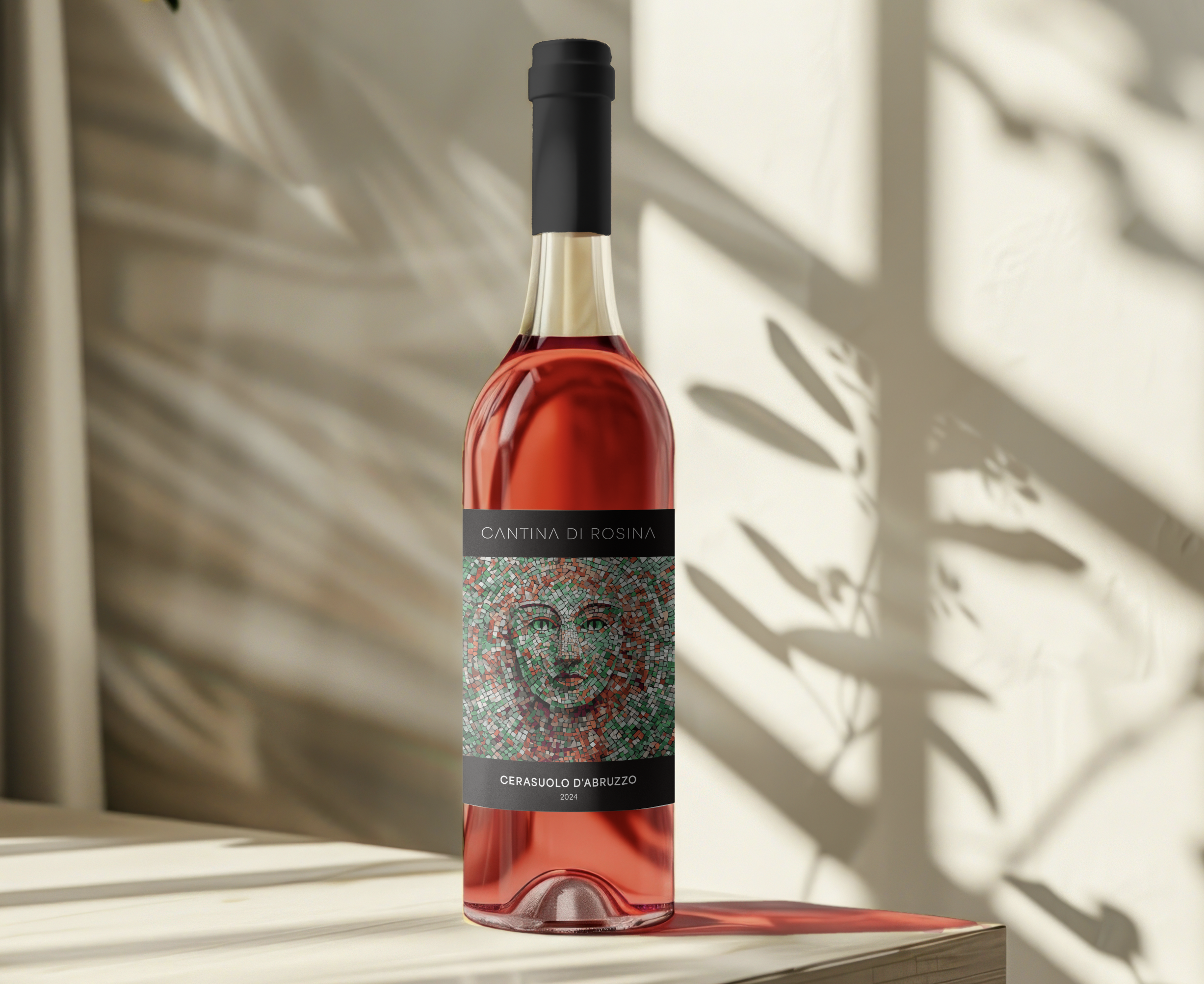
The Cerasuolo d’Abruzzo is a bold rosé with a cherry red color from a gentle kiss of skin contact. With a maceration of only 4 hours on the skins before fermentation, the color is deep and vibrant. It is made 100% from the Montepulciano grape and is essentially a rosé that drinks like a red offering a full spectrum of food pairings.
Not your normal “pink” wine or rosé for that matter. It projects an intense aroma of rose petals and flavors of wild berries and a savory herbaceous quality that lingers. Try it as an aperitif! Drink young.
Enjoy it chilled (50°- 54°F) all summer long by itself or with an array of food options, like seafood dishes, roasted white meats, pizza, cured meats, and semi-matured cheeses. I experienced this awesome wine with homemade bucatini pasta, blush sauce, andouille sausage, shrimp, and fresh herbs over the weekend, and it was a lovely pairing.
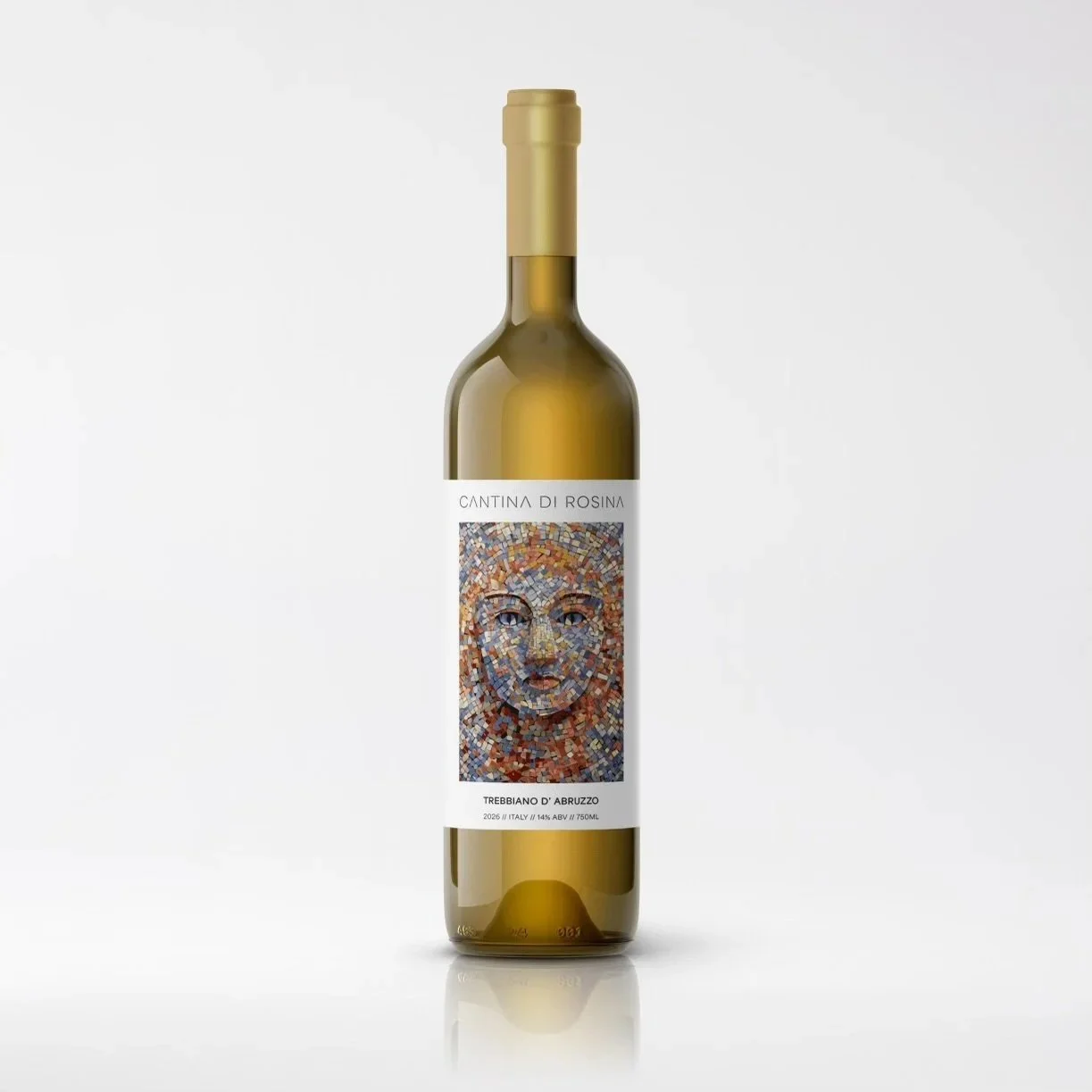
The Trebbiano d’Abruzzo DOC 2024 will be released in the next few weeks so you can enjoy all summer-long.
All the wines are 100% certified organic with sustainable farming practices. I have tried the wines, and they are very clean, bright, and complex.
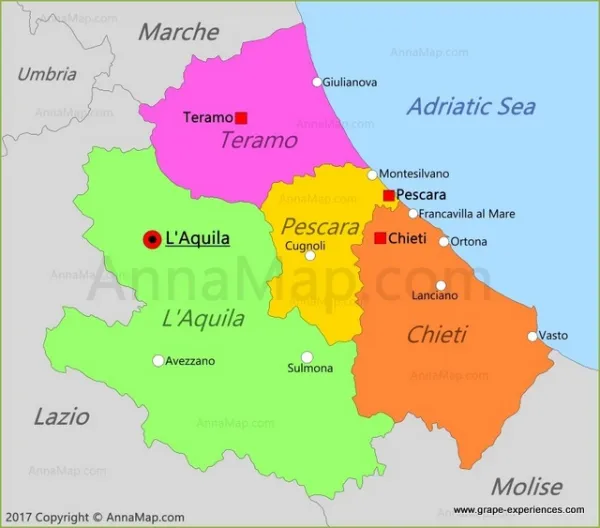
A little bit about the Abruzzo region to better understand the land, microclimate, vineyards, and what goes into the wine that is produced here.
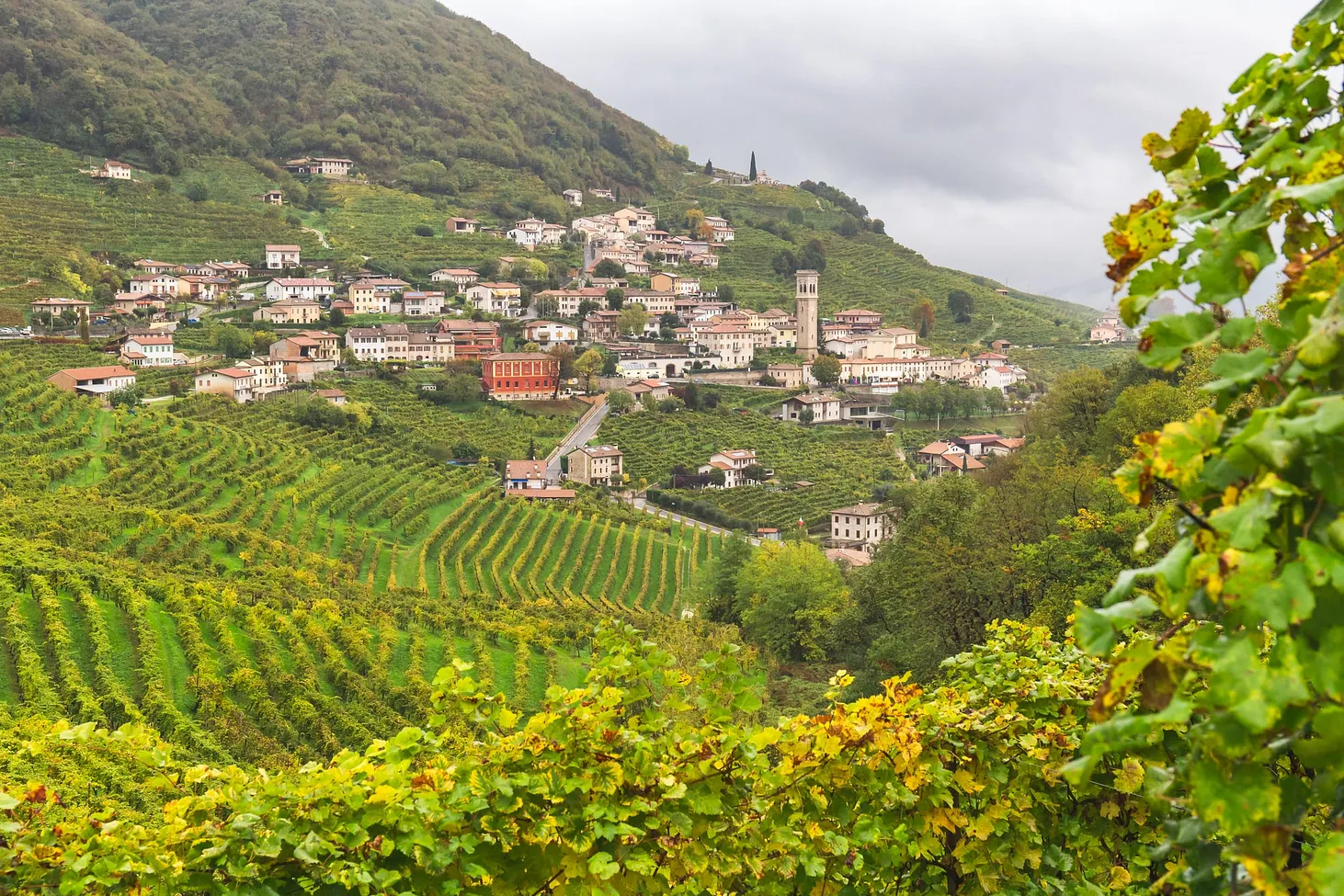
Abruzzo is an Italian region located about a two-hour drive east of Rome. Abruzzo extends from the snow-capped Apennine Mountains to the balmy Adriatic Sea. This magical scenic region offers summits and seacoast, medieval castles and clifftop villages.
It is a major wine region famous for robust Montepulciano d’Abruzzo red wines and crisp Trebbiano d’Abruzzo whites. The region is characterized by mountainous terrain, with most production in the coastal Chieti province, offering high-value, quality wines often with soft tannins and red fruit flavors.
National parks and nature reserves cover much of its rugged interior. It also encompasses hilltop towns, dating to the medieval and Renaissance periods. The regional capital of L’Aquila is a walled city, which was damaged in a 2009 earthquake.
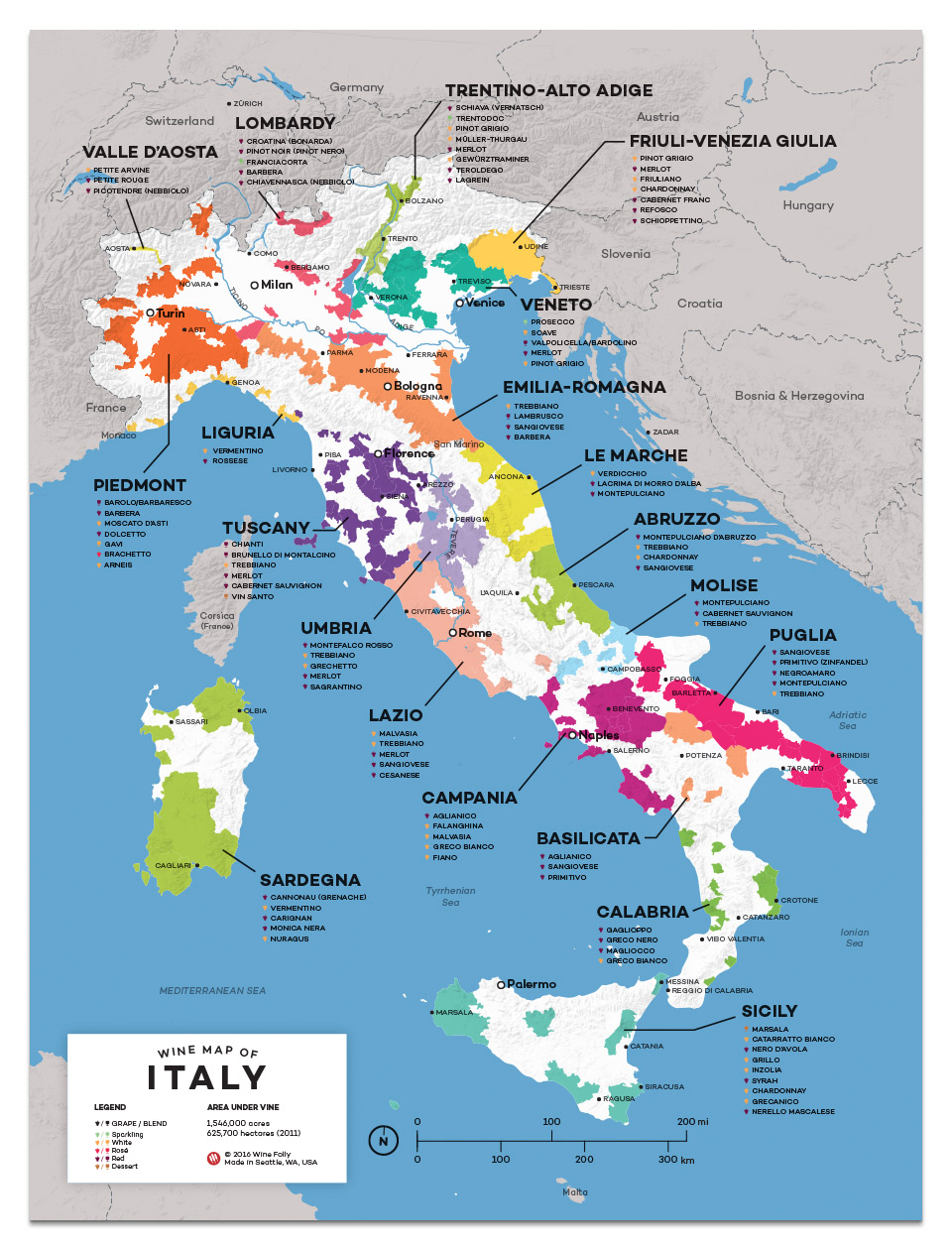
Abruzzo is also known as “the greenest region in Europe” as half of the region’s territory is protected through national parks and nature reserves, more than any other region in Italy. Culturally, Abruzzo is considered a region of Southern Italy; however, geographically it is often considered part of Central Italy.
The focus in Abruzzo is on the Montepulciano grape referred to as Montepulciano d’Abruzzo. It’s a versatile grape, in the sense that it can satisfy many different palates. Montepulciano is a fruit-forward dry red with a medium to full body, medium to high smooth tannins, and medium to high acidity. Notes of red plum, blackberry, dried herbs and thyme, and baking spices.
It is not be confused with Vino Nobile di Montepulciano, which is a wine made from the Sangiovese grape in the town of Montepulciano from the Tuscany region.
It can be vinified and aged in stainless steel to give a simple, approachable wine and food-friendly with freshness and expression of the fruit. For low crops, it can be aged in casks or barriques, sometimes new barriques, to create wines that have greater depth, concentration and complexity.
The oaked Montepulcianos coming out of the region are not wines for everyday drinking because they can be very dense, inky, and powerful. These bottlings can be a great option for the winter months. Some can develop gamey aromas with age while others continue to display primary fruit flavors for years.
Montepulciano does typically age well, but it’s not a wine that requires you to age in order to enjoy now and show complexity.
Montepulciano is the most planted grape in the Abruzzo region. It represents 80% of the total DOC wine produced in Abruzzo. The Montepulciano grape has been in Abruzzo since the mid 17th Century. According to DOC rules, Montepulciano d’Abruzzo wines must contain at least 85% Montepulciano, with Sangiovese often used for the rest. Bottles labeled “Riserva” must be aged at least two years.
Another reiteration of Montepulciano is Cerasuolo “chair-ah-swolo” which translates to “cherry red” and refers to an Italian wine style. It is Abruzzo’s best kept secret! Cerasuolo d’Abruzzo is a Rosé made from the Montepulciano grape. It is made from the free run juice and/or juice with very little skin contact and the color can vary from light pink to dark red. A rosé wine that is usually made by giving the juice a maceration of eight to 18 hours on the skins before fermentation.
The result is almost like a light red rather than a rosé. A wine with body and succulence not typically rosés. It’s very popular in the region, but you will not see many exported. However, that is starting to change though in recent years.
Even in a good pizzeria in the regional capital of Pescara, you don’t necessarily want to drink a rich red all the time. Cerasuolo, with its vinosity and weight, is actually best drunk lightly chilled. Most producers agree that you shouldn’t consider Cerasuolo a way to use up your least interesting grapes or put in a blend. It should be made from grapes of high quality and treated seriously even its rosé.
The signature white from Abruzzo is Trebbiano d’Abruzzo is a light white Italian wine known for its dark gold or amber-colored berries, high acidity and neutral flavor profile that produces stone fruit and apple aromas with hits of lemon. Though production remains small when compared to Montepulciano, it is starting to make an appearance on the world stage.
Being a very large and dispersed region of vineyards, Abruzzo is divided into many sub-regions, and there are also DOCs that are permitted to use non-Italian varieties such as Chardonnay or Merlot. Only someone who is an expert of Abruzzo terroir would be able to identify the many sub-zones for Montepulciano in the glass. Look for different styes of Sangiovese coming out of the region.
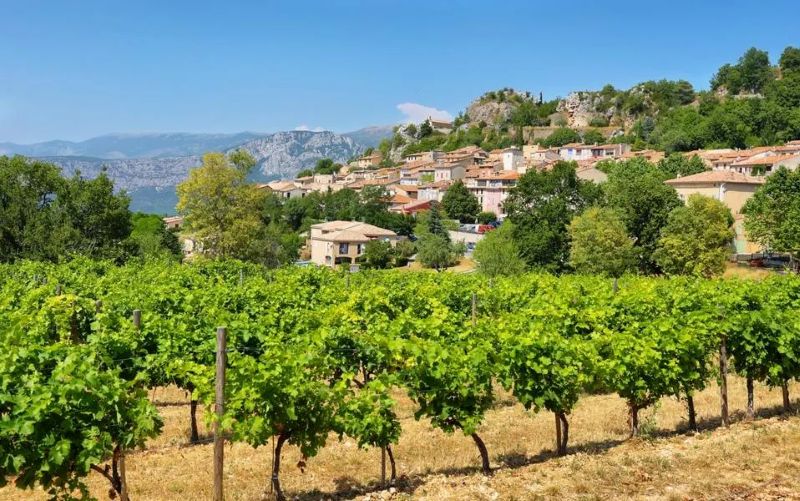
In many older regional vineyards, the vines are trained on tendone (pergolas) designed to shade the grape clusters and make harvest easier. Newer plantings are arranged in rows.
Tons of sunshine and generous rainfall provide happy growing conditions for wine grapes in Abruzzo. The higher elevations and combination of mountain and maritime breezes bring down summer temperatures, setting up conditions for warm days and chillier nights. This is ideal for maintaining acid balance in the ripeness. Most vineyards flow along the warm and dry coast in the nearby hills.
I am excited to be representing Cantina di Rosina winery as an ambassador in the Upstate and Central New York region so let me know if you want to schedule a tasting or place an order. Orders can be placed directly from their website or from my link in bio.
You can contact me, Michael Nagy, at 717.877.2729 or michael@cantinarosina.it The wines are truly remarkable by themselves but will also elevate your food experience and company.
If you have an Italian restaurant, steakhouse, pizzeria, or wine shop, these wines will be a perfect complement to your food menu and Italian wine section.
Allow me to share the beauty and story of Abruzzo and Cantina di Rosina (CdR) with you. Find the website at www.cantinarosina.it and on Instagram @cantinarosina. Follow them and me @themichaelpour 🙂
Cheers & Saluti,
Michael